Use lead body filler
The short answer
Lead body filler—usually sold as body solder or wiping solder—is a lead-tin alloy melted onto clean, tinned steel and shaped while it is still plastic. It is a metal repair, not a paste. Use it only on sound, bare steel after rust, paint, and oil are gone; skip it on aluminum, plastic, heavily galvanized panels you cannot tin, and any job you cannot ventilate and contain for lead dust and fume. Plastic polyester filler is the usual substitute for everyday dent filling. Lead still has a place on classic restorations, welded seams, and spots that must stay waterproof and fileable without shrinking.
What lead body filler is
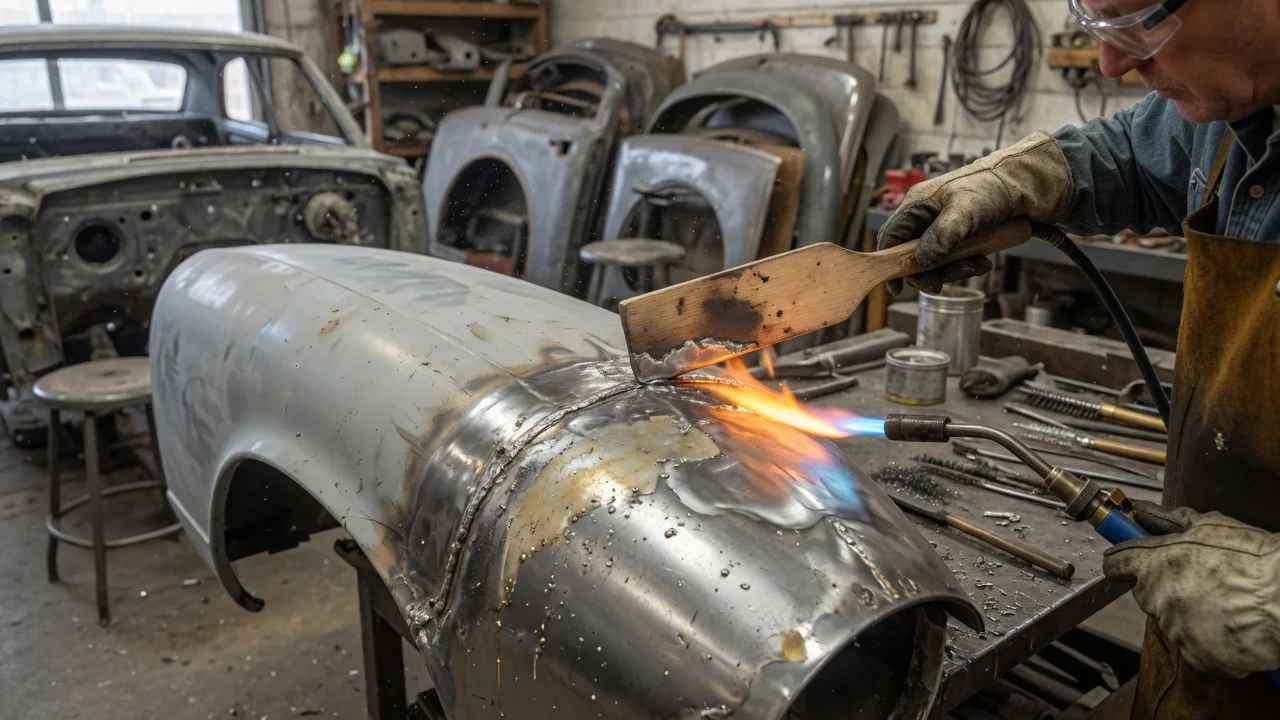
Body solder is an alloy of lead and tin formulated to melt well below the temperature of sheet steel. Applied with a torch, it wets a tinned steel surface, then cools into a solid metal fill that can be filed, sanded, and painted. The old shop term “wiping” describes spreading the semi-molten alloy with a paddle instead of troweling a chemical paste.
That difference drives every later choice. Polyester body filler (the common two-part cream) bonds chemically, cures by catalyst, and is easy to sand. Lead bonds metallurgically to tinned steel, does not absorb water, and does not shrink as it ages. It also creates lead fume when overheated and lead-bearing dust when filed, so the process is slower, hotter, and more tightly regulated than a typical filler job.
When lead is the better fill
Lead is worth the extra work when the repair must last as metal, not as a plastic patch. Typical uses are filling a dressed weld on a seam or patch, blending a hammer-and-dolly repair that is already close to contour, and restoring a panel on a vehicle that originally used wiped solder. It is also chosen where moisture in a porous filler would later blister paint, such as along a drip rail, door skin hem, or other joint that sees water.
It is a poor first choice for a deep, unsupported dent, a hole without a metal backing, a rusty panel that has not been cut back to solid steel, or a modern panel you cannot get chemically and thermally clean enough to tin. If the steel is thin, work-hardened, or already heat-distorted, more heat from soldering can make the panel worse. In those cases, metalwork first—or replace the panel—then decide whether a thin lead wipe or a conventional filler is still needed.
Safety limits before you light a torch
Lead work is a health-control job, not only a bodywork job. Heating the alloy can produce fume; filing and sanding produce dust. Both are hazardous if inhaled or ingested. Work outdoors or in strong local exhaust, keep food and drink out of the area, and use a respirator appropriate for lead fume and particulate plus eye and skin protection. Do not overheat the solder until it smokes heavily; that is a sign the alloy is past a controlled wipe and is generating more fume.
Cleanup is part of the repair. Dry sweeping spreads dust. Prefer wet wipe-down of tools, benches, and clothing, and treat filings, contaminated rags, and used flux as hazardous waste under the rules that apply where you work. Many shops and jurisdictions restrict or prohibit lead body solder; check that before you buy material or start on a customer car. If you cannot meet those controls, stop and use a non-lead filler system instead.
What you need on the bench
Body solder (lead-tin wiping alloy made for automotive use, not electrical solder); A torch you can keep on a soft, even heat—commonly propane, MAP-pro, or a small oxy-fuel setup used with restraint; Tinning flux or tinning compound made for steel bodywork; Clean steel wool or a dedicated tinning pad, plus files and a body file for the cooled fill; A wooden or coated wiping paddle and a way to keep it from sticking (traditional paddles are kept slightly damp or dressed so solder does not grab); Bare-metal prep: grinder or dual-action sander, degreaser, and a way to remove all paint, primer, undercoating, and rust in the work area plus a margin around it; Lead-capable respirator, gloves, eye protection, and a cleanup plan for dust and residue
Do not substitute plumbing or electronics solder and do not assume a flux made for copper pipe will tin automotive sheet correctly. If the product label does not describe body or wiping solder on steel, treat compatibility as unresolved and choose a product that does.
Prepare the metal so the solder can wet it
Solder sticks to clean, tinned steel. It does not stick to paint, mill scale, rust, oil, or polyester filler. Grind or sand to bright metal, going beyond the low spot so the finished wipe can feather onto surrounding steel. Remove any remaining oil with a wax-and-grease remover after sanding, not before the last cut, or you will grind contaminant back into the surface.
Repair the metal first. Lead is a skim, not structure. Planish the dent, weld and grind a patch, and make sure the panel is as close to shape as file-and-fill work allows. Heat from the torch will expand the sheet; a panel that is already tight or buckled can oil-can when you tin it. If rust perforation is still present, cut it out and weld in steel. Filling a hole with solder leaves a weak, heat-affected blob that cracks or falls through.
Galvanized coatings and factory e-coat complicate tinning because zinc and some conversion coatings fight a clean tin layer. Strip the coating in the bond area until you can tin a continuous, bright film. Aluminum, magnesium, and plastic substrates are outside this process; they need a different filler system.
Tin, then wipe
Tinning is the step that decides whether the fill lasts. Warm the steel with the torch—hot enough that flux becomes active and solder melts on contact, not so hot that the panel colors deeply or the solder burns. Apply flux, then melt a thin film of solder and work it into the pores of the steel with steel wool or a tinning pad until the surface is silvered and fully wetted. Wipe off surplus so you have a thin tin coat, not a lumpy pre-fill. Any dull, beaded, or blackened area is not tinned; reclean and retint that spot before you add bulk.
Build the fill in passes. Heat the tinned area, melt on more solder, and push it with the paddle while it is pasty. Keep the torch moving so you do not dump a pool of fully liquid metal that runs or overheats the panel. Think of frosting a warm pan: the alloy should smear and stay, not flash to a shiny liquid and drain. Overlap onto the surrounding tin so there is no cold joint at the edge.
Let the work cool in still air. Quenching can distort the panel and stress the fill. When it is fully solid, file toward the contour with a body file, then sand. If you uncover pits, pinholes, or a dry edge where solder sat on un-tinned steel, stop finishing and retint that defect; sanding will not make a poor bond paint-tight.
How thick, and what “done” looks like
Keep the lead as thin as the remaining low spot requires. A wipe over a well-metalworked panel is a skim. A thick mound is a sign the steel was never brought up, and it will take more heat, more filing, and more risk of trapping voids. Feather the edges onto tinned metal so later primer does not have a sharp ledge.
A sound fill is fully bonded, free of pits at the tin line, and close enough to shape that primer and a thin polyester glaze—if you use one—are cosmetic, not structural. Some restorers paint directly over filed solder after the specified metal prep and primer system; others apply a very thin conventional filler only to hide file marks. Either path still depends on the lead being a true metal bond underneath. Do not sandwich lead over cured plastic filler or plastic filler over unsound lead and expect the stack to hold.
Conditions that change the plan
Classic or show restoration that must match original soldered seams: lead remains appropriate if you can meet lead-safety rules. Daily driver with a shallow ding in sound steel: polyester filler after proper metalwork is usually the practical path. Welded patch or factory seam that must stay watertight: a thin lead wipe over a dressed weld is a traditional method; a poor weld is still a welding problem. Unknown coating, high-strength steel, aluminum, or bonded panels: stop and identify the substrate. Heat and solder that are safe on mild steel can ruin other constructions. You cannot ventilate, control dust, or dispose of lead waste: do not start a lead job.
What this guide cannot settle for you
Exact melting behavior depends on the alloy on the label; ratios and working temperatures are not interchangeable across products, so follow the solder and flux you actually buy. Whether a given model year, market, or panel was originally leaded, how a galvanized or high-strength panel on your car will respond to torch heat, and what your local rules allow for lead use and disposal are vehicle- and location-specific. Those points stay unresolved until you check the panel material, the product data, and the rules that apply to your shop or driveway.
Sensible next step
Decide the substrate and the job, not the filler first. If the steel is sound, the low spot is already small, and you can tin it and contain lead exposure, a wiped solder fill is a durable metal repair. If you need bulk, cannot tin the surface, or cannot run lead controls, finish the metalwork and use a conventional body filler system—or replace the panel. Practice tinning on scrap steel from the same kind of sheet before you put a torch on a visible panel; a failed tin on the car is harder to hide than a failed tin on a test piece.