Universal Brake Booster Check Valves: Checking Compatibility
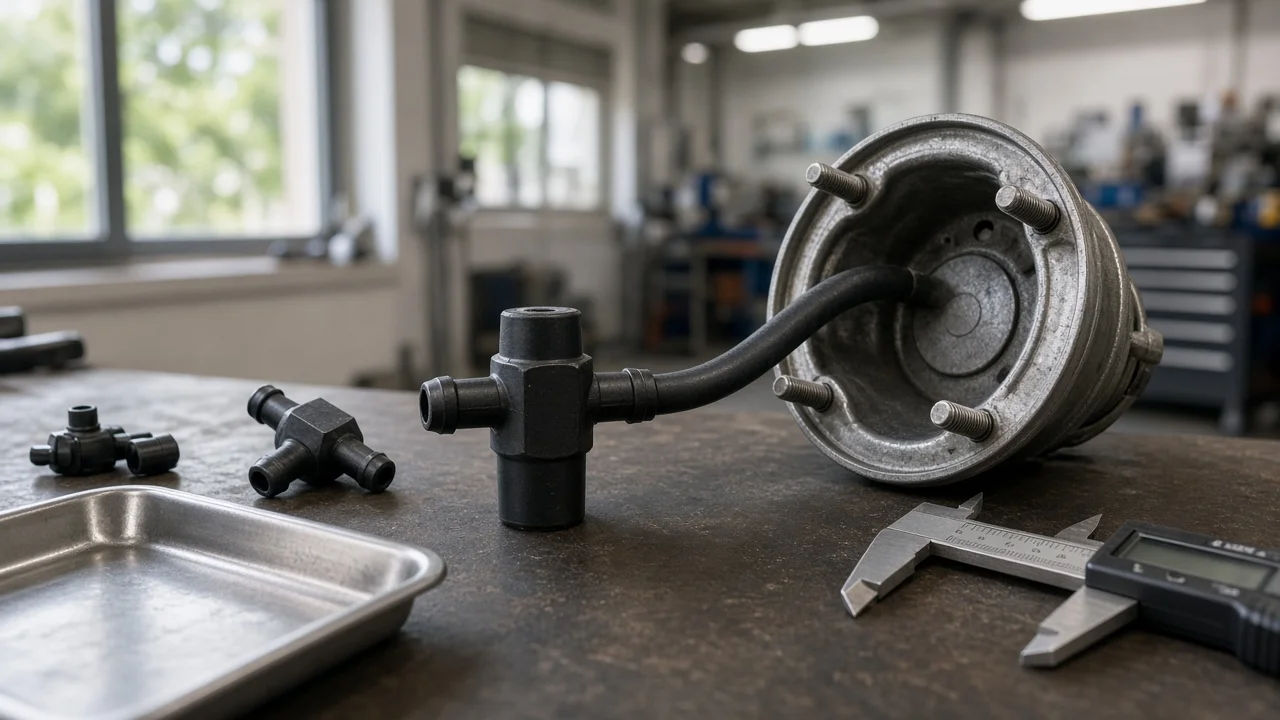
A universal brake booster check valve can restore power assist for less money than a vehicle-specific part, but only if it matches the hose, mounting style and vacuum source on your vehicle. Before buying one, confirm that the valve is actually the problem. This guide covers the symptoms worth recording, the causes that look similar, a sensible order of checks and how to read the results, using your vehicle's service information for specifications and procedures.
Establish the symptoms
The check valve is a one-way valve between the brake booster and its vacuum source. It lets air be drawn out of the booster and stops it from flowing back in, so the booster keeps a vacuum reserve when the engine is off or when intake vacuum drops. When the valve fails, typical signs include a hard first pedal press after the vehicle has been parked, with assist returning once the engine runs for a while; a hiss near the booster or vacuum hose; and, on turbocharged engines, a pedal that turns firm during or right after hard acceleration.
Write down when the problem appears: cold start or warm engine, after sitting for minutes or overnight, at idle, under load or with accessories running. Note recent changes such as a newly installed valve, replaced hose, intake or engine work, or brake service involving brake pads, brake rotors, a caliper or brake fluid. Also describe the pedal itself. A hard, high pedal suggests lost assist, while a soft, spongy or slowly sinking pedal points toward the hydraulic system rather than the check valve.
Distinguish plausible causes
A check valve that leaks backward is supported by assist that disappears soon after shutdown while the pedal feels normal with the engine running; it is weakened if the removed valve seals correctly on a bench test. A valve installed backward usually gives no assist at all from the moment it is fitted, and its flow arrow will point toward the booster. A valve with the wrong barb or stem size tends to fit loosely, hiss at the joint or need extra clamping to seal.
Other causes produce similar complaints. A leaking booster diaphragm or shell grommet often causes hissing at the pedal when it is pressed, an idle dip when braking and loss of reserve even with a good valve. Low engine vacuum or a weak vacuum pump, common on diesels and some modern gasoline engines, reduces assist all the time, usually alongside engine-related symptoms. A cracked, oil-softened or collapsing hose can leak or restrict flow. Hydraulic and friction problems look different: air in the brake fluid gives a spongy pedal, a sticking caliper causes pulling, and friction material or rotors worn past their wear limits cause noise, vibration or longer stops. A new check valve will not fix any of these.
What compatibility means for a universal valve
Universal valves come in two main styles. Inline valves sit within the vacuum hose and have a barbed end on each side. Grommet-mount valves push into a rubber grommet in the booster shell, often with an angled outlet for the hose. Match the style first. For an inline valve, each barb must suit the inner diameter of the hose on that side, and some systems use different sizes toward the booster and toward the engine. For a grommet type, the valve stem must seal in the grommet and the grommet must fit the opening in the shell.
Flow direction must run from the booster toward the vacuum source, and most valves are marked with an arrow or port labels. On turbocharged or supercharged engines the hose sees positive pressure under boost, so the valve must seal reliably against it. Systems with a mechanical or electric vacuum pump, a booster pressure sensor, or a factory hose assembly that combines the valve with a sensor port may lose a function if a generic valve is spliced in. Use hose rated for vacuum and engine bay heat so it does not collapse or soften. Seller vehicle fitment listings help narrow the choice, but compare the new part directly against the one you remove.
Checks in a useful order
Start with safe observations. With the engine off, follow the hose from the booster to its vacuum source and look for cracks, soft spots, kinks, oil contamination and loose ends. Confirm the valve's direction marking and that any grommet is fully seated. With the engine idling and the vehicle secured in park or neutral with the parking brake set, listen for hissing near the booster and hose, keeping hands, hair and clothing away from belts and fans.
Next, run the basic assist checks described in many service manuals. With the engine off, pump the pedal several times to use up the reserve, hold steady pressure and start the engine; the pedal should move down slightly as assist builds. Then run the engine, shut it off, wait the period given in your service information and apply the pedal several times; you should get some assisted applications before it firms up. To check the valve itself, remove it and use a hand vacuum pump: vacuum applied to the booster-side port should hold, while vacuum applied to the engine-side port should pass freely.
Some checks need tools, specifications or a qualified technician. Measuring intake vacuum or vacuum pump output with a gauge only means something when compared with the specification for your engine. Booster leak-down testing, diagnosing a vacuum pump or booster pressure sensor fault, and any inspection of the master cylinder, brake fluid or calipers belong in the same category. If you are unsure how to perform a test safely, leave it to a professional.
Interpret the findings
If the valve passes air in both directions or blocks it in both, it is faulty; replace it with a correctly matched valve and repeat the assist checks to confirm the fix. If the valve tests correctly and the hose is sound but the booster still loses its reserve quickly, suspect the grommet or the booster diaphragm and confirm with a leak-down test before buying a booster. If assist is weak even with the engine running and a good valve, measure the vacuum source before replacing anything on the brake side.
A replacement universal valve that fits loosely, needs extra clamps to stop hissing, or loses assist under boost is not compatible with your system, whatever the packaging claims. Each passing test clears only the component it covers. If a hard pedal remains after the valve and booster are confirmed good, or if the pedal is soft or sinking, the cause lies elsewhere and needs further diagnosis, including the hydraulic system.
Urgency and next action
Stop driving and arrange towing if the pedal sinks toward the floor, the pedal is very hard and the vehicle clearly takes longer to stop, a brake warning light is on, fluid is leaking near a wheel or the master cylinder, or the vehicle pulls hard when braking. Even lost assist alone means much more pedal force is needed, which is hazardous when it happens unexpectedly in traffic. No amount of remaining driving can be considered safe until the cause is found and repaired.
To get the right part or an accurate repair, gather the year, make, model, engine and VIN; whether the engine is turbocharged, diesel or uses a vacuum pump; the valve style; the measured hose inner diameter on each side; and photos of the old valve and hose routing. Add your test results and when the symptoms occur. With that information, a parts counter or technician can confirm whether a universal valve will work or a vehicle-specific part is required.