U0422 Code: BCM Data Fault Symptoms and Diagnostic Steps
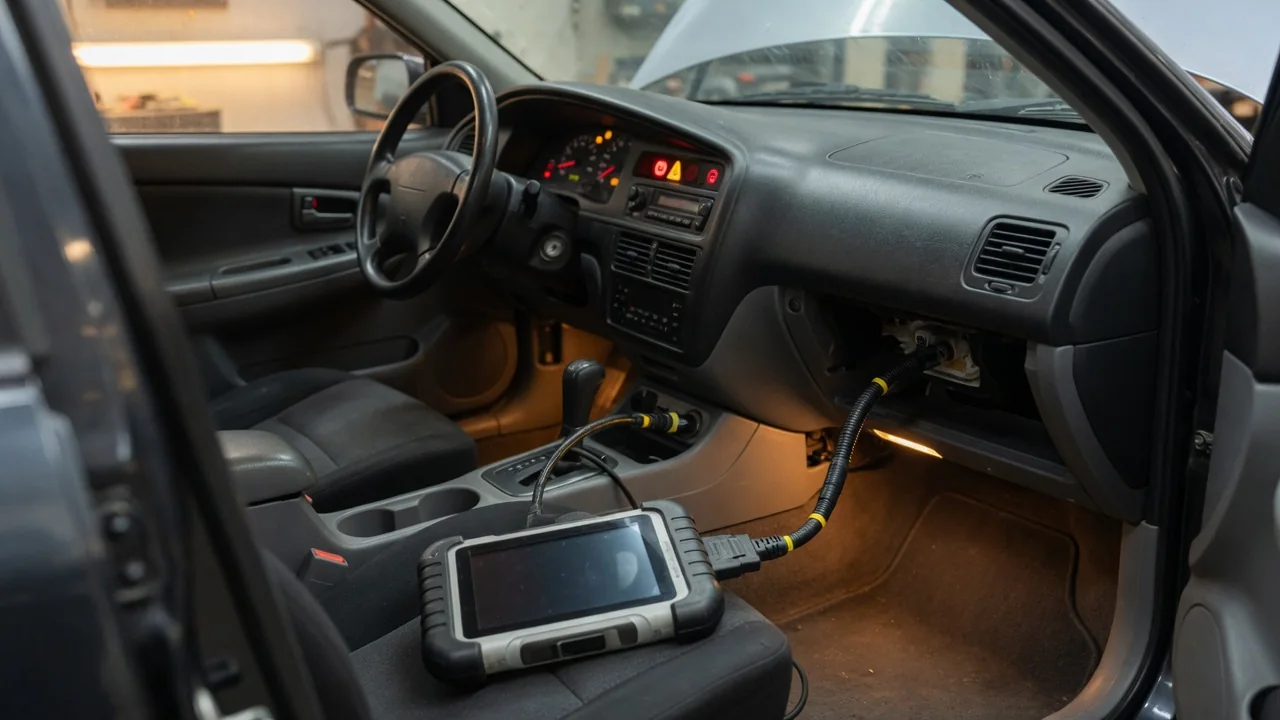
A U0422 code typically points to invalid data associated with the body control module, but the exact definition depends on the vehicle and which module stored it. Because the BCM coordinates many body electrical functions, this network-related fault can show up as lighting, lock, gauge, or accessory issues, or as a stored code with little current behavior. Diagnosis starts with the scan report, not with assuming the BCM has failed.
What U0422 Means on Your Vehicle
On most vehicles, U0422 commonly describes invalid data received from the body control module rather than a simple engine-running fault. That wording still needs confirmation for the year, make, model, and the module that reported it, because manufacturer-dependent codes can differ. The BCM coordinates body electrical functions such as lighting, locks, and various accessories, yet equipment and responsibilities vary by vehicle. A diagnostic scan that identifies who stored U0422 is the first step toward understanding which data was treated as invalid.
Invalid received data is not the same as a complete loss of module communication. U0422 indicates that some message arrived but did not look valid to the receiving controller, which can happen with CAN bus noise, mismatched signals, or intermittent electrical faults. The code alone does not establish that the BCM has failed; it is evidence to interpret. Identifying the module that stored U0422 matters because that controller decided which BCM data was unacceptable, and neighboring modules may report related communication issues that change the diagnostic path.
Symptoms That May Accompany the Code
A U0422 code may be accompanied by irregularities involving lighting, power locks, gauges, and accessories, but not every vehicle or every occurrence produces those effects. Interior or exterior lamps may behave inconsistently, door locks may cycle oddly, instrument readings may look implausible, or convenience features may drop out. Electrical warning indicators or driver messages can appear at the same time. Some stored codes have no obvious current symptoms, especially if the invalid data was brief and the functions returned to normal after the next key cycle.
Warning messages and intermittent electrical behavior are useful clues when they are recorded carefully. Note which functions act up together, whether the problem appears at startup or later, and whether it persists after the vehicle has been running. That symptom history helps a technician compare live data with the stored U0422 information. These symptoms can also have other causes, including switch, lamp, or instrument faults unrelated to module communication, so they cannot independently confirm a BCM problem.
Possible Sources of Invalid BCM Data
Unstable battery voltage or a weak charging system can disrupt module operation and make otherwise normal messages look invalid. Low supply, voltage spikes after jump-starting, or poor power and ground connections at the body control module can produce U0422 without a failed controller. Corrosion, loose terminals, and damaged wiring harnesses create similar conditions. Because network modules share a CAN bus, a power-related glitch in one area may be reported as invalid BCM data by another module that simply received a bad frame.
Wiring, connectors, moisture, and network integrity all deserve evidence from inspection and testing rather than assumption. Water intrusion at door, kick-panel, or underhood connectors can distort signals the BCM uses or sends. An incorrect input reaching the BCM, such as a faulty switch or sensor, may affect the data it broadcasts even when the module itself remains functional. Software, configuration, recent module work, and internal hardware faults are also possible, but they require vehicle-specific diagnostic support before programming or replacement is considered.
Safe Observations Before a Diagnostic Appointment
Before a diagnostic appointment, record warning messages and which functions misbehaved while the vehicle is parked. Do not try to reproduce electrical faults on the road. Write down whether lighting, locks, gauges, or accessories were involved and whether the behavior was brief or ongoing. Note recent battery discharge, jump-starting, water intrusion, accessory installation, or electrical repairs, without treating that timing as proof of cause. Those observations give the technician context for the U0422 code without requiring any disassembly.
Preserve the complete scan report and available fault details before anyone clears codes or disconnects the battery. Snapshot data, pending versus stored status, and companion codes often disappear after a reset and are difficult to recover. Limit owner checks to accessible visual observations such as obvious corrosion, loose battery cables, or standing water near modules. Connector disassembly, electrical probing, and module work belong with a qualified technician, because probing a CAN bus or BCM connector without the right method can create new communication faults.
How Professional Testing Narrows the Cause
Professional testing starts by scanning all relevant modules, not only the engine controller. A basic engine-code reader may miss U0422 entirely or omit the module that stored it, leaving an incomplete picture of module communication. Interpreting the U0422 code alongside related codes, fault status, freeze-frame or snapshot data, and vehicle-specific diagnostic information should happen before any parts are selected. That comparison shows whether invalid BCM data is isolated, paired with other network codes, or tied to a particular input that the BCM was broadcasting.
A technician then verifies battery condition, module power and grounds, network integrity, and relevant input data using methods appropriate to that vehicle. Those checks look for unstable supply, poor connections, and CAN bus problems that could make received data look invalid. Programming or BCM replacement needs supporting evidence, not the code by itself, and is followed by configuration, coding, or setup required for that vehicle. Confirmation is complete only when both the U0422 code and the original symptoms remain resolved after a complete diagnostic scan.
When Driving Should Wait
The U0422 code by itself cannot establish whether the vehicle is safe to drive. Urgency depends on the affected functions and any electrical warning indicators, not on the presence of a stored communication fault. If visibility, essential lighting, vehicle control, or reliable operation is compromised, stop safely and arrange assistance rather than continuing. Intermittent body-electrical glitches can still leave lighting or lock behavior unpredictable, so treat current function as the deciding factor rather than assuming a network code is only a nuisance.
Persistent or recurring U0422 activity deserves prompt diagnosis even when the vehicle appears to operate normally, because intermittent electrical faults can return without warning. Clearing the code does not repair its cause; the same invalid data condition can reset as soon as the modules communicate again. After testing, further observation may be needed if the fault is intermittent. A follow-up diagnostic scan confirms whether U0422 remains gone and whether lighting, locks, gauges, and accessories behave consistently under the same conditions that first raised concern.