U0420, U0428 and U0429: Understanding Steering Data Faults
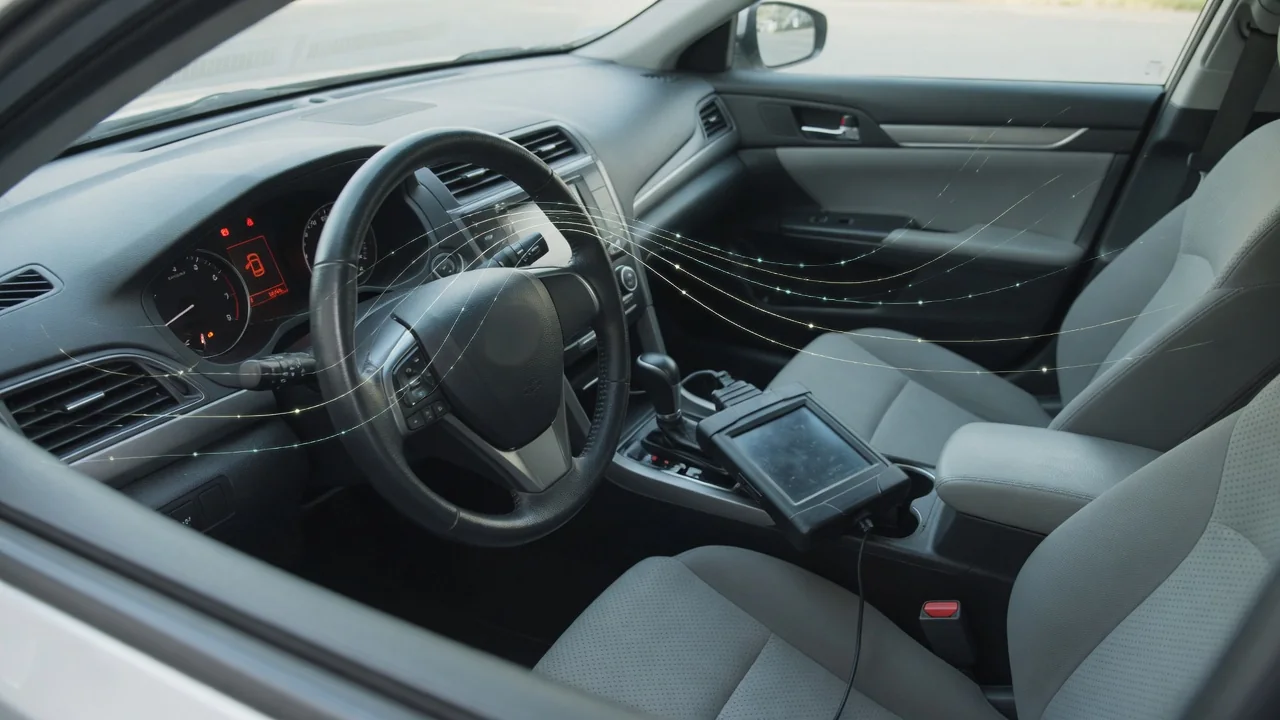
U0420, U0428, and U0429 are network communication codes that report invalid data received from steering-related modules. Depending on the vehicle, they may involve the power steering control module, steering angle sensor module, or steering column control module. These faults can affect stability control and require careful interpretation of companion trouble codes, live steering data, and whether calibration or electrical repair is needed.
U0420: Verify the Power Steering Data Fault Description
Before treating a U0420 code as a power steering problem, confirm the exact definition and any suffix in service information for that make, model, and year. Manufacturer-dependent codes can name different modules or data paths, so a generic description is not enough. When the vehicle-specific definition matches, U0420 typically means a receiving module recorded invalid data received from the power steering control module, which is the named data source rather than automatically the failed part.
An invalid-data report is evidence to interpret, not proof that the power steering control module has failed. The module that stored U0420 is the one that rejected the message; the named source may still be healthy while supply voltage, grounds, network communication, or another module's interpretation is at fault. Replacing the steering module without confirming live steering data, companion trouble codes, and module power and ground conditions can leave the original network communication problem unresolved.
U0428: Understand the Steering Angle Data Concern
A U0428 code likewise needs vehicle-specific verification before it is treated as invalid data from the steering angle sensor module. When that association is confirmed, the concern is that another controller received steering angle information that did not look plausible. Stability control and related traction functions often use that angle to judge yaw and driver intent, so implausible data may trigger warnings or limit those functions even if the steering wheel still feels normal.
Deciding what actually needs attention depends on more than the U0428 heading. A technician should review steering angle calibration status, whether live steering data tracks wheel movement in a plausible range, and which companion trouble codes appeared with it. A missed calibration after alignment or battery work can look similar to a sensor or wiring fault. Those findings separate a setup issue from a network communication problem or a genuine plausibility failure in the angle data.
U0429: Identify the Steering Column Data Source
Treat a U0429 code the same way: confirm the vehicle-specific definition before interpreting it as invalid data received from the steering column control module. Column electronics vary widely. Some vehicles use that module for lock, column-mounted switches, or assist interfaces, while others place those functions elsewhere. Supported features follow the vehicle's equipment and network design, so the same U0429 label can describe a different data path from one platform to another.
U0429 does not by itself identify a defective column assembly, clockspring, connector, or individual sensor. Those parts sit in the same area and can affect communication, but the code only reports that a receiver judged column-related data invalid. Clockspring circuits, harness connectors, and sensors share power and network paths that can corrupt messages without a mechanical failure of the column. Distinguishing those possibilities requires inspection and data review, not an assumption that the entire column must be replaced.
Warning Lights, Steering Changes and Driving Decisions
Dashboard messages tied to U0420, U0428, or U0429 can include steering, stability-control, or traction-control warnings, but which lamps appear and which functions drop out vary by vehicle. Assist may remain, or it may feel different, while stability control is limited because it no longer trusts the steering data. A normal steering feel does not establish that those functions remain available. Follow the dashboard messages and the owner's manual rather than assuming the car is fully protected because it still turns.
If steering becomes unexpectedly heavy, erratic, or difficult to control, stop safely and arrange assistance rather than continuing to test the problem. Record when warnings appear and whether they follow startup, turning, or recent service, because that timing helps a technician later. Do not deliberately reproduce a fault on the road. Notes about ignition cycle, temperature, and whether the concern is constant or intermittent are useful; attempting to force the condition while moving is not.
Possible Causes and Safe Information to Gather
Possible causes for these invalid-data reports include supply-voltage disturbances, module power and ground faults, connection problems, network communication faults, and incorrect initialization after a battery disconnect or programming event. Several related codes can appear together because they share a bus, a ground, or a power feed; that pattern often points to a common electrical or data problem rather than proving that multiple modules have failed. Each stored code still needs its own definition checked against the vehicle.
Recent battery trouble, alignment work, or steering service is diagnostic context, not proof of cause. A low battery can scramble initialization; an alignment can leave steering angle calibration incomplete; column or rack work can disturb connectors. Owners should record warnings, symptoms, and service history and stop there. Steering-column disassembly, connector probing, and airbag-adjacent work belong with qualified professionals because those areas include restraint circuits and can be damaged by casual testing.
Evidence Needed for Calibration and Electrical Repair
A useful diagnosis starts with a scan tool that can access the relevant chassis modules, not only the engine controller. Preserve code status, companion trouble codes, and any available event data before clearing anything, because that snapshot shows which receiver objected and under what conditions. Professional checks of live steering data, module supplies, and network integrity then guide the repair decision: whether the messages are missing, out of range, or corrupted by power and ground problems.
Steering angle calibration is appropriate only when vehicle-specific procedures and diagnostic findings support it. It cannot correct damaged wiring or an unresolved electrical fault, and performing it over a bad network can produce another invalid-data event. After any repair, verify calibration status, warning behavior, and whether U0420, U0428, or U0429 return, using the manufacturer's procedure. Clearing codes alone does not confirm a repair; the modules must communicate valid data through a complete drive cycle or specified test.