U0414 Code: Meaning, Symptoms, and Diagnostic Next Steps
The U0414 code indicates a network-level concern: a receiving module has detected invalid data from another control module. Before assuming a failed fuel pump control module or four-wheel-drive clutch module, the exact vehicle application must be confirmed. Because this is a communication diagnostic trouble code, it records that a data-validity threshold was crossed, not that a specific component is defective. Symptoms such as no-start, stalling, or warning lights can appear alongside U0414, yet the code alone does not explain why they occur or which module origins should be suspected first.
Confirm What U0414 Means for the Vehicle
U0414 is not a universal definition with one fixed meaning. The same base code can be reported by different modules depending on year, make, model, and powertrain. In many light trucks and SUVs, U0414 indicates invalid data received from the four-wheel-drive clutch control module, often accompanied by a service 4WD message. In other applications, however, the fuel pump control module interpretation appears, making the code's context essential before any diagnostic conclusion.
An invalid-data code means the receiving controller expected a specific message or value but saw data that fell outside plausible parameters, arrived at the wrong time, or failed an internal checksum test. This is a communication or data-validity concern rather than a direct electrical test result. A U0414 therefore does not prove the named module has failed; it only shows that the reporting module rejected the data it received. Vehicle-specific service information must identify which module sent the defective message and which one stored the code.
Identify Symptoms Without Assuming Their Cause
Symptoms tied to U0414 vary with the module that reports the code and the vehicle's network architecture. Drivers may notice an illuminated warning light, a message such as "Service 4WD System," or a loss of four-wheel-drive engagement. If U0414 is instead associated with a fuel pump control module, symptoms can include an extended crank, hesitation under load, or an engine that cranks but will not start. Recording these observations without assigning cause is the first diagnostic step.
A no-start or stalling event may occur while U0414 is stored, but this code should not be treated as proof of a fuel-delivery fault. The code could be an old or intermittent record unrelated to the current complaint. Exact conditions—engine temperature, vehicle speed, road surface, and whether the symptom appeared once or repeatedly—help a technician decide whether the invalid-data code and the drivability problem share a common cause. U0414 alone cannot account for every symptom the driver observes.
Understand What Can Produce Invalid Module Data
Interrupted module power or poor grounds are common causes of invalid data. A module that briefly loses voltage or ground can transmit a partial or implausible message, causing the receiving controller to set U0414. Connector damage, corrosion, or loose terminals on either the sending or receiving module can produce the same result. Network wiring faults—such as a chafed CAN bus wire, a short to ground, or excessive resistance at a splice—may allow communication to occur but corrupt the data enough to trigger the code.
An upstream sensor or another module can also supply implausible information that affects the reported data. For example, if a vehicle speed signal is missing or outside its expected range, a module that uses that signal may send a derived value the receiving controller rejects. Software or configuration mismatches are less common but possible, particularly after a module replacement or reprogramming. These causes should be considered only when vehicle-specific diagnostic information supports checking them rather than as routine suspicion.
Preserve Useful Evidence Before Clearing Codes
Before any codes are cleared, a full scan report should be saved, including the code status (current, pending, or history) and any freeze-frame data. Freeze-frame records capture operating conditions at the time the code set, such as engine speed, vehicle speed, and module temperatures. This evidence can show whether U0414 appeared during a particular event and can help reproduce the fault later. Without this record, intermittent communication problems become much harder to trace.
Recent battery problems, jump-starts, repairs, or aftermarket accessory installation are worth documenting because low system voltage or disturbed connectors can create invalid-data codes. The driver should record when symptoms appeared and what was happening at that moment. Dashboard messages and readily visible damage—such as a loose battery terminal, an unplugged connector, or a blown fuse—are safe observations. Probing connectors, opening fuel lines, or bypassing controls should be left to a professional, as these actions can create new faults or mask the original one.
Follow a Vehicle-Specific Diagnostic Path
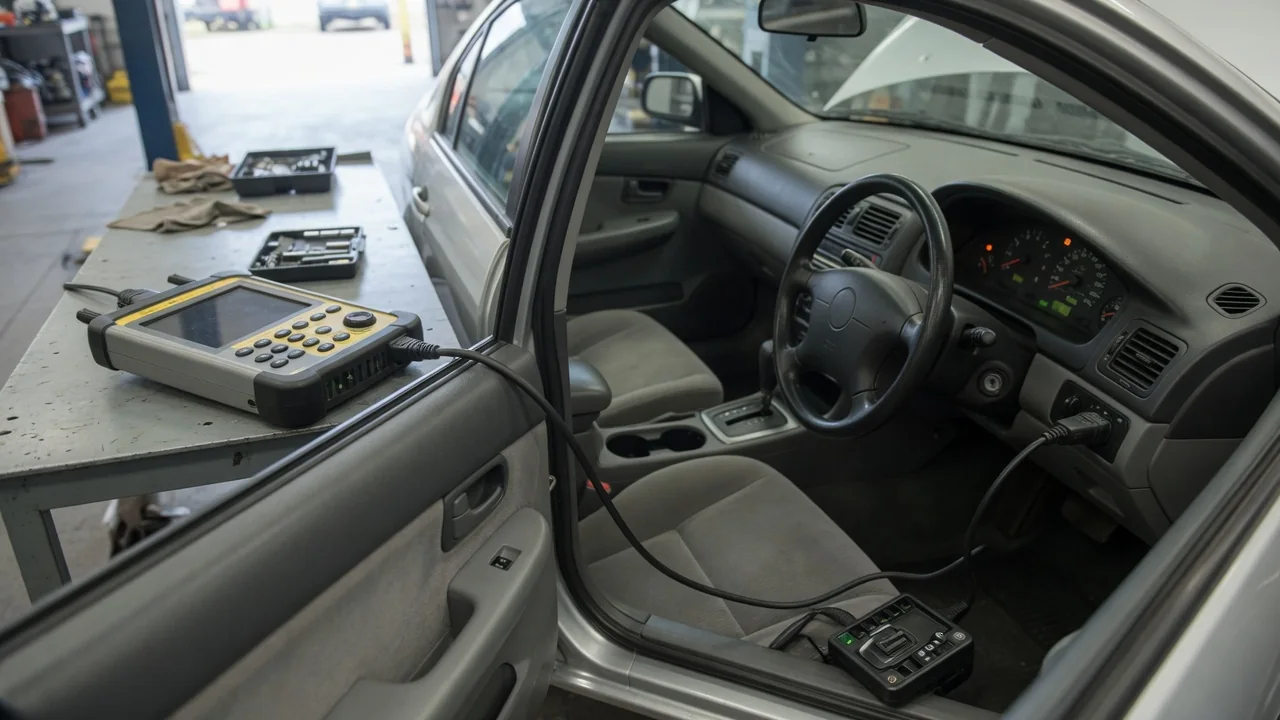
A capable scan tool is often needed to identify which module reported U0414 and to retrieve companion codes across the vehicle network. Companion codes, such as U-codes from other modules or P-codes related to the same event, can point toward the actual fault. Without this information, a technician may replace the module identified in the generic definition even though a different module or wiring problem caused the invalid data. Manufacturer-specific diagnostic procedures often begin with a network test and a check of all module communication statuses.
Professional checks of module power, grounds, network integrity, and relevant live data follow the manufacturer's diagnostic path. If the verified definition concerns fuel pump control, fuel-system testing must be performed with appropriate equipment. Fuel pressure, volume, and electrical current draw can establish whether the pump and its module are working correctly. However, a fault must be demonstrated before any module or pump replacement is justified; clearing the code or swapping parts without a confirmed cause may leave the original problem and create a new one.
Decide When to Stop Driving and Confirm the Repair
Repeated stalling, loss of propulsion, or a vehicle message instructing the driver to stop warrants pulling over safely and arranging assistance. The specific risk depends on where the fault lies and how the vehicle behaves, not on the presence of U0414 alone. A vehicle that briefly shows a service 4WD message and continues to run normally may be safe to drive to a repair shop, while one that stalls in traffic or cannot maintain speed should not be driven further. The code itself cannot establish safety.
Confirming a repair involves more than clearing the warning. The vehicle should be retested under the conditions that originally set the code, and a follow-up scan should show no current U0414 or related codes. Restored operation—such as four-wheel-drive engagement working normally or the engine starting reliably—is a necessary part of verification. Only when the original symptom is gone, the data communication returns to expected values, and the scan remains clear can the fault be considered resolved.