U0403 Code: Meaning and Transfer Case Diagnostic Checks
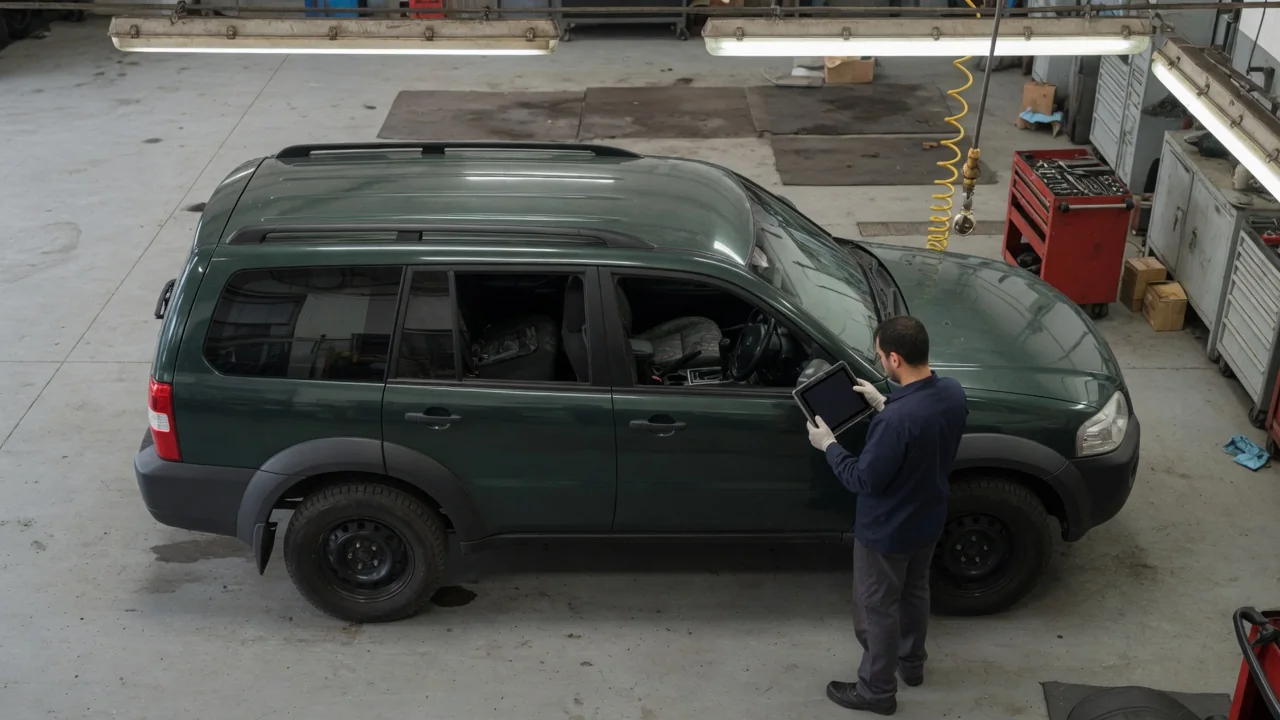
The U0403 code on a four-wheel-drive or all-wheel-drive vehicle usually points to a network communication complaint, not a finished diagnosis. A receiving module has flagged invalid data it associates with the transfer case control module, but that flag does not prove the module has failed. Confirm the exact definition for the year, make, model, and drivetrain, then treat related codes such as U0404 and U0414 as separate pieces of evidence that still need vehicle-specific interpretation.
What U0403 Means on the Specific Vehicle
U0403 is a manufacturer-dependent network code, so the first useful step is to look up the exact definition and diagnostic procedure for that vehicle's year, make, model, and drivetrain. On many 4WD and AWD systems the description is invalid data received from the transfer case control module, yet that wording is not universal. Without confirming the published meaning, a technician can chase the wrong module, ignore a vehicle that never had a transfer case controller, or treat a stored history flag as a current mechanical failure.
The module that stored the U0403 code is the reporter, not necessarily the failed part. A receiving controller can reject a message it considers implausible because of a wiring drop-out, a corrupted frame, a missing companion signal, or an unexpected transfer-case status, even while the transfer case control module is still operating. Establish which module recorded the code, whether the vehicle actually has the relevant AWD system hardware, and whether the data path is even present on that drivetrain before interpreting the complaint as a transfer-case failure.
Symptoms to Record and When to Stop Driving
A U0403 complaint may appear with a 4WD warning light, an AWD system message, locked-out drive modes, or delayed engagement, but none of those signs is guaranteed. Some vehicles only store the code and keep driving in a default mode; others refuse a requested range or show intermittent binding as the transfer case tries to follow conflicting commands. Record when the warning appears, which drive mode was selected, road surface, speed, and any recent battery or electrical work, because those details later separate a network event from a mechanical transfer-case issue.
Dashboard symptoms cannot identify an electronic module, a wiring fault, or a mechanical transfer case problem on their own. The same 4WD warning light can follow invalid data, a low-voltage event, or a stuck actuator. If the vehicle shows unexpected drivetrain engagement, severe binding, grinding, or compromised control, stop in a safe place and arrange professional assistance rather than cycling modes to reproduce the fault. Forcing range changes on a disputed network can increase mechanical stress without producing a cleaner diagnostic scan report.
Safe Checks Before Clearing Fault Information
Before any codes are cleared or battery power is disconnected, preserve the complete diagnostic scan report, including which modules responded, code status as active or stored, freeze-frame or event data if available, and any companion fault codes. A basic code reader often talks only to the powertrain controller and may never see a transfer case control module or the module that actually stored U0403. A vehicle-capable scan tool is needed to capture the network communication picture that later testing will depend on.
Owner checks should stay limited to dashboard messages, service history, and visible damage or moisture in areas that can be inspected with the vehicle off and parked. Do not probe connectors or apply jumper wires to force a module awake. A recently discharged battery or a jump-start is relevant history because low voltage can corrupt network frames and leave invalid data flags, yet that history does not establish the cause. The same U0403 code can remain after voltage recovers if a connector, ground, or controller issue is still present.
Professional Network Testing and Evidence-Based Repairs
Professional diagnosis starts with a full-module scan that identifies the reporting module, lists companion fault codes, and shows whether U0403 is currently active or only stored. Vehicle-specific service information then directs testing of module power and ground, network integrity, and the input data the transfer case control module is expected to publish. Those checks belong in a shop environment because they require the published pin data, known-good voltage ranges, and a scan tool that can watch live messages without improvising circuit bypasses.
Repair paths should follow what the tests actually show. A missing supply or poor ground is corrected at the circuit, damaged wiring or a corroded connector is repaired, and an erroneous sensor or switch input is addressed if it is feeding implausible transfer-case status onto the network. Software updates, module replacement, programming, or calibration are reserved for confirmed needs after power, ground, and communication have been proven sound. After any repair, verify restored drive-mode operation and rescan to confirm U0403 and related network communication codes do not return.
Handling U0404 and U0414 in the Same Scan Report
If the scan also lists U0404 or a U0404 code, confirm the exact identifier and its vehicle-specific definition before assigning it a role. U0404 is another invalid-data or implausible-message family code on many platforms, but the source module, the receiving module, and the published description can differ from U0403. Treat it as a separately recorded event: note which controller stored it, whether it is active, and whether that vehicle's drivetrain even uses the data path the definition names.
The same verification applies to a U0414 code: confirm the reporting module, the published meaning, and the applicable drivetrain configuration before linking it to the transfer case control module. Companion codes on a network do not prove a shared failed component; they can reflect one voltage event, two independent message paths, or a downstream controller reacting to invalid data it received. During a U0403 investigation, interpret U0404 and U0414 on their own terms and let vehicle service information plus test evidence set diagnostic priority rather than assuming one part explains every flag.