U0401 Code: Meaning, Symptoms, Causes, and Safe Next Steps
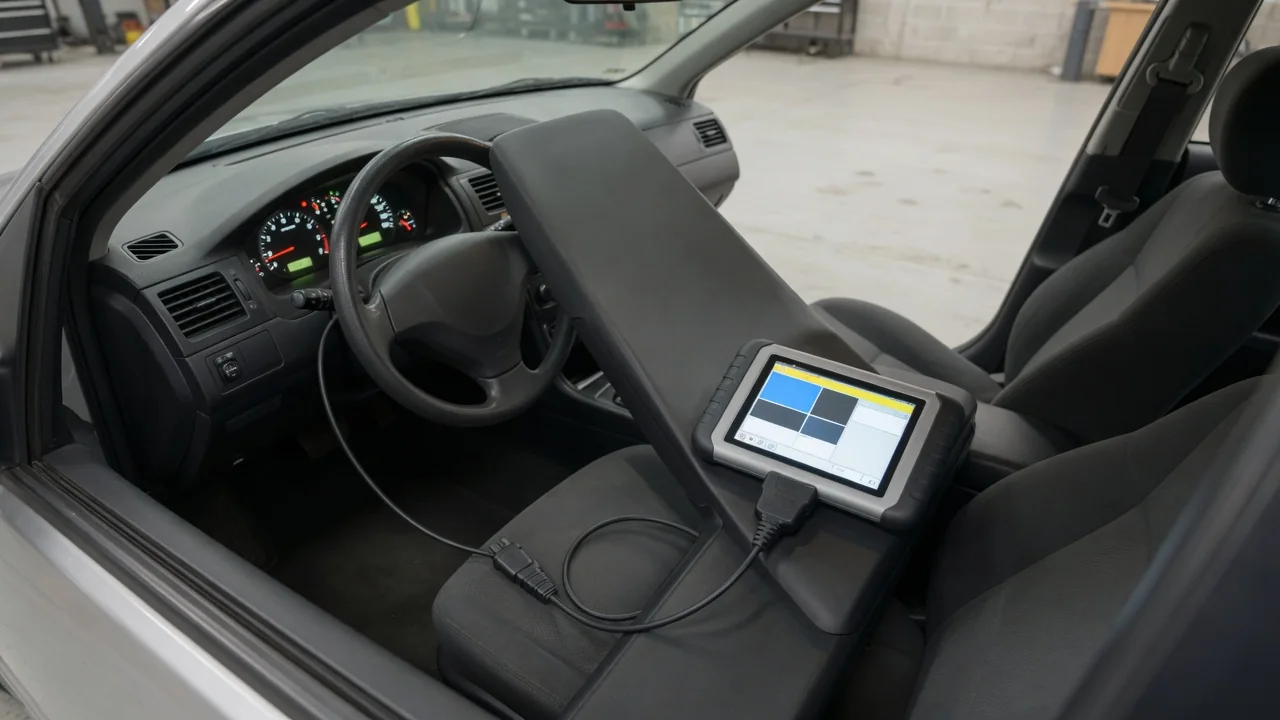
The U0401 code is a network-related diagnostic trouble code that generally means a receiving control module has judged data from the engine control module or powertrain control module invalid. A U0401 code does not, by itself, prove that any one part has failed. Symptoms, setting criteria, and the reporting module vary by year, make, model, and powertrain, so the stored message is evidence to interpret with manufacturer information rather than a ready-made repair decision.
What U0401 Means on Your Vehicle
On many vehicles, U0401 reports that a module on the network received a message it considered invalid from the engine control module or powertrain control module. That judgment can involve checksums, expected ranges, missing updates, or data that does not match what the receiving software was written to accept. The exact definition, any suffix, and the conditions that set the code are manufacturer-dependent, so confirm the year, make, model, powertrain, and factory diagnostic information before treating a generic description as the vehicle's official meaning.
Identifying which module stored U0401 matters because the report is a complaint about received data, not a verdict that the engine control module has failed. The same code can appear when the source is transmitting implausible values, when CAN bus module communication is disturbed, or when the receiver itself is misinterpreting a valid frame. An invalid data received message alone cannot establish whether the origin is an input problem, an electrical fault, a software issue, or a communication disturbance; companion trouble codes and vehicle-specific tests are needed to separate those possibilities.
Symptoms and When to Stop Driving
Symptoms associated with a U0401 code depend on the vehicle and on which module reported the invalid data. Drivers may see a malfunction indicator or other warning lamps, reduced power, rough running, delayed or harsh shifting, or disabled convenience and control functions that rely on shared network messages. In other cases the code is stored with little obvious drivability change because the receiving module logged a data quality concern without immediately limiting operation. Those possibilities cannot be ranked from the code number alone.
U0401 cannot establish driving safety by itself. If the vehicle stalls, loses substantial power, or shows abnormal braking or steering response, stop in a safe location and arrange assistance rather than continuing to drive. Follow the owner's manual for any warning-light instructions, including whether a lamp calls for immediate stop or continued operation with reduced function. Persistent warnings still deserve prompt diagnosis, because an intermittent network or powertrain data problem can return under load even when the vehicle currently feels normal.
Electrical, Data, and Software Problems That Can Trigger U0401
Unstable battery voltage, weak grounds, or interrupted module power can distort the frames a control unit sends or the way another unit reads them, which may contribute to invalid data received flags and additional communication-related codes. Damaged wiring, loose or corroded connectors, moisture intrusion, and CAN bus network faults are also possibilities, but each needs supporting evidence rather than assumption. A visual clue such as a crushed harness or water in a connector is useful context; it still does not prove that the engine or powertrain control module is the failed part.
An engine-management fault or an implausible sensor or switch input can cause the powertrain control module to broadcast values another module rejects as invalid, even when the network itself is intact. Companion trouble codes for sensors, actuators, or other network participants help establish that context. Software, configuration, and internal module faults can produce the same U0401 result if calibration, programming, or a hardware defect changes how data is assembled or interpreted. The stored code lists a data-quality complaint; it does not confirm any single cause among those electrical, data, and software paths.
Safe Checks and Information to Save Before Clearing the Code
Before clearing anything, record the exact U0401 code, any suffix, the reporting module if the scan tool shows it, whether the code is current or stored, all available companion trouble codes, and freeze-frame or event data. That snapshot often captures engine speed, load, voltage, and operating mode at the moment the invalid data was judged, which later tests may not recreate. Note when the warning appeared, whether it returns after a key cycle, and any recent battery discharge, jump-start, electrical work, water exposure, or repair that could have disturbed module communication.
With the vehicle parked and powered off, limit owner checks to visible damage or corrosion in readily accessible areas such as battery terminals, obvious harness routing, and connectors that can be seen without disassembly. Do not unplug modules or probe wiring; those actions can create new faults and erase evidence. Basic code readers may not reach every control unit on the CAN bus, so a U0401 code found in one module can coexist with unread faults elsewhere. Clearing codes or disconnecting the battery can wipe freeze-frame data that a technician would use to reconstruct the event.
How a Technician Finds the Source of Invalid Data
A technician typically starts with a full-module scan to see which units reported faults, which codes are active versus history, and which diagnostic steps the manufacturer specifies for that U0401 definition. Power supply, grounds, and relevant companion faults are assessed before any control module is condemned, because a voltage drop or ground issue can make valid data look invalid across several receivers. The scan results guide whether attention belongs on the engine or powertrain control module as a data source, on the reporting module as a receiver, or on the network path between them.
Professional evaluation then compares the source data other modules expected with wiring integrity and observed CAN bus behavior, using factory procedures rather than improvised connector work. That process looks for interrupted communication, implausible broadcast values, and receiver-side interpretation problems without treating the first stored code as a parts list. A one-time scan has limits for an intermittent fault, because the invalid data may not be present when the vehicle is sitting in the bay. Saved freeze-frame and event information helps reproduce the concern under similar operating conditions in a controlled setting.
Repairs That Address the Confirmed Cause
Repairs should follow confirmed test results rather than the presence of U0401. If supply-voltage or ground faults are found, correcting those conditions can restore stable module communication and valid broadcast data. Damaged wiring or connectors are repaired when inspection and electrical tests show they are interrupting or corrupting messages. If an input fault is causing the powertrain control module to send values another module rejects, fixing that input is the relevant correction. None of those paths is selected by the code number; each is selected by evidence.
Module programming or replacement is considered only after vehicle-specific software and configuration requirements are checked, because a correctly functioning unit can still set invalid-data complaints if it is misconfigured for that powertrain. Replacement modules often need setup that matches the vehicle, and U0401 alone does not justify purchasing one. After the confirmed cause is addressed, verification includes rescanning all relevant modules, checking the functions that had been affected, and confirming that the fault does not return under operating conditions similar to those captured in the original freeze-frame data.