U0198–U0214 and U0253–U0275 Codes: Lost Communication With Body and Infotainment Modules
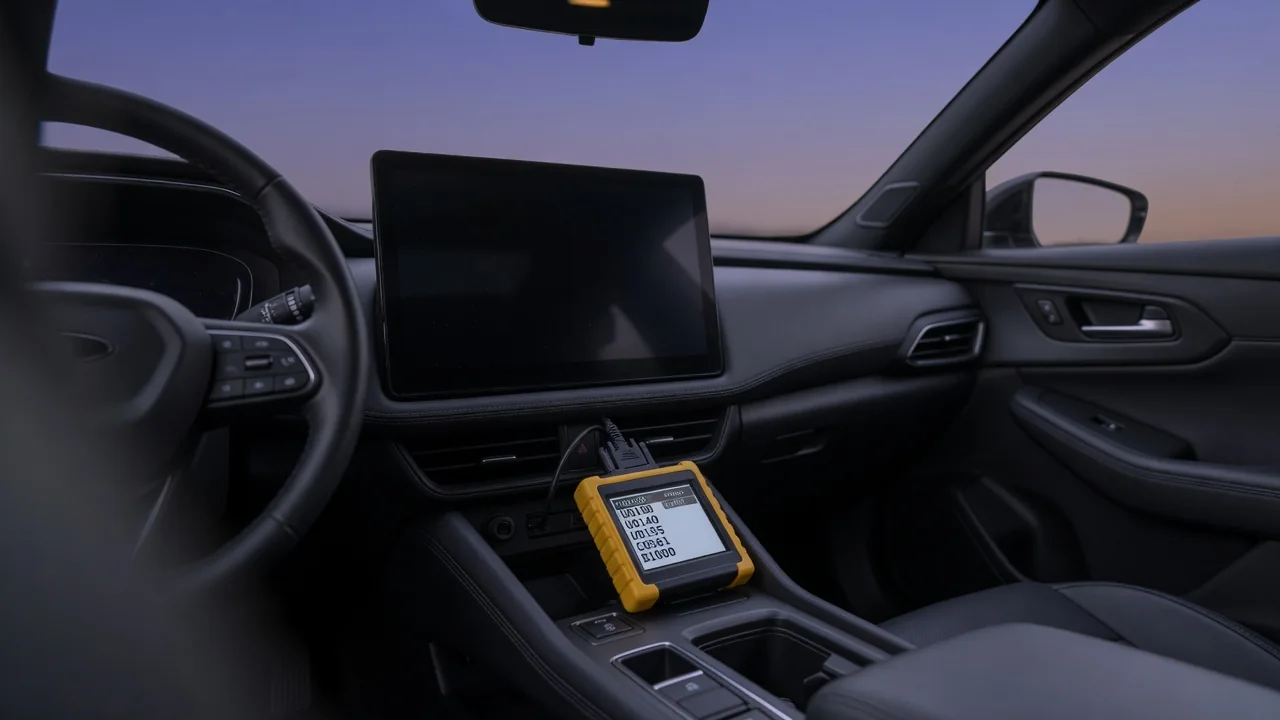
Lost communication trouble codes in the U0198–U0214 and U0253–U0275 ranges appear when a control module stops receiving expected messages from another module over the vehicle communication network. These codes often point to telematics, door, steering column, remote function, infotainment, front control interface, or camera modules. While the code name suggests a failed module, the actual problem is usually wiring, voltage, ground, or network-related. This guide explains what the codes mean, how to confirm the vehicle-specific definition, and how to narrow down the cause safely before replacing parts.
What a Lost Communication U-Code Means and Why You Must Verify the Definition
U-codes are network diagnostic trouble codes. The module that stores the code has stopped receiving expected messages from another module, but this does not prove the named module has failed. The named module may be offline due to its own power or ground loss, a wiring break in the communication path, or a network-wide fault. Treat the code as a symptom, not a verdict against the module itself.
Code descriptions and module names differ by manufacturer, model year, and network design. A code may mean one thing on a Ford and something else on a Toyota. Before interpreting any code in this range, confirm the vehicle-specific meaning in service information or with a capable scan tool. Also distinguish the module that reports the code from the module named in the code. The reporting module can often communicate, while the named module is silent. Checking which modules respond to a scan is the first diagnostic step. Current codes differ from history codes; one-time codes can be set by low voltage, jump starts, or battery work.
U0198 and U0199: Telematics and Door Module Communication Faults
U0198 is commonly associated with a telematics control module and U0199 with a door control module, but exact wording varies. Symptoms may include connected services, emergency calling, or remote app features not working for a telematics fault. A door module fault may leave windows, mirrors, or door locks on one door not responding. These symptoms help localize the issue but are not universal, so the manufacturer definition must be confirmed first.
Door module wiring passes through a flexible hinge area and can fatigue over time. Visible damage or moisture at accessible connectors is safe to check, but cutting or probing harnesses is not recommended. A telematics fault can also involve its own backup power source or antenna circuits on some vehicles. This needs verification in service information rather than assumption because those circuits are not shared with other modules.
U0212 and U0214: Steering Column and Remote Function Module Codes
U0212 is commonly linked to a steering column control module and U0214 to a remote function actuation module, but definitions vary. Possible symptoms include stalk switches, horn, or turn signal inputs not responding for a steering column fault, while a remote function fault may affect key fob functions, remote start, or keyless entry. No single symptom always appears, so scan data is necessary to see whether the module is actually offline or the inputs are not being recognized.
The steering column area can contain airbag and clockspring circuits, so disassembly or probing should be left to a trained technician. A weak key fob battery or a separate security issue can look like a network fault because both block remote commands. A scan tool can read whether the remote function module is receiving the fob signal and responding on the network, separating a communication loss from a credential or signal problem.
U0253 and U0256: Infotainment and Front Control Interface Communication Loss
U0253 is often associated with an infotainment or accessory interface module and U0256 with a front controls interface module, but names vary by brand. Typical observations include a blank or rebooting screen, lost audio, Bluetooth, or navigation, or faceplate buttons and climate controls not responding. These symptoms are not universal because some infotainment functions are distributed across several modules, but they point toward a communication loss rather than a display hardware failure.
Software problems, failed updates, or internal module resets can cause intermittent communication loss. Confirming these needs dealer-level tools or software checks because the module may drop offline only during certain operations. Note whether symptoms change with ignition cycles, temperature, or accessory use. A module that works when cold but fails when warm suggests a solder joint or component issue, while a loss only after a software update points to a programming conflict.
U0264 and U0275: Camera and Other Module Codes That Need Model-Specific Lookup
U0264 is commonly tied to a rear or parking camera module, with a missing or frozen backup image as a possible symptom. The exact definition must be confirmed for the specific vehicle because camera networks vary. U0275 does not have a meaning that can be safely presented as universal. Readers must look it up for their exact make, model, and year before drawing conclusions, since it may refer to a different module or system entirely.
Camera wiring through a tailgate or liftgate can flex and corrode over time. Visual checks of accessible connectors and seals are safe, but probing or disconnecting wiring is not recommended. While the camera is malfunctioning, do not rely on it for reversing safety. Use mirrors and direct visual checks until the system is repaired, because a frozen image can hide obstacles behind the vehicle.
Shared Causes Across These Codes: Power, Ground and Network Wiring
Low or unstable battery voltage, charging system problems, and poor grounds are common shared causes that should be ruled out before condemning any module. A weak battery can cause multiple modules to drop offline at startup or during cranking, setting several lost-communication codes. Check the battery condition and charging voltage first, because fixing a voltage problem may resolve several codes at once.
A damaged network wire, a corroded connector, a poor splice, or water intrusion can make several modules drop offline at the same time. A blown fuse or a failed power feed to one module can cause a single, isolated lost-communication code; fuse locations must come from the owner's manual or service information. Aftermarket accessories, recent collision repair, or recent electrical work can disturb network wiring, so this history is worth reporting to a technician.
Safe Diagnostic Logic and When Professional Testing Is Needed
A safe diagnostic order begins with recording all codes and freeze frame data, checking battery condition, and noting which modules respond to a scan. Then clear the codes and see which ones return. Codes that return immediately are more likely to be active faults, while those that stay gone may have been one-time glitches. This process avoids chasing history codes caused by a one-time low-voltage event.
A code name alone cannot confirm a failed module. Replacing modules without network testing can waste money and still leave the fault in place. Network resistance, voltage, and waveform tests, module programming, and software updates or configuration usually need professional equipment and service information. Prompt professional inspection is advised if the codes come with warning lights, safety-system messages, steering column or airbag concerns, or loss of camera or emergency-call functions.