U0167 and U0168 Codes: Immobilizer and Security Communication Faults
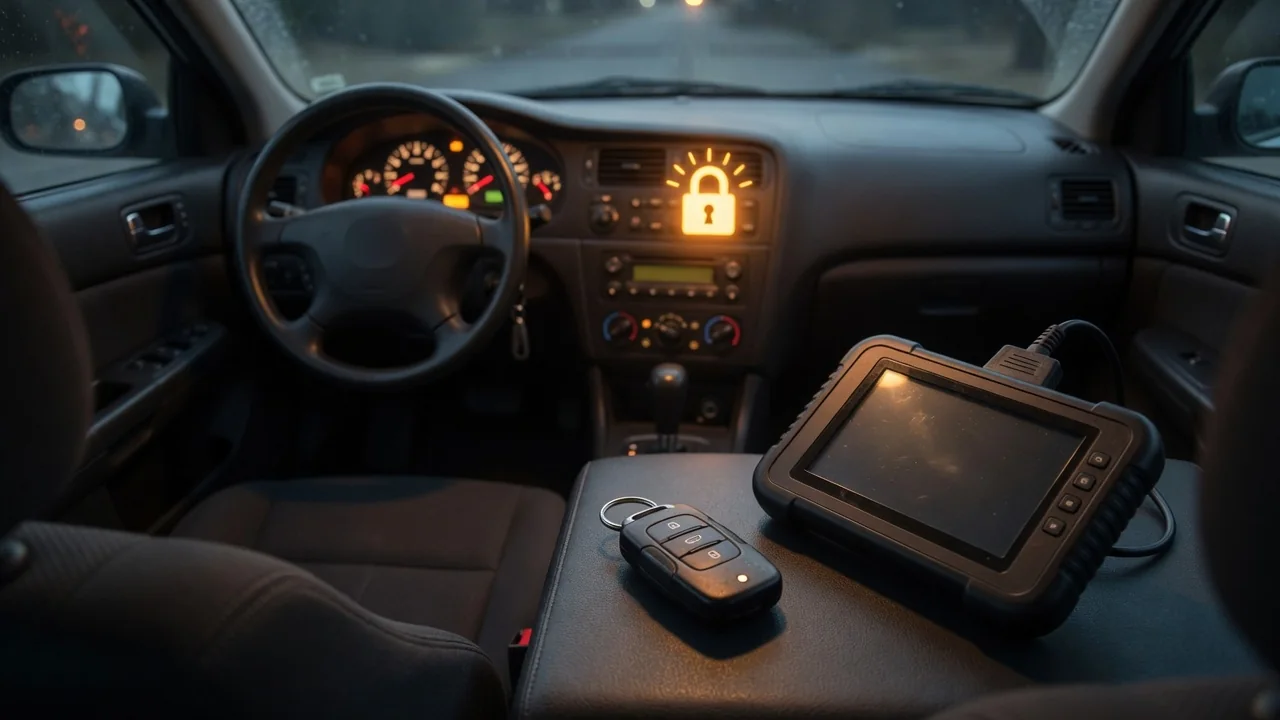
When a scan tool reports U0167 or U0168, the vehicle is signaling a loss of communication with parts of the immobilizer and security system. These faults often appear with no-start conditions, a flashing security warning light, or intermittent starting problems because the powertrain can no longer confirm key recognition and start authorization through the vehicle communication network. The codes are a starting point, not a part replacement instruction. Keys, wiring, module power, and network integrity all need considered before blaming a failed component.
Confirm What U0167 and U0168 Mean for the Vehicle
A U0167 or U0168 code must first be confirmed against the exact definition and diagnostic pathway for the specific year, make, model, and equipment level. Different manufacturers use different module names, network architectures, and immobilizer logic, so a generic description can mislead. Service information or a professional scan tool will identify which module lost communication and how the vehicle expects that signal to arrive. Without this confirmation, any test or repair plan is guesswork.
The immobilizer and vehicle security communication context involves modules that verify the key transponder and grant start authorization. When communication is lost, the engine controller may not receive permission to allow fueling or cranking. However, a lost communication report does not prove the named module has failed. An open circuit, water-damaged connector, missing power, or corrupted network traffic can create the same fault. Interpretation must follow the vehicle-specific diagnostic chart before condemning hardware.
Read the Codes in the Context of the Full Scan
Read the codes in context by recording the exact code text, the module that set it, and whether the status is current, stored, or intermittent. Some controllers log lost communication only as a history fault that has not recurred, while others report it active every key cycle. Clearing codes without this record destroys evidence. Note the engine control module, body controller, instrument cluster, or other units reporting the fault and whether they agree on the failure.
Accompanying voltage, network, and start-authorization faults help establish a direction. A low system voltage code alongside U0167 or U0168 suggests battery or charging concerns, while multiple modules reporting lost communication points toward a shared network or ground issue. Scanner coverage can limit access to security-related modules, and failure to display a module is not proof of a vehicle fault. Some inexpensive tools cannot query all immobilizer processors, so a missing module reading may be a tool limitation rather than an electrical failure.
Connect No-Start and Security-Light Symptoms to the Diagnosis
Document whether the engine does not crank, cranks without starting, or starts and then stalls, without presenting any pattern as proof of an immobilizer fault. A no-crank with a dead theft light can be a discharged battery or starter circuit, while a crank-no-start with a flashing security indicator suggests start authorization is being withheld. Stalling after a few seconds often indicates a key signal accepted at first but then lost, but these are correlations, not diagnoses.
Record the security indicator's behavior and consult the owner information for its intended meaning. Some vehicles flash the light during normal key-off operation and illuminate steadily only when a fault is present. Note whether symptoms began after a discharged battery, jump-start, key change, water exposure, or recent electrical work. A stored communication code may be unrelated to the present no-start condition, especially if the event was months old or the key was just reprogrammed.
Make Safe Key and Battery Observations
If available, try a known working, already authorized spare key using the normal starting procedure and record the result. A second key that starts the engine suggests the first key may have failed or lost programming, while neither key working points toward a vehicle-side issue such as a receiver, wiring, or module. Do not assume a new key battery will fix the communication fault; remote locking operation and key recognition for starting are separate circuits and signals.
Record dim lights, sluggish cranking, or recent battery discharge, and explain when battery and charging-system testing is appropriate. Low voltage can cause modules to drop offline and set U-codes even though the battery still cranks the engine slowly. Limit owner checks to safe observations with the vehicle parked; exclude security bypasses, wiring probing, and repeated starting attempts. Repeated failed starts can lock out the immobilizer and create additional faults that complicate the diagnosis.
Investigate Module Power, Grounds, and Network Wiring
Possible causes include interrupted module power, poor grounds, connector damage, moisture intrusion, network faults, or an internal module problem, but no reliable universal prevalence ranking exists. A corroded ground under the dash may affect the security module while leaving other systems working. Water entry from a windshield leak can damage a module or its connector. Network faults such as a shorted data line can bring down several modules at once.
Recent repairs or aftermarket electrical equipment provide useful context without establishing causation. An alarm installation, remote starter, stereo, or trailer wiring tapped into the wrong circuit may disturb immobilizer communication. Require vehicle-specific wiring information and professional testing to evaluate power, grounds, and communication circuits before replacing any module. Installing a new security module without confirming its electrical supply and network connection can leave the original fault unresolved and may waste an expensive, non-returnable electronic part.
Determine Whether Programming or Specialist Help Is Needed
Programming, configuration, or key enrollment may be required after certain verified repairs or module replacements, depending on the vehicle. A replacement immobilizer module often must learn the vehicle's VIN, security data, and key codes through a dealer or specialist tool. These codes alone do not justify reprogramming or replacing keys or modules. Only after wiring, power, grounds, and the specific module's internal diagnosis point to a confirmed failure should programming be considered.
Recommend a qualified technician or appropriately equipped automotive locksmith when security-system access or enrollment is required, with proof of ownership available. Repair verification includes restored module communication, normal start authorization, and a follow-up scan with no active or pending codes. Advise arranging transport if the vehicle cannot start reliably; repeated attempts may lock the system or drain the battery. A verified repair returns the vehicle to normal operation and clears the security light.