U0155 and U0156 Codes: Dashboard Communication Faults
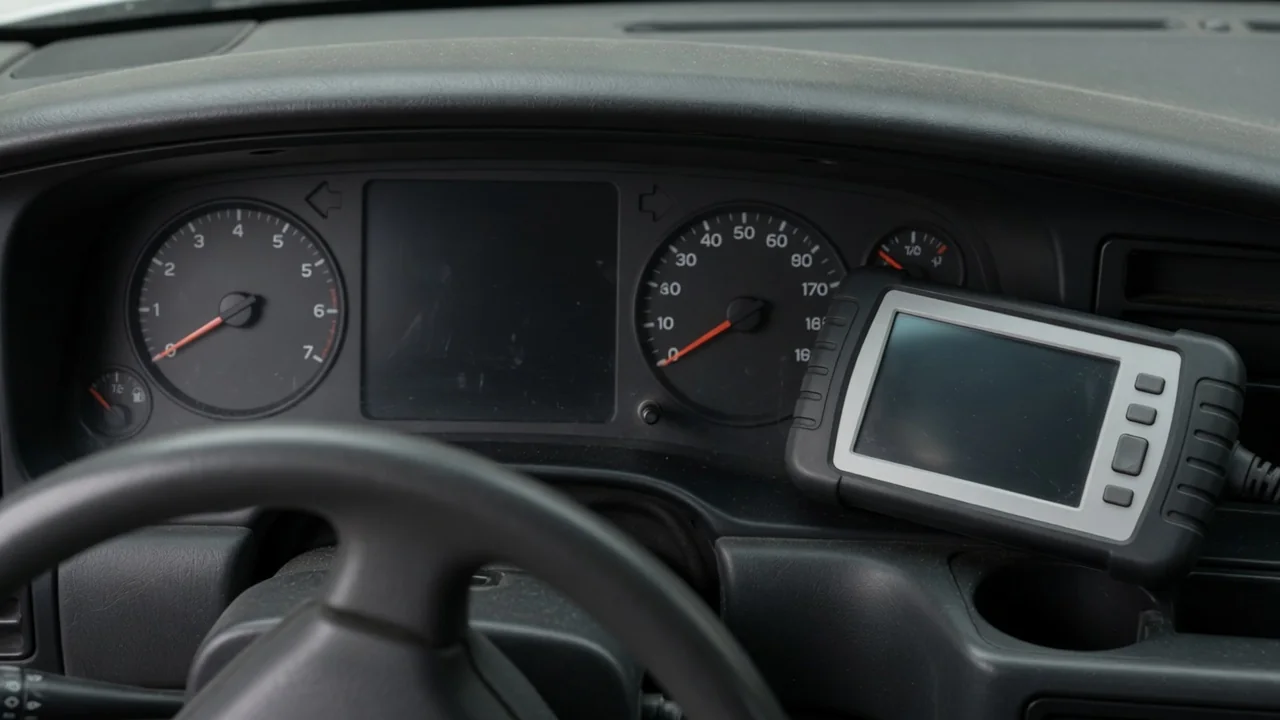
When a scan tool reports a U0155 code or a U0156 code, the vehicle is recording lost communication on the vehicle communication network, not automatically proving that a module has failed. U0155 generally involves the instrument panel cluster, and U0156 generally involves an information center. Either finding can coincide with dead gauges, a blank dashboard display, or intermittent warning lights. Use the codes to begin network fault diagnosis rather than to order parts.
Confirm What U0155 and U0156 Mean for the Vehicle
On many vehicles a U0155 code means another controller stopped receiving expected messages from the instrument panel cluster. A U0156 code generally means the same kind of lost communication with information center A. Those descriptions are typical, not universal. Module names, network layouts, and even the wording on a scan tool change by manufacturer and model year, so the exact vehicle's service information and the scanner's definition must be checked before the codes are treated as settled.
A communication code records a missing expected message. It does not, by itself, prove the named cluster or information center has failed internally. The reporting module may be healthy while power, ground, wiring, or another node on the vehicle communication network is the actual problem. Note which controller stored U0155 or U0156, and whether the scanner lists the status as current, pending, or stored. That status and the reporting source shape the rest of the diagnosis far more than the code number alone.
Recognize Dashboard Symptoms and Decide Whether to Drive
Dashboard symptoms tied to U0155 or U0156 can include dead or flickering gauges, a blank dashboard display, a dark information center, and warning lights or messages that appear without a matching mechanical problem. The cluster may also light several lamps at once because it cannot confirm other modules. A stored communication code can remain after the instrument panel cluster or information center starts working again, so a currently normal dash does not cancel the earlier event. Watch whether trouble appears at key-on, after a battery disconnect or jump, or only at random while driving.
Those timing notes matter because a startup-only blank screen often points toward module power and ground coming up late, while dropouts during normal use more often involve connectors or the network itself. If speed, fuel level, temperature, or other essential driving information is missing, stop in a safe place and arrange assistance rather than guessing at remaining range or vehicle speed. An active safety warning should not be dismissed as a mere network glitch. Intermittent warning lights still deserve a scan, because the underlying lost communication can return without warning.
Trace the Electrical Conditions That Can Interrupt Communication
Low system voltage can keep the instrument panel cluster or information center from joining the vehicle communication network, even when the rest of the car still cranks. An interrupted module power and ground feed has the same effect: the controller is present, but it cannot transmit. After a weak battery, a failed charging event, or a poorly clamped jump, U0155 and U0156 may set because the cluster never completed its wake-up sequence. Confirm battery and charging condition before assuming a display hardware fault, because a starved module looks silent on a scan.
Loose connectors, corrosion, moisture intrusion, and damaged wiring can open the same circuits or load the network with noise. A break or short in network wiring can isolate the named device, and another malfunctioning module can hold the bus in a state that blocks cluster or information center traffic. Internal failure of the cluster or information center remains possible, but that conclusion needs test evidence rather than the code alone. Until power, ground, and network circuits are verified, replacing the display is a guess that may leave the original lost communication in place.
Follow a Practical Diagnostic Sequence for U0155 and U0156
Before anyone clears codes or disconnects the battery, record the full U0155 and U0156 details, freeze-frame or snapshot data if the scanner provides it, and a short history of when the gauges or information center failed. A basic engine-code reader may show only powertrain codes and miss body or network modules entirely. A scan tool that can reach the relevant controllers should list every stored code and identify modules that are not responding. Those silent nodes, together with the reporting module, tell a technician where the vehicle communication network actually stopped talking.
Owner checks should stay at safe visual observations of accessible areas and a review of recent battery, electrical, or dashboard work. Dashboard disassembly and connector probing belong in a shop, not at the curb. A technician then confirms battery and charging-system condition and, using vehicle-specific procedures, verifies the affected module's power, ground, and network circuits. Scan results only point to the next test. A nonresponsive instrument panel cluster or information center still needs those circuit checks before replacement, because an open supply or a shorted network line can make a good module look dead.
Handle an Accompanying U0160 Code Without Assuming Its Meaning
A U0160 code that appears with U0155 or U0156 should not be interpreted from memory. Communication identifiers are manufacturer-dependent, so the exact definition, the named module, and the scanner description must be confirmed in that vehicle's service information before anyone assumes which device dropped off the network. Record which controller reported U0160, whether the status is current, pending, or stored, and which dashboard symptoms were present at the same time. Those notes show whether U0160 belongs to the same communication event or to a separate, earlier incident that merely remained in memory.
Several lost-communication codes can share a low-voltage, ground, or network wiring cause, which is why U0160 sometimes sits beside U0155 and U0156 after one electrical disturbance. Their presence together does not prove that shared cause. A verified U0160 finding is useful when it identifies another silent node on the same vehicle communication network, because that pattern steers testing toward common power feeds and backbone wiring instead of only the instrument panel cluster. If U0160 names an unrelated module and does not match the current symptoms, keep it documented but do not let it redirect the cluster investigation.
Confirm the Repair and Resolve Intermittent Faults
If testing shows the instrument panel cluster or information center itself has failed, replacement should follow those results, not the original U0155 or U0156 code. Programming, configuration, or security pairing may be required on the specific vehicle, so that need must be checked in service information before the new module is expected to talk on the network. After the repair, confirm that gauges, the information center, warning functions, and module communication all operate. A live data view that shows the cluster responding is as important as a screen that simply lights up.
Once the work and the original code details are documented, clear the codes and rescan under conditions that previously reproduced the fault, using only safe driving or key-on checks as appropriate. Recurring U0155, U0156, or a returning U0160 code after a brief recovery usually means the underlying wiring, connector, or voltage problem is still present. Record when the blank dashboard display or intermittent warning lights return, then go back for professional electrical testing. A temporarily working display does not establish a lasting repair, because lost communication often hides until the next voltage dip or moisture event.