U0121 and Related ABS, Brake, and Stability Communication Codes
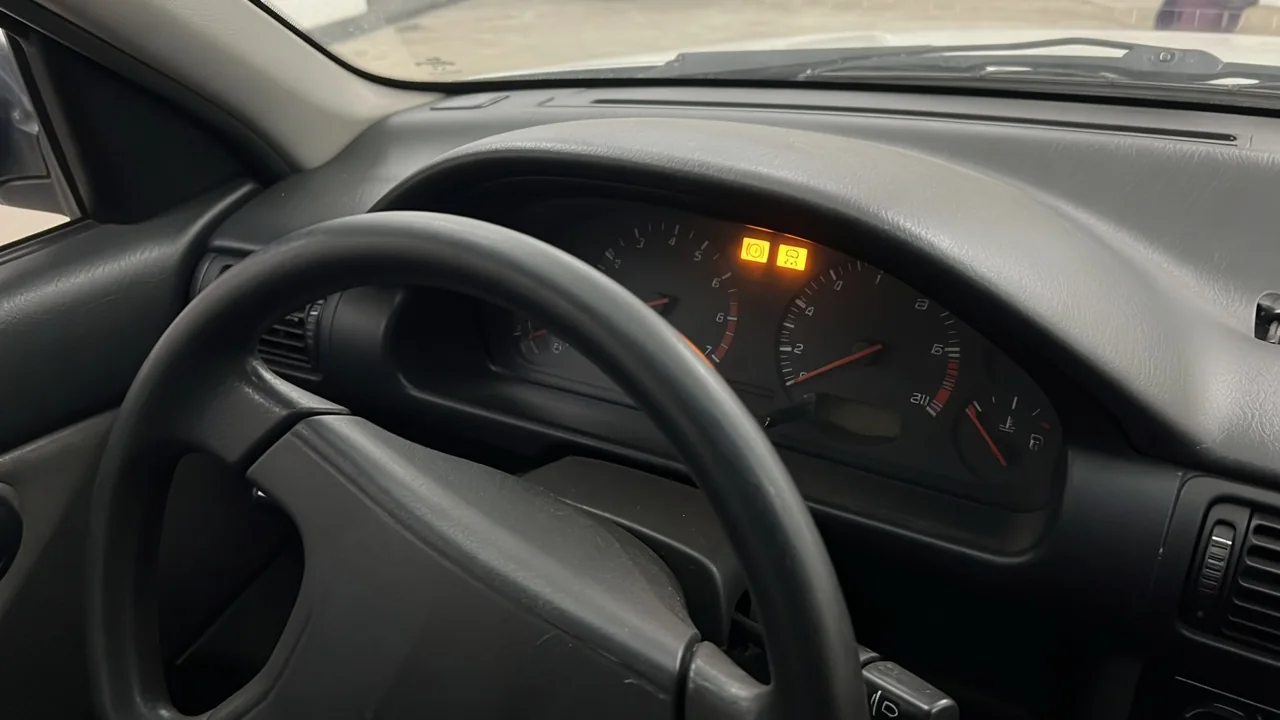
A U0121 code points to lost communication with the ABS control module on the CAN bus, and related network codes from U0122 through U0129 plus U0137 often appear in the same brake and stability family. These codes describe missing messages, not a confirmed failed part. Exact definitions and installed equipment vary by year, make, and model, so a network scan and vehicle-specific confirmation belong at the start of diagnosis.
What U0121 Means and Why It Does Not Prove ABS Module Failure
U0121 is commonly listed as lost communication with the ABS control module, but that wording must be confirmed against the service information for the vehicle's year, make, model, and brake equipment. The module that stored the U0121 code is reporting that expected CAN bus communication from the ABS controller did not arrive, which is not the same as proving the ABS control module itself has failed. Power supply, ground, network wiring, connectors, or the module can all interrupt those messages, and none of those paths can be ranked as more common without vehicle-specific testing.
Whether the U0121 code is current or stored, which controller recorded it, and which companion network or brake codes sit beside it all change how the finding should be read. A stored-only result after a battery event can look different from an active loss that repeats on every key cycle. Accompanying codes for other chassis modules may point toward a shared network, power, or ground issue rather than a single controller. That context still does not identify a failed part; it only tells a technician where vehicle-specific communication checks should begin.
ABS and Stability Warnings That Need Immediate Attention
Lost communication around the ABS control module can illuminate ABS, traction control, stability control, or general brake warnings, and the exact messages depend on how those systems share data. A lamp or cluster text does not prove that hydraulic service braking is gone, nor that electronic assistance remains available. Some vehicles keep conventional pedal braking while disabling ABS, traction, or stability functions; others present combined warnings that are easy to misread. Follow the owner's manual for each lamp color and wording rather than assuming what still works from the warning alone.
If the pedal feels abnormal, braking seems reduced, fluid is leaking, or a red brake warning requires stopping under the owner's manual, pull over safely and arrange professional help. Those signs go beyond a communication code and can involve hydraulic or mechanical brake condition that a network fault cannot rule out. An absence of obvious symptoms is not reassurance: ABS, traction, and stability assistance may stay inactive until needed in an emergency, so a quiet pedal does not confirm those functions will intervene during wheel slip or a yaw event.
U0122 Through U0125: Vehicle Dynamics and Motion Sensor Communication
U0122, U0123, U0124, and U0125 need the same vehicle-specific definition check as U0121, including whether the named sensor or function lives in a standalone unit or is integrated into another assembly. Common listings associate U0122 with lost communication involving vehicle dynamics control, U0123 with the yaw rate sensor, U0124 with the lateral acceleration sensor, and U0125 with a multi-axis acceleration sensor. Those labels are starting points only. On some platforms the vehicle dynamics module hosts several of these functions, so the printed name of the code may not match a separate replaceable sensor.
Yaw rate, lateral acceleration, and multi-axis acceleration signals tell stability programs how the vehicle is rotating and sliding relative to the driver's intended path. When CAN bus communication of those signals is interrupted, several warnings can appear together because traction, stability, and related brake logic may wait on the same motion data. A U0122, U0123, U0124, or U0125 result still describes missing communication, not a proven inaccurate reading, a failed calibration, or a sensor that must be replaced. Distinguishing a silent network path from a live but incorrect measurement requires vehicle-specific testing, not the code number alone.
U0126 and Steering Angle Communication
After the vehicle-specific definition is confirmed, U0126 is commonly listed as lost communication with the steering angle sensor. That sensor reports how far and how quickly the driver is turning the wheel so ABS, vehicle dynamics, and related stability logic can compare intended path with actual motion from yaw and acceleration sensors. A communication loss means those controllers did not receive the expected steering-angle messages on the network. It does not, by itself, describe a bent wheel, a pulling vehicle, or a mechanical steering fault, and it should not be treated as an alignment diagnosis.
Because U0126 is a network finding, it cannot establish whether the steering angle sensor needs calibration, whether the steering is mechanically sound, or whether the wheels are aligned. Those are separate inspections that only become relevant after communication is restored and the vehicle's service information calls for them. A nearby code, U0127, commonly concerns tire pressure monitoring communication rather than a brake or stability component; if U0127 is present, verify its definition instead of assigning it a chassis-control role just because it sits numerically between steering-angle and parking-brake network codes.
U0128, U0129, and U0137: Parking, Service, and Trailer Brake Modules
U0128, U0129, and U0137 also require verification of the exact definition and of the equipment actually installed before anyone treats them as a failed brake part. Common listings associate U0128 with lost communication involving the parking brake control module, U0129 with the brake system control module, and U0137 with the trailer brake control module. Those associations only apply when the vehicle has the corresponding controller. A truck without a factory trailer brake module, or a car without an electronic parking brake, will not share the same architecture, so the printed code name still needs confirmation against that vehicle's network map.
Possible results include parking-brake messages, general brake-system warnings, or trailer-brake alerts, without meaning that every braking function has been lost. Service-brake hydraulics, an electronic parking brake, and trailer-output control can be separate paths, and a U0129 or U0137 communication code does not automatically disable all of them. Do not rely on an electronic parking brake that may not apply or release as expected, and do not tow with unresolved trailer brake warnings. Release procedures, hold tests, and trailer-output functional checks belong with qualified service personnel using the vehicle's service information.
Safe Observations and the Professional Diagnostic Path
Record the warning messages, when they first appeared, any recent battery discharge or jump-start, and any recent service, because timing supplies context without proving a cause. A low battery or interrupted power can drop CAN bus communication across several chassis modules at once, which is useful history rather than a diagnosis. Preserve the freeze-frame and code list before clearing anything. A basic engine-code reader may not reach ABS, vehicle dynamics, parking brake, brake system, or trailer brake modules, so a U0121 family fault can be missed or only partly displayed until a full network scan is performed.
Professional diagnosis starts with a full module scan, a review of the vehicle's communication topology, module power and ground checks, and network integrity testing from the manufacturer's service information. Owners should not probe connectors, add jumper wires, force brake actuation, or road-test in a way meant to trigger ABS or stability intervention. Repair confirmation is restored communication, a reassessment of codes and warnings, and any manufacturer-required functional checks or calibrations after the network path is intact. Until those steps are complete, a communication code remains evidence of a missing message, not proof a particular module or sensor has failed.