U-Joint Removal Tools: Choosing a Press or Puller
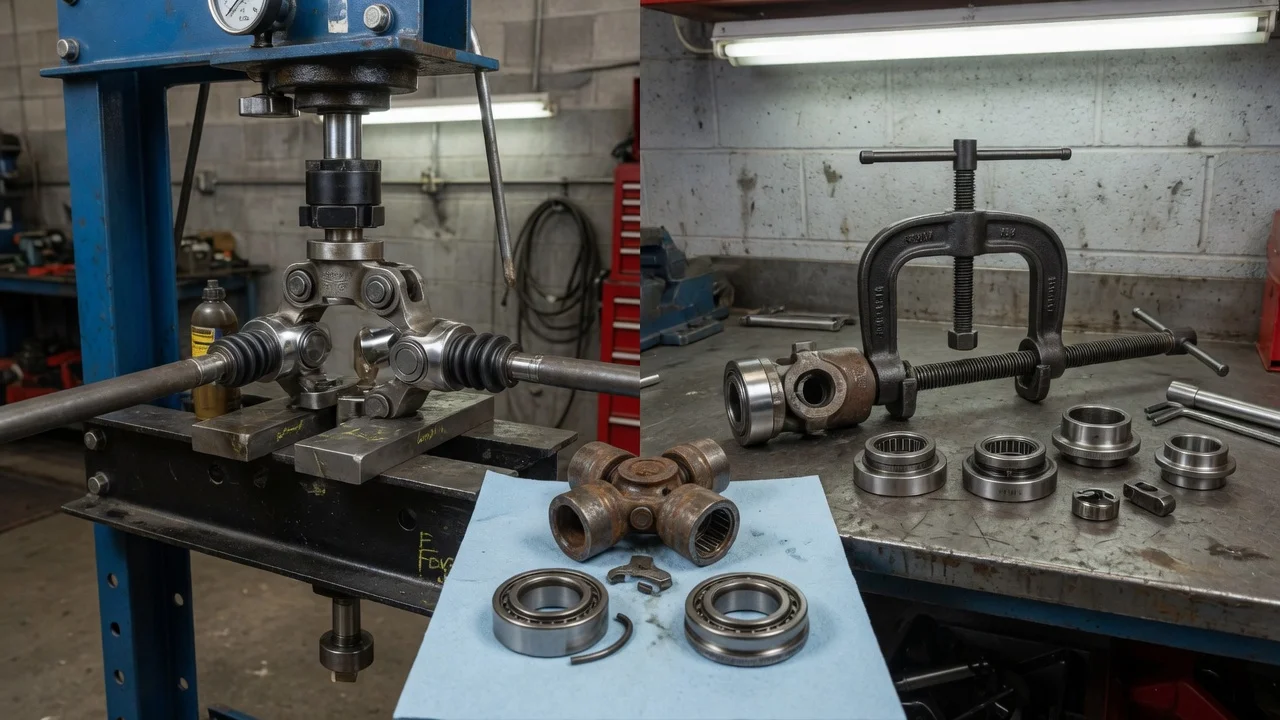
A stuck universal joint can turn a simple driveline repair into an afternoon of hammering, bent yokes and damaged bearing cups. A dedicated u-joint press pushes the caps out and the new joint in with controlled force, and puller-style kits do similar work in tighter spaces. This guide explains how to match a U-joint removal tool to your vehicle configuration, which features actually matter, and what the tool will not do for you.
Define the job the product must do
Start with the joints you actually plan to service. Rear driveshaft joints on a pickup or rear-wheel-drive car are usually handled off the vehicle, with the shaft on a bench, so a C-frame press or a vise-mounted method can work. Front axle shaft joints on many four-wheel-drive trucks are larger and are often serviced in tight spaces, where clearance around the knuckle limits what fits. Some owners only need to replace one worn joint found during an inspection. Others maintain several vehicles or off-road rigs whose operating conditions wear joints out more often. That difference decides whether a basic kit is enough or whether a heavier frame and more adapters justify the cost.
Consider your workspace and power tools as well. A U-joint press tool is driven by a forcing screw that you turn with a wrench or ratchet, and some are designed to accept an impact wrench. If you work on the ground with little bench space, a compact frame that clamps around the yoke may be more practical than a bench vise setup. If you already own a shop press, a dedicated tool adds value mainly through its receiving cups and its ability to work on joints still attached to an axle.
Check compatibility
Compatibility depends on the joint size and the yoke design, not only on the vehicle model name. Driveline joints are made in different series sizes, and cap diameter and the span across the yoke vary between them. Check the replacement joint's listing or your service information for the series used on your driveshaft or axle. Then confirm that the tool's frame opening is deep and wide enough to straddle that yoke, and that the kit includes receiving cups and pressing adapters sized for those caps. A cup that is too small can bear on the cap instead of letting it pass through. A cup that is too large can spread force onto the yoke ears.
Also check how the caps are retained. Many aftermarket and older joints use snap rings that come out before pressing. Some factory driveshafts instead use injected plastic retainers that are sheared during removal and are replaced by a joint with conventional clips, and some yokes are staked, so the stakes must be dealt with first. Front axle joints in some four-wheel-drive designs have limited clearance, so look for a kit specifically listed for axle shaft joints if that is your job. When a listing claims universal fitment, verify it against the actual dimensions and your vehicle's manufacturer specifications rather than trusting the label.
Features that affect the choice
Frame construction is the first real trade-off. A forged or thick plate frame resists spreading under load. A thin stamped frame may flex, which can push a cap in at an angle and gall the yoke bore. Product pages rarely publish comparable load ratings, so treat terms like heavy-duty or professional grade as marketing until the seller states the material, frame thickness or a rated capacity you can compare. A frame with a short throat may be stronger but may not reach around wider yokes, so you have to balance rigidity against reach.
The forcing screw does the work, and its diameter, thread and drive size affect how easily it turns and how long it lasts. A finer thread gives more control, and a coarser thread moves faster. If you plan to use an impact wrench, buy only a screw the maker states is suitable for impact use, because running an unrated screw under impact can damage the threads. A swivel or ball-ended pad helps keep the force square on the cap.
Adapter selection matters more than the number of pieces in the case. A kit full of cups you will never use adds cost without benefit, while a kit missing the right size forces you to improvise. Puller-style U-joint tools that hook or clamp behind the yoke can work where a C-frame will not fit, but check that their jaws seat fully and will not slip under load. Some owners combine a basic press with a socket-and-vise method for odd sizes. That approach is workable if the sockets are sized correctly and the yoke is properly supported.
Limitations and ownership costs
No U-joint removal tool fixes problems in the yoke itself. If a bore is worn, cracked, out of round or damaged by earlier hammering, a new joint will not seat properly, and the yoke or driveshaft may need repair or replacement. The tool also does not take care of driveshaft balance or phasing. Mark the shaft and yokes before disassembly so the parts go back in the same orientation, and follow the manufacturer's torque values and procedures when reinstalling. Constant-velocity joints are a different design and are not serviced with this kind of press.
Ownership costs are modest but real. Plan for new joints, snap rings and grease, penetrating oil for corroded caps, and thread lubricant for the forcing screw. Clean and grease the screw after each use to keep it turning smoothly. Check cups and adapters for cracks or mushroomed edges, because a damaged adapter can fail under load. Wear eye protection, since caps and clips can release suddenly. Joint wear depends on operating conditions and service history, so replacement timing comes from your vehicle's maintenance schedule and inspections, not from the tool.
Build a practical shortlist
Before buying, gather the facts that decide fit. You need the U-joint series or cap dimensions for each joint you plan to replace, whether those joints sit in a driveshaft or a front axle shaft, the retainer type, and the workspace you will use. With that information, compare candidate presses and U-joint pullers on frame opening and depth, the cap sizes listed for the receiving cups and adapters, stated frame material, forcing screw drive size and impact rating, and whether replacement screws or adapters are sold separately.
Then narrow the list. If you service one rear driveshaft occasionally, a compact press with correctly sized cups, or a bench vise with matched sockets, may be enough. If you maintain several trucks, work on front axle joints or deal with corroded caps often, a sturdier frame with axle-specific adapters and an impact-rated screw is easier to justify. Do not choose on piece count or the word universal alone. Choose the tool whose documented dimensions match your vehicle configuration, and you can expect cleaner removal, straighter installation and fewer damaged yokes.