Twisted Seat Belt: How to Untwist the Webbing Safely
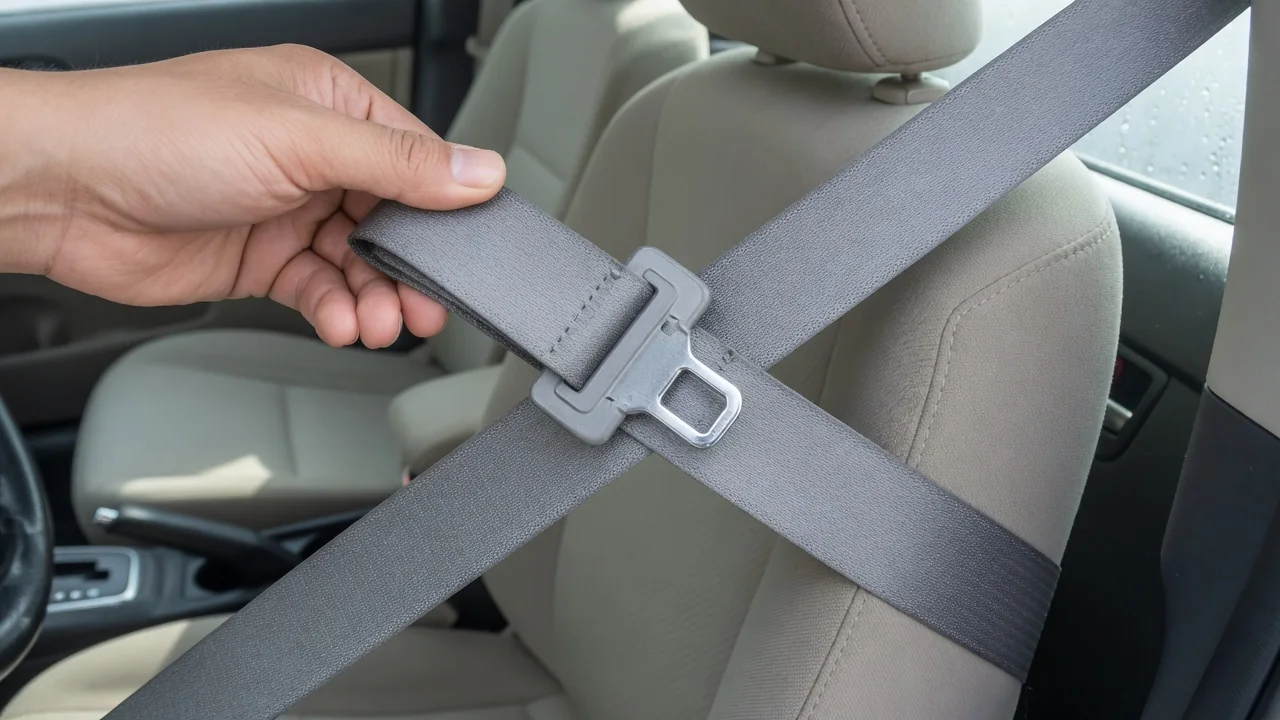
A seat belt twisted at the buckle or shoulder is a common annoyance, and it can matter more than it looks. Learning how to untwist a seat belt takes a few minutes, some patience and your hands. This guide covers where twists hide, which safety checks come first, the latch plate fold method, what to do when the webbing jams near the retractor, and when the restraint system needs professional attention.
Why a Seat Belt Gets Twisted and Where the Twist Usually Hides
A twist forms when the webbing folds over on itself and stays that way. The latch plate can flip over as the belt is released, or the belt can retract quickly while a section is folded and carry the crease back toward the retractor. Once a fold passes through the latch plate or the shoulder belt guide, those narrow openings tend to hold it in place. Because of that, the twist can last through many trips without working itself out.
Twists usually settle in three places: at the latch plate, at the upper guide loop or D-ring anchor near the shoulder, or close to the retractor slot in the pillar or seatback. To find one, slowly pull the belt out to its full length. Then run your hand along the webbing from the buckle up to the anchor and feel for the fold. Even a single half-turn that looks minor can stop the seat belt webbing from lying flat across your chest and lap.
Quick Safety Checks Before You Try to Untwist the Belt
Park the vehicle, set the parking brake and turn the ignition off before you start. Adjust the seat so you can reach the shoulder guide and buckle without stretching. With the belt pulled out, inspect its whole length. Look for frayed edges, cuts, burns, stiff or glazed spots, and loose or broken stitching. If you find any of that damage, stop. Have the belt serviced instead of untwisting it and continuing to use it.
Use only your hands on the webbing. Pliers can crush the fibers, blades can nick the edges, and heat can weaken the material. Lubricants or harsh cleaners can contaminate the weave and change how the belt slides through its guides. Also keep in mind that any belt worn in a crash should be inspected, twisted or not. Crash forces can affect the webbing, the retractor and the anchors in ways you can't see at a glance.
How to Untwist a Seat Belt with the Latch Plate Fold Method
Pull the belt out to its full length and hold it so it can't retract while you work. A firm grip on the retractor side works, or you can gently pin the webbing between your knee and the seat. Avoid clips that might mark the fabric. Find where the twist sits relative to the latch plate. The most widely used technique is to fold the webbing lengthwise into a narrow crease right where it enters the plate, so it is slim enough to pass through.
With the webbing creased, slide the latch plate over the fold and turn it so the plate flips to the correct side, then flatten the belt again. Work the twist down the belt one turn at a time until the webbing lies flat through the plate. Next, let the belt retract slowly by hand, then pull it out again to confirm the twist is gone. Latch plate designs vary, so you may need to try flipping the plate in both directions before one works.
Dealing with a Twist Stuck at the Shoulder Guide or Retractor
If the twist sits above the latch plate, move it up toward the shoulder belt guide instead. Hold the belt flat below the fold and ease the folded section through the guide loop by hand, keeping it creased lengthwise so it fits. Once the twist clears the loop, flatten the belt on both sides and check that it slides freely. If the twist is jammed inside the retractor slot, don't force it. Pull the belt out slowly in short steps.
Don't remove interior trim panels, pry at the retractor housing or unbolt the anchor hardware to reach a stubborn fold. These areas can contain pretensioners and other tensioning parts, and airbag components are often mounted nearby. Taking them apart is risky and can disturb other parts of the restraint system. If the belt still won't move freely after a few gentle attempts, stop and arrange a professional inspection rather than using more force.
Why a Flat Seat Belt Matters for Comfort and Protection
Seat belts are designed so that flat webbing spreads the load across the stronger parts of the body, mainly the pelvis, chest and shoulder. A twist reduces that contact area to a narrow edge or folded strip, which puts more pressure on a smaller part of the body. That is why it makes sense to fix a twist before driving again, even on short trips. Keeping the full width of the webbing against the body is part of how the belt is designed to work.
A twist also hurts comfort. A twisted shoulder belt can dig into the neck or collarbone, retract slowly, or pull unevenly, leaving slack in one spot and tightness in another. The fold can also make the belt harder to buckle or release smoothly, because the latch plate doesn't line up squarely with the buckle. These problems won't go away while the fold stays in place, so fix the twist as soon as you notice it.
Signs a Twisted Seat Belt Needs Professional Service
Some symptoms mean more than a simple fold and should be checked in person. Watch for a belt that won't retract, locks constantly during normal movement, won't extend or stays loose against your body. Also watch for a latch plate that won't click securely into the buckle. A twist that keeps coming back after you have flattened it may point to a worn guide, a misaligned anchor or a retractor problem. Only a hands-on inspection can identify which one it is.
Some vehicles show a seat belt warning light or message when the system detects a fault or an unfastened belt. Its meaning varies between vehicles, so check the owner's manual for your make, model and year before drawing conclusions. Treat the warning as a clue, not proof that a part has failed. For repair or replacement of any seat belt component, use a dealer or a qualified repair shop that knows your vehicle's restraint system.