Turbo Lag Eliminators: What to Check Before Buying
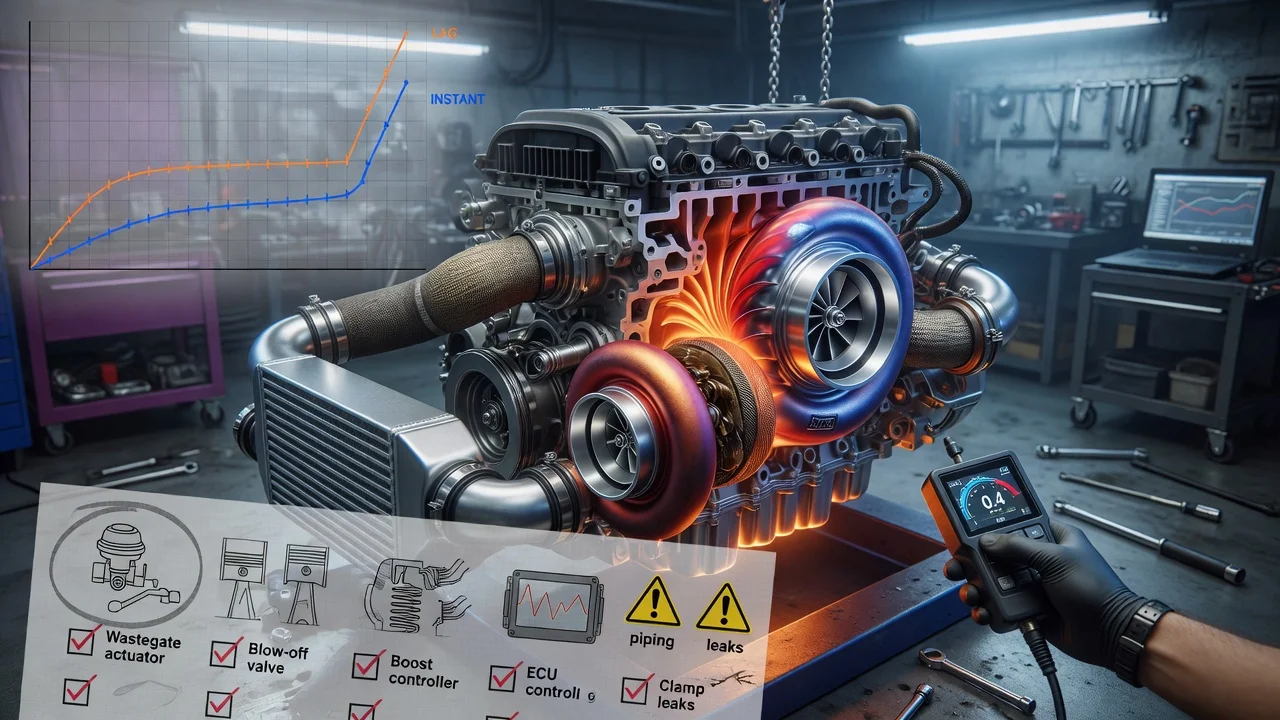
A turbo lag eliminator promises sharper response from a turbocharged engine, but the label covers very different products. Some are throttle pedal controllers that only change how pedal input is interpreted. Others involve boost-related hardware or tuning. Before buying one, confirm that the delay you feel is ordinary turbo behavior rather than a fault. A boost leak, sticking actuator or sensor problem will not be fixed by an add-on, and masking it can make the eventual repair harder and more expensive.
Establish the symptoms
Start by recording exactly when the hesitation happens. Note whether it appears only when accelerating from low rpm in a high gear or on every pull, whether it differs between a cold and a fully warm engine, and whether heat, altitude or a loaded vehicle make it worse. Pay attention to what the delay feels like. If the engine hesitates before revs rise at all, the issue may sit in throttle response or pedal mapping. If revs climb but real pulling power arrives late, the delay is more likely in how quickly boost builds. Also decide whether the car has always behaved this way or whether the lag developed gradually or suddenly.
Then list associated signs: a hiss or whistle under load, a check engine light, reduced power or limp mode, black or blue smoke, rising oil consumption, a noticeable change in fuel economy, or new noises from the turbo area. Record recent changes as well, such as an aftermarket intake, a tune, a battery disconnection that reset adaptive values, recent work on the intake or intercooler, or a change in fuel. Keep these notes together with your exact vehicle configuration: engine, transmission, model year and any modifications.
Distinguish plausible causes
The first possibility is that nothing is wrong. Every turbocharged engine needs exhaust flow before the turbo produces meaningful boost, so some delay at low rpm is part of the design. Turbo size, tall gearing, economy drive modes and electronic throttle mapping that softens the first part of pedal travel all add to the effect. A consistent delay with no warning lights, no new noises and no change from how the car has always driven supports this explanation. A recent onset, stored fault codes or a change in sound weaken it. In this case a pedal controller can alter the feel of initial response, but it does not make the turbo spool faster.
Air path leaks and boost control faults are common competing causes. A split intercooler hose, loose clamp or leaking intercooler lets pressurized air escape, often with a hiss and a boost build that weakens as load increases. Wastegate actuator or vacuum line problems, a failing boost control solenoid, or sticking variable geometry vanes on many diesel engines cause slow or erratic boost. Soot buildup on variable vanes is more likely when operating conditions involve mostly short trips. Underboost or overboost codes and boost that varies from one pull to the next support these causes.
Restrictions and faulty sensors can also produce lag. A clogged air filter or a restricted exhaust, such as a loaded diesel particulate filter or a damaged catalytic converter, reduces the flow the turbo depends on, and regeneration warnings point toward the exhaust side. A dirty or failing mass airflow or manifold pressure sensor gives the engine computer wrong information, and it may limit fuel or boost to protect the engine. Worn turbo bearings tend to bring other evidence, such as oil smoke, whining or visible shaft play. No single symptom proves a cause, so treat each observation as support for or against a possibility rather than a verdict.
Checks in a useful order
Begin with checks that are safe for most owners. With the engine off and cool, look over the visible intake and intercooler hoses for cracks, oily residue and loose clamps. Inspect the air filter if the owner's manual describes how to reach it, and confirm the oil level. Read stored codes with a basic OBD-II scanner and write them down, including any freeze frame data, rather than clearing them. Compare your service history against the maintenance schedule for the engine to see whether filters, oil changes or other relevant items are overdue.
The next layer needs tools and reference values. A scan tool with live data can compare commanded boost with actual boost and show airflow sensor readings during acceleration, but the numbers only mean something against the manufacturer specifications for your engine. A smoke test or pressure test of the intake tract finds leaks that are not visible, and an actuator movement test shows whether the wastegate or variable vanes respond as commanded. Logging data while driving should be done with a passenger handling the device, never by the driver.
Leave some work to a qualified technician. Checking turbo shaft play usually means removing intake ducting, exhaust back pressure tests involve hot components, and many checks require lifting the vehicle safely. Aggressive driving to reproduce the problem is not a substitute for a proper inspection.
Interpret the findings
If there are no codes, actual boost tracks commanded boost within specification, the intake tract holds pressure and the filter is in good condition, the delay is most likely inherent to the engine. Choosing a turbo lag eliminator then becomes a product decision rather than a repair. A pedal controller changes how quickly the throttle opens for a given pedal movement and can make the car feel more eager, but it does not change turbo spool. Products or tunes that alter boost or fueling can affect warranty coverage, emissions compliance and the load on engine components, so confirm the product is intended for your exact configuration and legal for road use where you live. True anti-lag systems built for motorsport are not designed for street vehicles.
A fault code or found leak identifies a system, not necessarily a part. An underboost code, for example, can come from a leak, an actuator, a solenoid or a sensor. Confirm the specific cause with a follow-up test before replacing anything expensive, because turbochargers are sometimes replaced when the actual problem was a hose or clamp. After a repair, recheck live data to confirm boost now behaves correctly, then decide whether any remaining delay still justifies an add-on.
Urgency and next action
Some signs mean the vehicle should not be driven further: heavy blue or white smoke, a sudden loss of power with grinding or screeching from the turbo, oil leaking onto hot exhaust parts, a flashing check engine light, a burning smell, or an oil pressure warning. A failing turbo seal can let oil into the intake, and on a diesel this can cause the engine to run on its own oil and speed up uncontrollably. If these signs appear, stop in a safe place, switch off the engine and arrange towing. There is no reliable way to estimate how far a car can safely travel with these symptoms.
If the lag is not accompanied by warning signs, book an inspection and bring useful information: the VIN and exact vehicle configuration, recorded codes and freeze frame data, a description of when the delay occurs, recent service work, modifications and any logged data. Ask the shop to confirm the cause before you buy parts or a turbo lag eliminator. If you still want one after a clean diagnosis, ask whether it is compatible with your vehicle, whether it can be fully removed, and how it may affect warranty and inspection requirements.