What Is a Turbo Blanket, and Is It Worth Using?
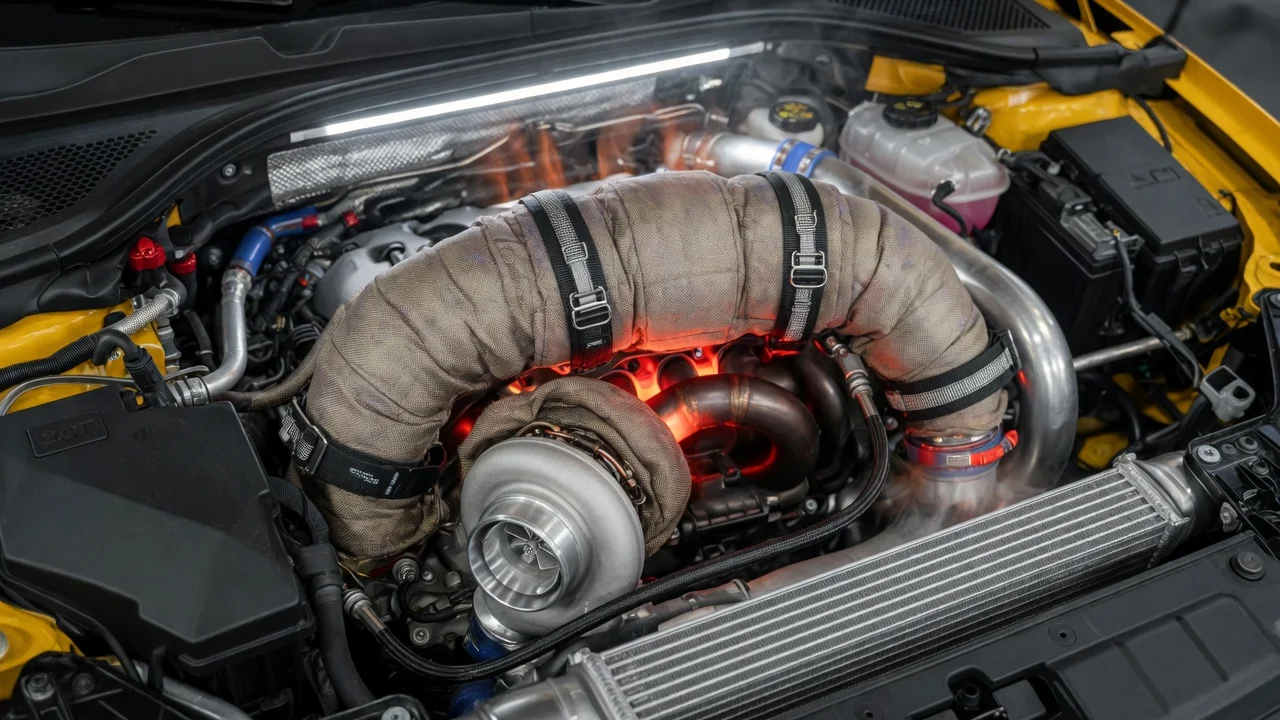
A turbo blanket is a heat-insulating cover that wraps around the hot exhaust side of a turbocharger. Owners usually consider one to cut underhood heat, protect nearby parts or chase quicker spool. Whether it helps or hurts depends on your engine configuration, the factory heat shielding already in place and how the vehicle is driven. This guide explains what a blanket does, where it makes sense and where it can create new problems.
The short answer
A turbo blanket is a fitted insulating jacket that covers the turbine housing. It is typically made from layered high-temperature materials such as fiberglass, basalt or silica fabric. Its job is to keep exhaust heat inside the housing instead of radiating it into the engine bay. Is it worth it? For many stock daily drivers with intact factory heat shields, the benefit is small. The main gain is lower temperatures around nearby hoses, wiring and plastic parts. For modified engines with aftermarket turbos, exposed manifolds or tight packaging, a blanket can be a sensible way to manage underhood heat.
It is not a guaranteed performance upgrade. Claims of faster spool or more power are plausible in principle because more exhaust energy is retained. However, the effect varies widely and is rarely measured on a specific car under controlled conditions. Treat a blanket as a heat-management tool first, and judge it on that basis.
How a turbo blanket works
The turbine side of a turbocharger runs extremely hot because exhaust gas passes straight through it. A bare cast housing radiates much of that heat outward. That heat warms the intake tract, intercooler piping, brake and fuel lines, wiring looms and plastic covers. A blanket slows that radiation, so more heat stays in the housing and the exhaust stream and less reaches the surrounding components.
Two effects follow. First, underhood air near the turbo stays cooler, which helps the intake side and protects heat-sensitive parts. Second, the turbine housing itself runs hotter than it would bare, because it can no longer shed heat as freely. That second effect is the root of most arguments against blankets. The housing and nearby fasteners were designed around a certain amount of cooling. A blanket should cover only the turbine housing. It should not wrap the center bearing section, the compressor housing or the wastegate actuator.
Benefits that hold up
The most dependable benefit is lower radiant heat in the engine bay. That can reduce heat soak in the intake system after hard driving. It can also extend the life of rubber hoses, vacuum lines and connectors close to the turbo, and make the area less hostile for sensors and wiring. This protection matters most where the turbo sits near the firewall, the starter or other heat-sensitive components.
Other benefits are more situational. Retained exhaust heat may sharpen spool response slightly. Some owners also report that the engine bay is more comfortable to work in after a drive, and a covered housing reduces the chance of an accidental contact burn. These are reasonable expectations, but they are owner reports rather than verified results for a particular vehicle. Do not buy a blanket expecting a measurable power gain.
Drawbacks and risks
Higher housing temperatures are the main concern. Some owners have reported cracked turbine housings, warped flanges or seized fasteners after running a blanket for a long time. These reports deserve attention, but they do not prove the blanket caused the failure. Housings can also crack from heat cycling, poor castings, aggressive tuning or skipped cooldowns, with or without insulation. What is certain is that a blanket changes the thermal conditions the part was designed for. That raises the risk most on housings already working near their limits.
There are practical downsides too. A blanket can hide oil leaks, exhaust leaks and early cracks, which delays diagnosis. Insulation that soaks up oil or coolant can smoke and, in the worst case, become a fire risk. A poorly fitted blanket can trap heat against the wastegate actuator or cover the bearing section, which encourages oil coking. Cheap blankets fray and degrade over time. On a vehicle under warranty, an aftermarket cover may complicate a turbo-related claim.
What changes the answer for your engine
Engine configuration matters most. A factory turbo with an OEM heat shield already manages radiant heat in a way the manufacturer validated. Adding a blanket underneath that shield, or using one in its place, changes the design. Model years and engine variants can differ in shielding, turbo placement and whether the center section is water cooled. As a result, the same blanket may be reasonable on one version and questionable on another. Blankets most often make sense on aftermarket turbos, tubular manifolds and engine swaps that lack factory shielding.
Operating conditions also change the result. Track use, towing and sustained high load drive housing temperatures up. That increases both the value of protecting nearby parts and the stress on the housing itself, while short-trip city driving produces less heat overall. Some stress comes from elsewhere and no blanket will fix it. Examples include tuning that raises exhaust gas temperature and shutting the engine off immediately after hard driving. For some setups, a dedicated heat shield or a coated manifold may be a better fit than a blanket.
What the owner can do
Before buying, check what your vehicle already has. If the factory heat shield is present and in good condition and you have no heat-related problems, there may be little to gain. Look for actual symptom conditions that point to excess heat. These include melted or brittle hoses near the turbo, damaged connectors, discolored components and intake temperatures that stay high after hard driving. Also review the service history for past turbo, manifold or exhaust leak repairs, because a blanket placed over an existing problem only hides it.
If you go ahead, choose a blanket made for your specific turbine housing. It should fit snugly without covering the bearing housing, the oil and coolant lines or the wastegate actuator. Keep it free of oil and other fluids, and replace it if it becomes saturated. Remove it during routine inspection to check for cracks, leaks and loose fasteners, especially in the first months of use. Watch for new noises, smells, smoke or boost changes. Keep following the manufacturer specifications for oil service and cooldown practice.
Limitations and next step
General guidance cannot predict how a particular housing will respond to added insulation. Temperature or spool figures published for one setup do not transfer reliably to another. The long-term durability effect on a specific turbo is rarely documented. If your vehicle is still under warranty, ask the manufacturer or dealer about aftermarket heat insulation before installing a blanket.
Do not treat a blanket as a fix for existing problems. These include an exhaust smell, smoke, unusual turbo noise, loss of boost or stored diagnostic codes related to boost or exhaust temperature. Have a qualified technician inspect the turbo, manifold and related lines first. Once the system is confirmed healthy, a well-fitted blanket can be a reasonable choice for heat control, provided it is checked regularly.