Turbo Blanket Materials: How to Choose an Insulation Construction
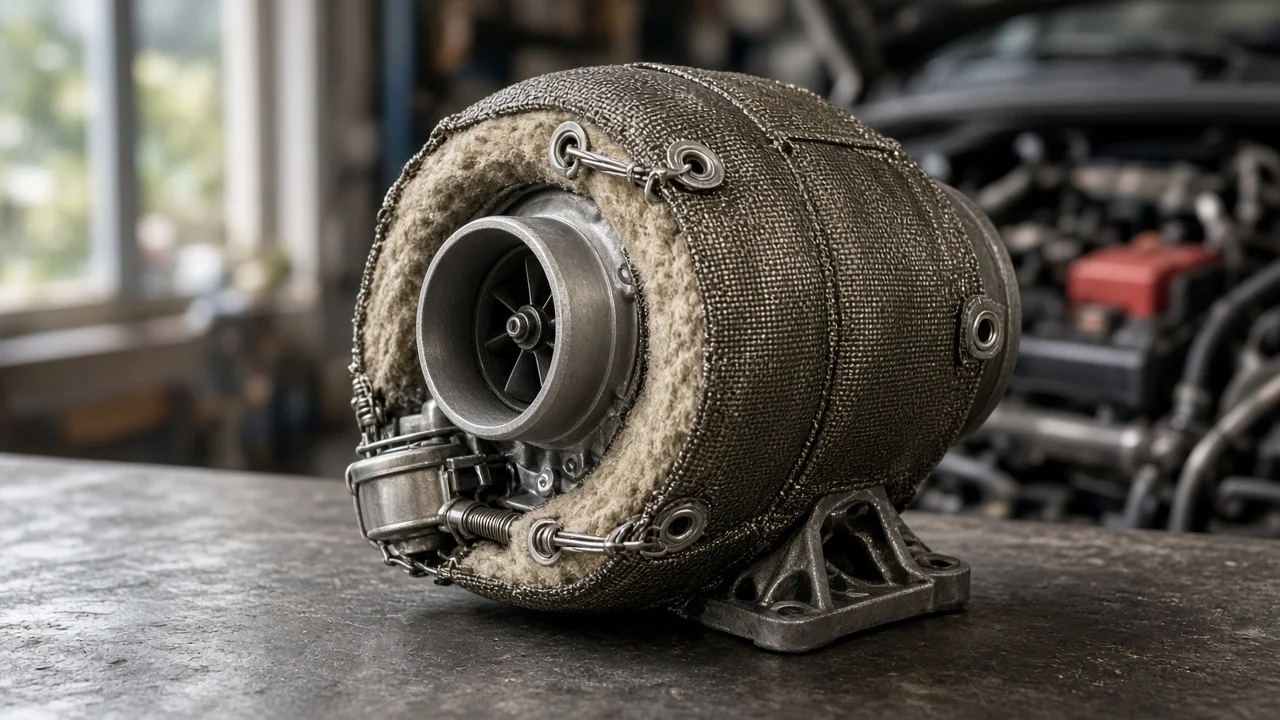
A turbo blanket encloses the turbine housing to keep exhaust heat in the hot side and away from nearby wiring, hoses and intake parts. Its fiber type, outer shell and fastening method decide how long it lasts, how well it fits and whether it creates new problems. This guide explains how to choose a turbo blanket material and construction that suits your engine, your turbo housing and the specific heat problem you need to manage.
Define the job the product must do
Start with why you want a blanket, because that reason shapes every later choice. Owners usually want one of three things. They may want to protect nearby wiring, vacuum lines, brake lines or intake plumbing from radiant heat. They may want to lower under-hood temperatures after an aftermarket turbo replaced a factory heat shield. Or they need to cope with sustained load such as towing, track sessions or long climbs. A daily driver that only sees boost occasionally needs less than a truck pulling a trailer for hours. The space around the turbo, how often you service it and how exposed it is to road grime all narrow the field further.
Separate symptom reports from verified problems before you buy anything. A heat-soak complaint, a burnt smell or a sluggish feel after idling is a starting point, not a diagnosis. Inspect for physical evidence of heat damage: • discolored or brittle harness loom; • cracked plastic connectors; • hardened coupler boots; Also log intake air temperature with a scan tool under the conditions where the symptom appears. Read any stored diagnostic codes too. Boost control faults, exhaust leaks and failing sensors can mimic heat problems, and a blanket will not fix them. Finally, confirm which turbo you actually have. The same model name can use different engines, turbos and factory shielding across model years, and the service history may show that the original unit was replaced with a different one.
Check compatibility
Fit depends first on the turbine housing. Blankets are typically sold by housing family and inlet style. Examples include smaller T25/T28-type housings, T3 or T4 flanges, and V-band inlets and outlets. Twin-scroll housings may need a different pattern than single-scroll ones. Measure the housing yourself and compare it with the maker's stated dimensions, rather than trusting a listing that only names a vehicle. Many modern engines use turbos cast into the exhaust manifold, and a generic blanket may wrap those shapes poorly or not at all.
Next, map every part the blanket has to clear or work around: • the wastegate actuator rod and arm; • electronic wastegate or variable-geometry actuators; • oil and coolant lines; • exhaust gas temperature and oxygen sensor bosses; • downpipe clamps; • factory shield mounting points; Check clearance to the hood, firewall, strut tower and steering components, allowing for the engine rocking on its mounts. Engine configuration changes access a lot. An inline engine with a side-mounted turbo, a V engine with turbos tucked low beside the block, and a layout with turbos in the valley are all different jobs. Read the manufacturer specifications for both the vehicle and the turbo. Some call for retaining factory heat shields or warn against wrapping certain housings. Removing emissions-related shielding can also raise inspection or warranty questions.
Features that affect the choice
The insulation core sets how much heat the blanket tolerates. Common core materials are: • E-glass fiberglass, usually the cheapest but with the lowest heat tolerance; • high-silica fiber, which tolerates more heat; • basalt fiber, made from volcanic rock; • ceramic fiber batting, layered between cloth faces; Thickness and layer count affect both insulation and how well the blanket conforms to tight curves. Listings often quote temperature figures without saying whether they are continuous or short-term ratings, or whether they apply to the core or the outer face. Ask the seller which it is before comparing numbers.
The outer shell decides how well the blanket survives the engine bay. Silicone-coated fiberglass cloth resists dirt and light fluid splash. Its coating can char on the hottest areas, though, and usually smokes during the first heat cycles. Stainless steel foil or woven stainless mesh resists abrasion, sheds oil better and holds its shape, but it is stiffer and costs more. Check the stitching as well. Ordinary thread can fail long before the fabric, so choose seams sewn with thread rated for high heat, such as stainless wire. Fastening comes as stainless springs and hooks, safety wire, or band straps. Springs make removal easier, while wire holds more securely on high-vibration engines.
Treat marketing labels with care. Terms such as titanium, lava or race-proven often describe a color or a trade name rather than a material. Titanium-colored wraps, for example, are commonly basalt-based. Useful evidence is concrete: the stated fiber composition of the core and shell, layer count and thickness, temperature ratings with their conditions, a cut pattern that matches your housing and actuator, and the fastener material.
Limitations and ownership costs
A blanket keeps the turbine housing hotter than it would run bare. Whether that contributes to cracking in some cast housings is debated. Reports blaming blankets are often anecdotal, because housings crack for many reasons, including heat cycling and poor downpipe support. What is certain is that a blanket covers the housing, so cracks, leaking flange gaskets and loose studs are harder to spot. Plan to remove it during routine inspection rather than trying to look around it.
Fluid contamination is the main safety concern. An insulation core soaked with oil, fuel or coolant can smoke and, in the worst case, smolder. Before installing a blanket, repair any leak from the turbo oil feed and return lines, the valve cover or nearby injectors. Replace any blanket that has become saturated. Expect smoke and odor from binders and coatings during the first few heat cycles. Budget for consumables such as replacement springs, safety wire, and gaskets if you disturb shield bolts. Wear gloves, eye protection and long sleeves during installation, because loose fibers can irritate skin and eyes.
Know what a blanket cannot do. It will not: • lower exhaust gas temperature inside the engine; • change boost behavior; • make up for an undersized intercooler; • cure a heat problem caused by an exhaust leak; It may not replace a factory shield that protects a specific component. The fabric also wears with every removal, so treat it as a service item rather than a permanent part.
Build a practical shortlist
Work through the same checks for each candidate: • Confirm the exact turbo and housing from the part tag or service history, not just the year and model. • Measure the housing and inlet style, and note every actuator, line and sensor that needs a cutout. • Choose a core material that suits your duty cycle. • Choose a shell that suits your engine bay conditions, from road spray to oil mist. • Check that the stitching and fasteners are rated for the heat. • Pick a fastening method that suits how often you will remove the blanket.
Before ordering, decide how you will handle any factory shielding the blanket replaces, and whether that affects emissions inspection or warranty coverage. Record the ratings each seller states and the conditions behind them, so you compare like with like. Finally, set an inspection routine. Check the blanket for oil contamination and fraying at regular service, and remove it to examine the housing and flange whenever the turbo or exhaust is serviced. A blanket that passes these checks for your specific engine variant is a reasonable choice, whatever the brand.