Choosing a Turbo Blanket for a Cummins Engine
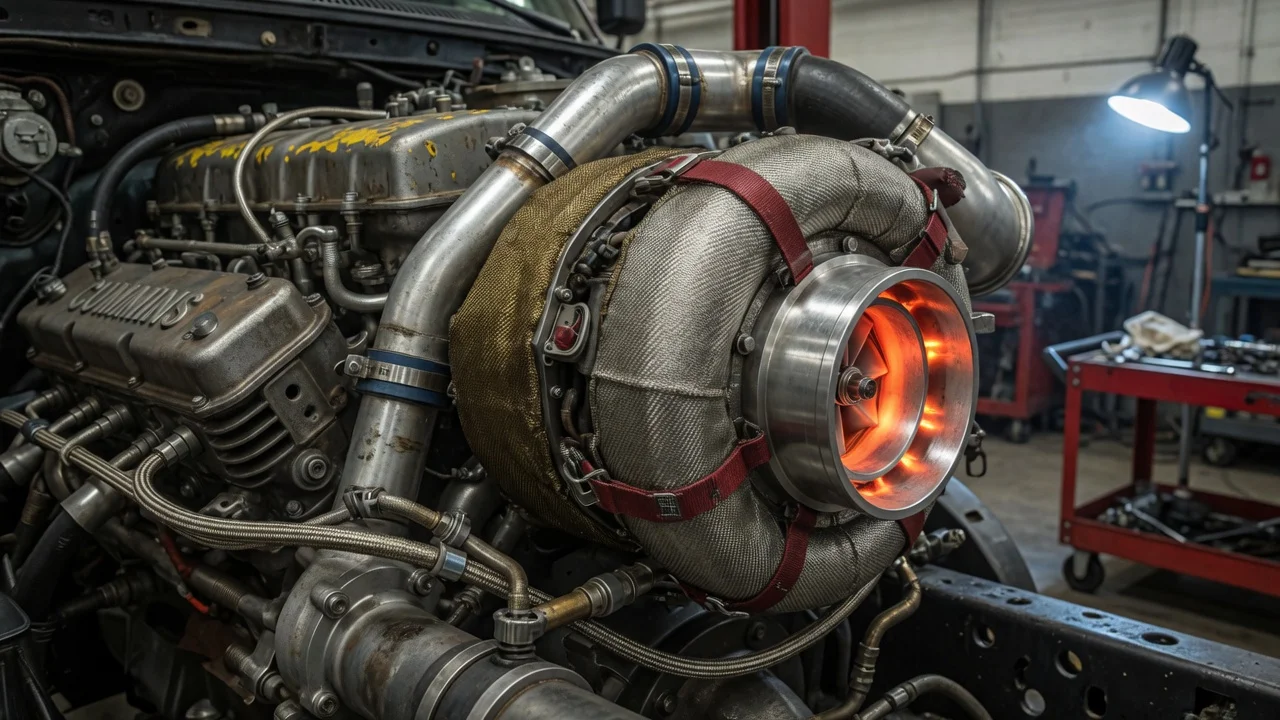
A turbo blanket wraps the turbine housing of a Cummins turbocharger to keep exhaust heat inside the hot side and away from nearby wiring, hoses and actuators. Whether one is worth buying depends on how the truck is used, which engine and turbo it actually carries, and what condition that turbo is in. This guide covers fitment, materials, real limitations and a short checklist so the blanket solves a genuine problem instead of hiding one.
Define the job the product must do
Start with the reason you want a blanket. Common goals are lowering radiant heat around the turbo during heavy towing, protecting harnesses and plastic parts in a crowded engine bay, keeping heat off an aftermarket intake or compound turbo setup, and reducing the chance of burns during service. Some sellers also claim quicker spool or lower intake temperatures. Treat those as possible side effects, not promised results, because the outcome depends on the truck, the turbo and how temperatures are measured. A blanket is a heat-management accessory, not a performance part.
If the purchase is driven by a problem, such as a melted connector, a brittle hose or turbo actuator faults on a 6.7L, separate symptom reports from verified failures first. Note the symptom conditions: towing, idling, hot weather or after a tune. Read any stored diagnostic codes and inspect the area. Heat damage near the turbo is often traced to an exhaust leak at the manifold or turbo flange, a missing factory heat shield or a failing component. A blanket will not fix any of those, and fitting one over an active leak can make the leak harder to find.
Check compatibility
Fitment follows the turbine housing, not the badge on the truck. In Ram pickups, the 5.9L 12-valve, the 5.9L 24-valve and the 6.7L used different Holset turbochargers, and the turbo also changed within those engine runs. Many trucks no longer carry the original unit, so check the service history and the data tag on the turbo itself before ordering. A truck with an aftermarket drop-in or a compound arrangement needs a blanket sized for those housings, and compounds usually need separate blankets for each turbine.
Compare the blanket listing against the housing you actually have: inlet flange type, housing size, outlet connection and the location of any wastegate. Wastegated 5.9L turbos need a cutout or clearance for the wastegate canister and linkage. The variable geometry turbo on the 6.7L has an electronic actuator on the center section, so the blanket must leave that actuator, its connector and its nearby lines uncovered and unstressed.
Also check what bolts to the turbine outlet. Factory and aftermarket exhaust brakes, downpipes and clamps all take up space, and the blanket has to seat without interfering with them. Some installs require removing a factory heat shield. If your engine configuration differs from the listing, or the manufacturer specifications do not name your turbo, ask the seller for housing measurements rather than relying on a year range.
Features that affect the choice
Construction matters more than headline temperature ratings. Most blankets use an insulating core, often silica or basalt fiber, inside an outer layer of fiberglass or a similar woven fabric. Look at the stitching material, whether edges are bound to stop fraying, and whether the outer layer resists oil and diesel. A published maximum temperature is the maker's claim about the material, not proof of how the finished blanket survives repeated heat cycles on a working diesel.
Retention is the next practical difference. Stainless springs and hooks, wire ties and straps each behave differently as the housing expands and contracts. Springs keep tension during heat cycles but can lose it with age; straps are simple but may loosen. Thickness affects clearance in a tight bay, and a one-piece wrap may be easier to install on one turbo while a two-piece design suits another. Precise cutouts for sensors, the wastegate or exhaust brake hardware are a stronger sign of real fitment work than generic sizing.
Be skeptical of labels such as race-proven, maximum spool or lowers EGTs. Useful evidence is a fitment list naming specific turbos, clear photos of the blanket installed on your housing type, material specifications and documented install instructions. Owner reviews help when they describe the same engine, turbo and use case, but a single report of better spool or cooler intake air is anecdotal unless it was measured under comparable conditions.
Limitations and ownership costs
A blanket keeps the turbine housing hotter by design. It should cover only the hot side; wrapping the center bearing housing or the 6.7L actuator traps heat where oil and electronics need it to escape. Owners sometimes link blankets to cracked housings, seized studs or corrosion from trapped moisture, but those reports rarely prove the blanket was the cause. Treat them as reasons to inspect more often, not as established failures.
The bigger ongoing risk is contamination. A blanket soaked by an oil, fuel or coolant leak can smolder on a hot turbine housing and should be replaced, not cleaned and refitted. Fix leaks before installing one. Plan to remove it for routine inspection of the manifold, flange and turbine outlet, since a blanket hides soot tracks and cracks. That adds labor to turbo-related service, and springs, hardware or a worn blanket may need replacement over time.
Know what the product cannot do. It will not repair a sticking actuator, correct high exhaust temperatures caused by tuning or fueling, seal a leaking manifold gasket or replace a missing heat shield. Do not assume it will lower intake temperatures on its own. If a warranty applies to the turbo or engine, check whether an aftermarket wrap affects coverage.
Build a practical shortlist
Narrow the options with a short checklist. Confirm your engine and model year, then the turbo actually installed, using its tag and service records. Match the inlet flange, housing size, outlet hardware and any wastegate or actuator clearance to the blanket's fitment notes. Check core and outer materials, edge binding, stitching and retention method. Make sure the design leaves the center section, actuator and sensors exposed. Finally, confirm that the instructions and replacement hardware are available.
Before installation, inspect the turbo and exhaust side for leaks, cracks and oil seepage, and record any existing diagnostic codes so later changes can be compared. After the first few heat cycles, recheck tension and fit, then include the blanket in regular under-hood inspection. Chosen this way, a Cummins turbo blanket becomes a targeted fix for heat around the turbo rather than a cover over unresolved problems.