Trux Service Body & Rigging: Equipment Scope and Selection Guide
Direct Answer and Scope
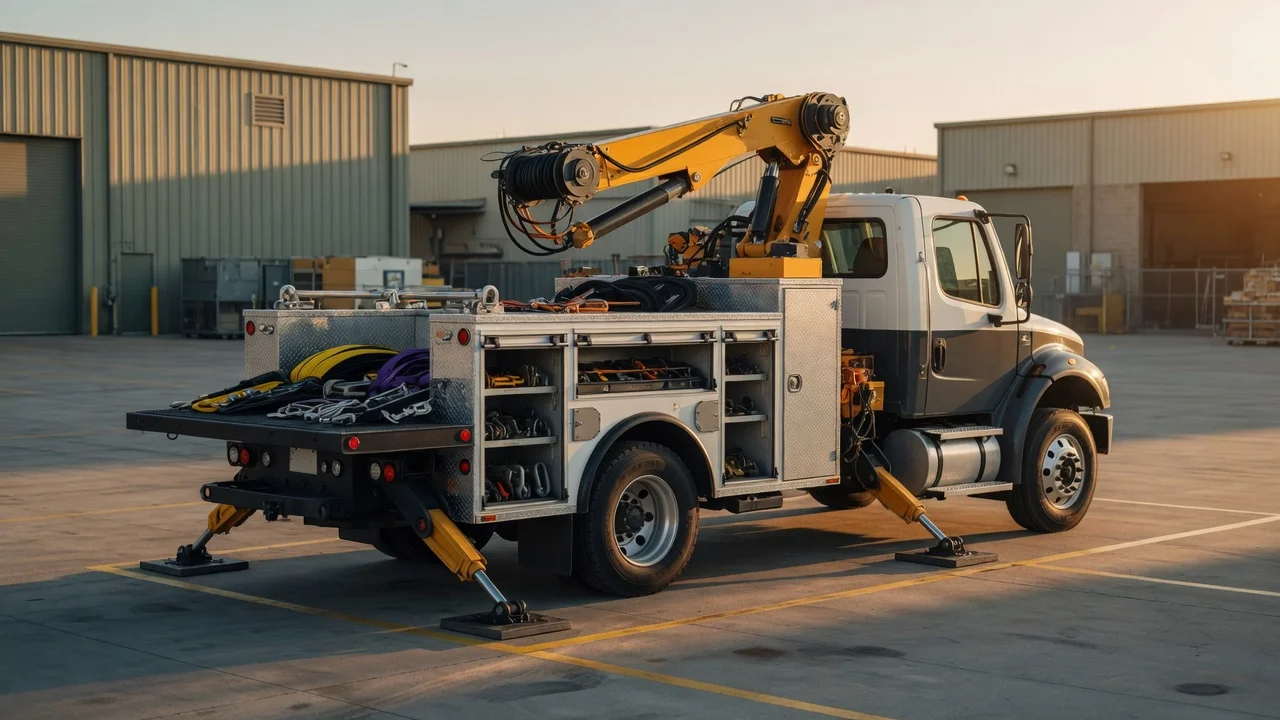
Trux service body and rigging refers to a class of work-ready truck bodies and related load-securing or lifting components, not a single universal product. In common use, the term covers a service body mounted on a chassis cab, plus the rigging items added to it such as tie-down points, crane bases, ladder racks or chain trays. The exact specification depends on the model year, the chassis it was built for, and the options ordered by the original owner. Because Trux has produced units for different markets and duty cycles, any statement about capacity, weight or corrosion resistance should be tied to a specific data plate or build sheet rather than assumed across all Trux bodies.
What the Term Usually Includes
A Trux service body generally consists of steel or aluminum compartment boxes mounted behind the cab, with a flat bed or deck area between the rear wheels. The compartments are designed for tools, fittings and small parts. Rigging in this context typically means the hardware that supports load control and field work: D-rings, stake pockets, removable side racks, boom or crane supports, and sometimes underbody tool boxes or pipe racks. These items may be factory-installed on some units and added later on others, so a used body should not be judged without confirming what was original equipment.
Evaluating a Used Trux Service Body
Condition matters more than age. The first points to inspect are the mounting points between the body and the chassis frame. Loose bolts, cracked crossmembers or rust around the mounting brackets can indicate overloading or poor previous installation. On steel bodies, check the lower edges of the compartments and the floor seams for corrosion. Aluminum bodies can suffer galvanic corrosion where steel hardware contacts the aluminum, so look for white powder or pitting around bolts and hinges.
Rigging components should be checked for deformation. D-rings that are pulled forward, cracked welds at crane bases, and bent ladder racks all suggest the body has been used near or beyond its working limit. Door seals and latch alignment also matter because a compartment that no longer closes tightly can let water and dirt reach tools. If the unit has an integrated crane or lift gate, treat it as a separate inspection item and verify the hydraulic system does not leak and the controls operate smoothly.
Fitment and Load Rating
A Trux service body is not universal across all chassis. The frame width, cab-to-axle distance and gross vehicle weight rating must match the truck that will carry the body. A body removed from a one-ton chassis may not fit a three-quarter-ton chassis without modification, and even when it bolts on, the loaded weight may exceed the chassis rating. The body’s own weight, often stamped on a plate inside a compartment or listed on the build sheet, should be subtracted from the truck’s payload rating to find the remaining capacity for tools, parts and rigging loads.
Where documented specifications are unavailable, the safest approach is to treat the body as a used, unverified structure. Do not assume it retains the original rated capacity if it has been repaired, repainted or moved between trucks. A professional inspection by a shop familiar with commercial truck bodies is reasonable for any unit that will carry concentrated loads such as a crane, welder or heavy reel.
Common Purchase Considerations
Compare the body’s empty weight against the truck’s available payload before adding tools or rigging gear. Confirm whether the body mounting points match the target chassis frame width and cab-to-axle measurement. Inspect compartment floors, door seals and latch alignment for water intrusion and daily usability. Check all rigging attachment points for cracks, elongation or signs of prior overloading. Verify any hydraulic or electrical accessories independently of the body structure.
Material Gaps and What to Verify
Publicly available data on specific Trux service body models is inconsistent. Some units carry a clear data plate with serial number, body weight and date of manufacture, while others do not. Capacity ratings for rigging points are not always marked on the hardware itself. If the seller cannot provide a build sheet or legible data plate, then the load rating of the body and its tie-down points should be considered unknown. In that situation, avoid relying on the unit for heavy or dynamic loads until a qualified inspector can assess the welds, floor structure and mounting system.
Next Step
For a specific Trux service body and rigging package, the most useful next action is to collect the data plate details, the original chassis information, and clear photos of the mounting points and welds. With those in hand, a commercial truck body shop can give a realistic assessment of fitment, remaining life and safe working limits. Without that information, treat any claimed capacity as an estimate rather than a supported specification.