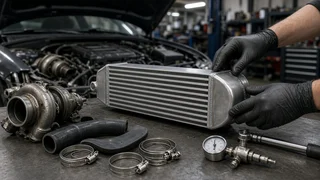
Truck turbo intercooler
A truck turbo intercooler is the heat exchanger positioned between the turbocharger’s compressor outlet and the engine’s intake manifold. Turbocharging raises boost pressure, but compression also raises charge-air temperature, which can invite detonation and reduce air density. The intercooler removes that added heat so the engine receives a cooler, denser intake charge. Whether someone searches for a truck turbo intercooler or a turbo intercooler truck, the core question is the same: how this component helps a working truck make repeatable power without giving back the gains the turbo creates.
Essential answer
The essential answer is that a truck turbo intercooler cools the pressurized intake air after the turbocharger has compressed it. When the compressor squeezes intake air, boost pressure climbs, but the air also becomes hotter. That heat works against the turbo’s purpose because hot air is less dense and carries less oxygen into each cylinder. An intercooler sits in the charge-air path and sheds heat before the air reaches the intake manifold, helping the engine use the boost it is already producing. It is not a replacement for the turbo; it is a supporting part that makes the turbo’s output more useful.
The scope changes a little depending on application because intercoolers exist in two common designs. An air-to-air unit uses ambient airflow through a front-mounted core, making it common on many highway and towing trucks. A water-to-air unit uses engine coolant or a separate low-temperature circuit to pull heat from the charge air, which can suit tight engine bays or sustained load conditions. In both cases the component connects through the charge-air plumbing, and a hose connection at the inlet or outlet is a normal service point. The intercooler is part of the boosted intake system, not an isolated add-on.