Truck Tire Repair: Finding the Right Service
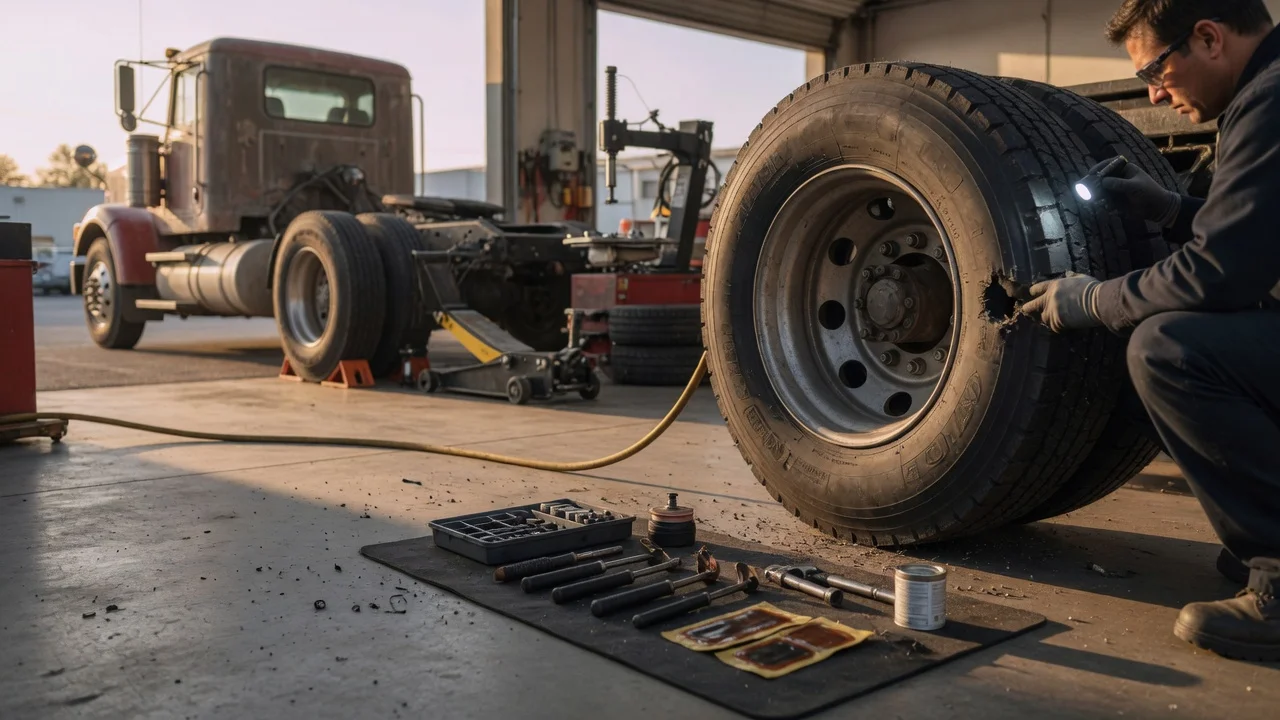
What truck tire repair typically means
Truck tire repair is service work intended to return a damaged tire to safe, usable condition. The right service depends on the damage location, tire type, and whether the repair will be performed on a commercial truck, a work vehicle, or a light truck used for personal transportation.
Not every tire can be repaired. A shop should examine the tire before agreeing to fix it. General tire-industry repair guidance commonly restricts repair work to the tread area, which is the part of the tire that contacts the road. Damage in the sidewall, which is the flexible outer portion between the tread and the wheel, or in the tire shoulder, where the tread transitions toward the sidewall, is usually treated as a replacement situation rather than a repairable puncture.
Common reasons a truck tire needs repair
Punctures and cuts are among the most common reasons for truck tire repair. Typical causes include nails, screws, metal debris, sharp road objects, and cuts from damaged road surfaces or loading areas. A puncture can sometimes produce a slow leak, while a more serious cut may cause rapid pressure loss.
Other conditions that may appear similar include a leaking valve stem, a damaged valve core, or a wheel that is not sealing correctly against the tire bead, which is the inner edge of the tire that seats against the rim. These can produce air loss without a puncture in the tire itself. For that reason, a diagnosis should identify the actual leak location before any repair method is chosen.
What to check before choosing a repair option
Start by confirming where the leak is coming from. A leak at the tread area is different from a leak at the valve stem or wheel. If the tire holds air only briefly or the sidewall shows a visible cut, bulge, or exposed cord, continued driving can damage the tire further and may create a safety risk. A bulge can indicate internal structural damage.
The tire should be removed from the wheel so the inside can be inspected. This helps confirm whether hidden damage exists beyond the visible puncture. If a repair technician cannot inspect the inner liner, which is the airtight layer inside the tire, the condition of the tire cannot be fully confirmed.
Service types and how repair is usually performed
A proper puncture repair generally involves more than plugging the hole from the outside. Many truck tire service providers use a combination repair that seals the puncture through the tire body and applies a patch to the inner liner. The specific method depends on the puncture size, angle, and position.
Repair service may be offered at a fixed tire shop, through a mobile truck tire service, or at a commercial fleet location. Mobile service can be useful when the truck cannot be moved safely or when the tire loses air away from a shop. A fixed location may be more suitable for repairs that require a more complete inspection or for trucks that can be driven short distances at limited speed.
Questions to ask the repair provider
Will the tire be removed from the wheel and inspected from the inside? Is the puncture located in the tread area rather than the sidewall or shoulder? What repair method is being used, and is it suitable for this tire size and load rating? Will the repaired tire need a speed or load restriction? Is the wheel and valve stem condition also being checked?
When replacement is the appropriate decision
A truck tire repair is not always the correct outcome. Replacement is typically considered when the damage is in the sidewall or shoulder, when the puncture is too large, when the tire shows signs of internal separation, or when the tire has been run with significantly low pressure. Running a tire with very low pressure can damage its internal structure even if the outside looks acceptable.
The applicable decision should be based on a confirmed inspection of that specific tire and wheel, not on the leak location alone. A quoted or estimated repair should be understood as initial guidance until the tire is removed and examined.