Truck Tire Repair: How to Choose a Repair Service
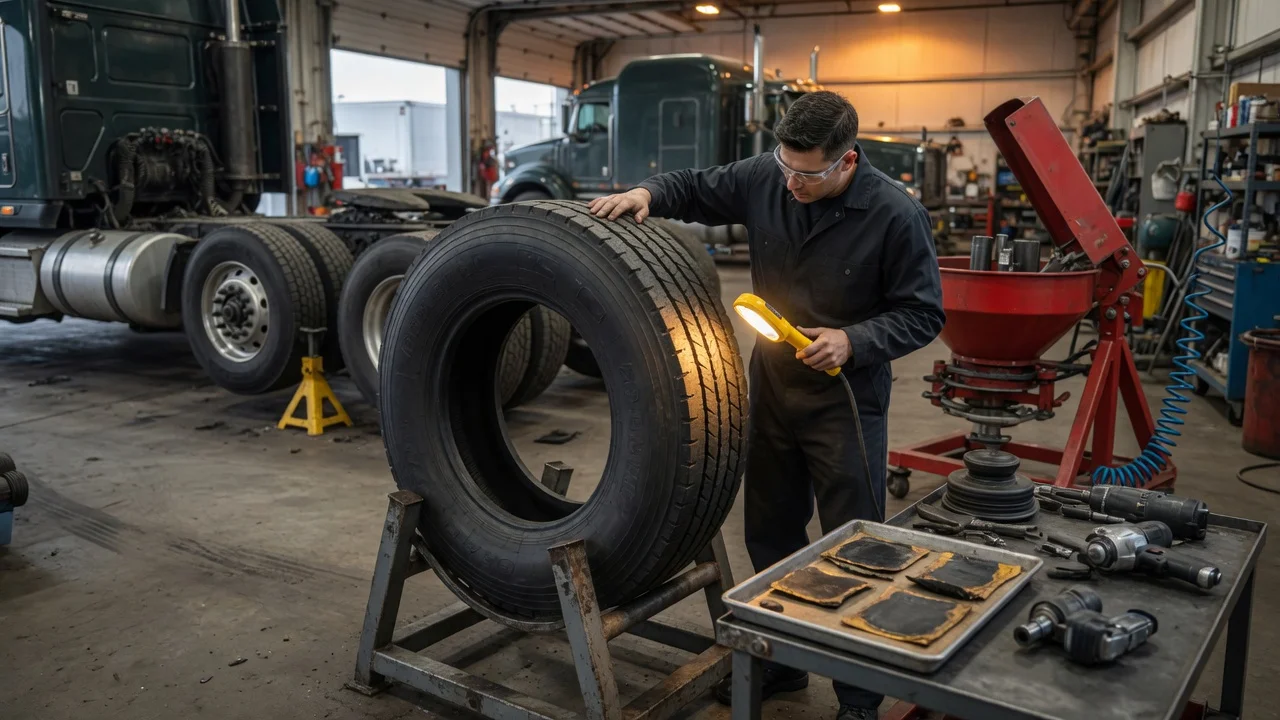
Choose a truck tire repair service that can handle your class of truck and tire, removes the tire from the wheel to inspect it from the inside, and uses a repair method the tire maker approves. For most punctures, that method is a combination patch and plug installed from inside the tire. Whether you need a general tire shop, a commercial truck tire specialist or a mobile roadside service depends mainly on two things: what kind of truck you drive and whether the vehicle can safely get to a shop.
Light Trucks vs. Commercial Trucks
"Truck tire" can mean two very different things, and the difference decides which service fits.
Light trucks include pickups, vans and SUVs, often on tires marked LT (light truck) or P (passenger). Most general tire shops repair these with the same equipment they use for cars. Check that the shop can handle your wheel size, your load range (the tire's load-carrying and inflation capacity) and any tire pressure monitoring system (TPMS) sensors.
Medium- and heavy-duty commercial trucks include box trucks, tractors, trailers and buses. They use larger, heavier tires, often on dual wheels and at higher pressures. Mounting and inflating these tires calls for specialized equipment, including inflation safety cages, and trained technicians. A shop that handles passenger and light-truck tires may not be equipped or qualified for this work. Commercial operators may also have to meet regulatory inspection and tire-condition rules, which vary by jurisdiction.
What a Proper Repair Involves
A few terms help you judge whether a service is doing the job correctly.
Demounting: removing the tire from the wheel. This lets the technician inspect the inner liner for damage that is invisible from outside, such as damage from driving while underinflated. Combination repair (patch-plug): a single unit that fills the injury channel and seals the inner liner. Tire industry repair guidance generally treats this as the standard for puncture repairs. Plug-only repair: a plug pushed in from outside without removing the tire. Industry guidance generally treats it as temporary at best, because nobody inspects the inside and the inner liner is not sealed. Repairable area: punctures are generally repairable only in the tread area. Damage to the sidewall or shoulder, or an injury larger than the manufacturer's size limit, usually means the tire should be replaced. Section repair: a reinforced repair for larger injuries, used mainly on commercial truck tires and only by properly equipped specialists within the manufacturer's limits.
Some tire types carry extra restrictions. Many run-flat tire makers limit or prohibit repairs, especially after the tire has been driven without air. Speed ratings and warranties can also be affected by repairs. If you don't know your tire's repair policy, ask the shop to check the manufacturer's guidance before work begins.
Comparing Your Service Options
Option | Best suited for | Repair quality potential | Speed and convenience | Main limitations; General tire shop | Pickups, vans and light-truck tires | Good if the tire is demounted and patch-plugged | Requires driving or towing to the shop; wait times vary | May not handle commercial tires, large wheels or dual setups; Commercial truck tire center | Medium- and heavy-duty trucks, trailers and fleets | Highest for commercial tires; can offer section repairs and retread-related services | Shop visit required; some offer fleet accounts | Often not aimed at single light-truck customers; Mobile or roadside tire service | Trucks that can't safely move, or operators trying to limit downtime | Varies; some carry full equipment, others do only temporary fixes or tire swaps | Comes to you, often including after hours | Call-out charges are common; repair scope depends on the truck's equipment; Dealership service department | Owners who want manufacturer-specified parts or warranty handling | Good, though tire work may be sent to a partner | Usually needs an appointment | Often less tire-focused than a dedicated tire shop; DIY plug kit | Getting a light truck to a shop in an emergency | Temporary only; no inner inspection | Immediate if you carry a kit | Not a substitute for a proper repair; not suitable for commercial tires
No pricing data was available for this guide, so the table compares cost only in general terms. Prices vary by region, tire size, time of day and whether the tire can be repaired or must be replaced. Get a quote that separates the repair, mounting and balancing, any TPMS service and any call-out fee.
Which Option Fits Your Situation
Pickup or van with a nail in the tread, and the tire still holds some air: a general tire shop that demounts and patch-plugs is usually the practical choice. Light truck that is flat and can't be driven safely: fit the spare, or call a mobile service or tow to a tire shop. Driving on a flat tire can destroy it and damage the wheel. Commercial truck or trailer stopped on the road: a mobile commercial tire service, or a roadside program arranged through your fleet, avoids moving an unsafe vehicle. Have the temporary repair or replacement followed up at a commercial tire center if needed. Fleet with recurring tire work: a commercial tire center offering account service, records and repair tracking is generally the better fit. Run-flat, high-performance or specialty tires: choose a shop that can confirm the manufacturer's repair policy before starting.
Questions to Ask Before You Authorize a Repair
Will you remove the tire from the wheel and inspect it from the inside? What repair method will you use, and does it follow the tire manufacturer's guidance? If the damage is in the shoulder or sidewall, or is too large to repair, will you tell me before replacing the tire? Are your technicians trained for my class of tire, especially commercial or high-pressure tires? Will you rebalance the wheel and check or reset the TPMS sensor if my truck has one? What torque specification will you use for the wheel fasteners, and should I return for a torque re-check after driving? What does the quote include, and is there a call-out or after-hours fee? Is the repair documented, and is there any workmanship warranty?
Warning Signs
The shop offers to plug the tire from the outside as a permanent fix without demounting it. The shop agrees to repair sidewall or shoulder damage. The service won't explain why a tire can or cannot be repaired. A light-vehicle shop attempts commercial tire work without suitable inflation safety equipment. The quote is vague about which services and fees are included.
Limits of This Guide
This guide covers general selection criteria, not repair specifications for any particular truck or tire. Puncture size limits, repairable zones, run-flat policies and wheel torque values come from the tire and vehicle manufacturers and differ between products. Legal requirements, such as minimum tread depth and rules for repaired or regrooved tires on commercial vehicles, depend on your jurisdiction and vehicle class. Confirm them with your local transport authority or a qualified commercial tire professional. No cost or performance figures were available, so none are given here.