Truck Tire Repair: Assessing Damage and Choosing a Repair Shop
The short answer
A truck tire is a candidate for repair when the injury is a puncture or small object hole in the tread, the casing and inner liner are sound, remaining tread is adequate for continued service, and a shop set up for truck tires can complete an inside unit repair to commercial procedure. Sidewall, shoulder, and bead injuries, tires driven while flat or badly underinflated, exposed cords, and casings already worn to a fleet or legal limit belong in the replacement column. Light-truck pickup tires and medium- or heavy-duty commercial tires follow different construction and repair limits, so the same hole can be acceptable on one tire and out of limits on another.
This guide covers how to judge visible damage, when to stop using the tire, how repair compares with replacement, and what to look for in a truck tire shop. Exact maximum injury size, minimum tread depth, and whether a repaired casing may later be retreaded depend on the tire type, load range, and the repair standard the shop follows; those figures are not uniform, so treat the shop’s written inspection as the decision record.
How to assess the damage
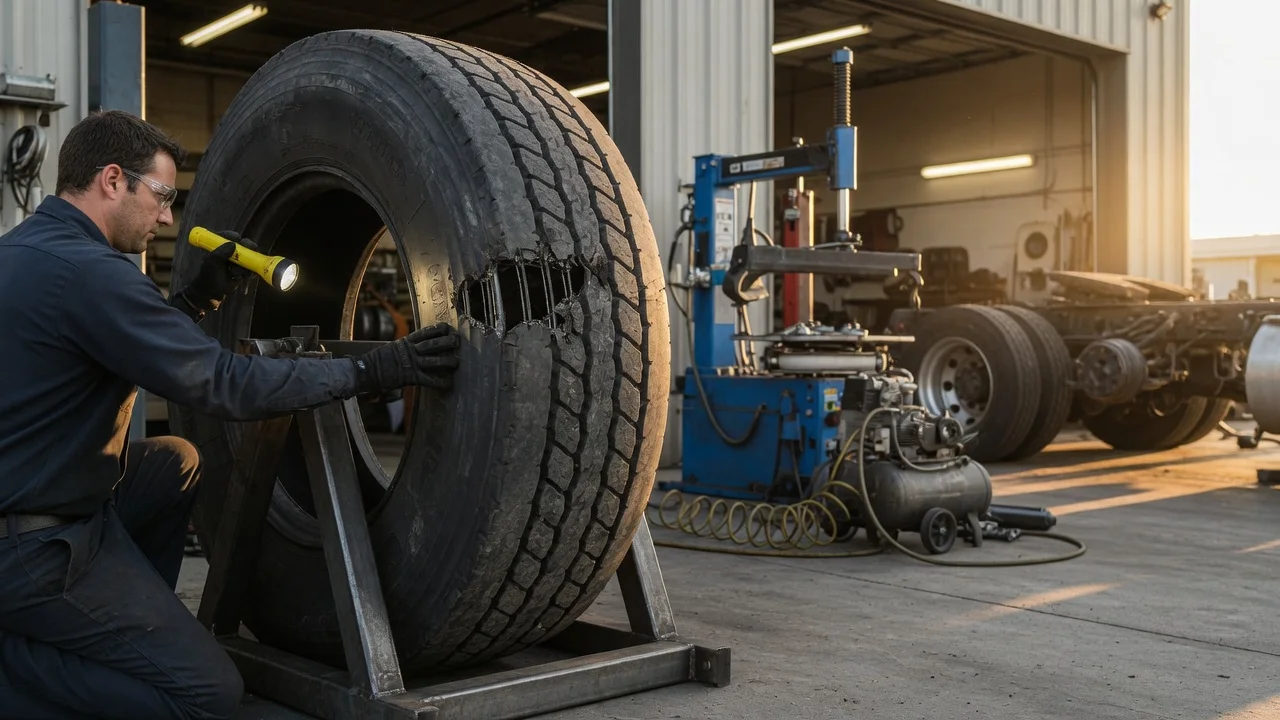
Park on level ground, set the parking brake, and inspect the tire on the vehicle before anyone demounts it. Identify where the injury sits: the center of the tread, the outer tread toward the shoulder, the sidewall, or the bead next to the rim. A nail or screw in the tread face is the usual repairable injury. A bulge, a cut that reaches cord, or damage on the sidewall or bead is a reason to take the tire out of service and have it replaced.
Work through these checks in order. Each result points to a different next step, and several of them mean the truck should not continue in service on that tire.
Air condition: a slow leak with the tire still seated and reasonably inflated can be driven a short distance to a commercial shop; a tire that is already flat or folding on the wheel should be changed or the vehicle towed. Injury location: the tread face is the repairable zone; the shoulder, sidewall, and bead are outside normal puncture-repair practice. Injury type: a round puncture from a nail or screw is the typical repair; a slash, impact break, or bubble in the sidewall indicates casing damage. Run-flat clues: heat discoloration, a chewed or wrinkled inner liner once the tire is demounted, or a long stretch driven while low. Those findings usually condemn the casing even if the original hole looked small. Remaining tread and wear pattern: a repair does not restore worn tread. Cupping, a flat spot, or wear to a fleet or legal minimum means replacement. Wheel and valve: a leaking valve core, cracked wheel, or bent flange can look like a tire leak. Have the wheel inspected if the tire itself looks intact. Duals on a loaded truck: a low inner dual is easy to miss and can overheat. Treat an unexplained dual temperature or pressure difference as a stop-and-inspect item.
Stop using the tire if it is flat, shows a sidewall bulge or broken cords, has a cut into the body ply, or was driven a meaningful distance while underinflated. Continuing to roll can turn a repairable tread puncture into a ruined casing and can damage the wheel. If you cannot confirm that a dual is carrying load, park the truck and call commercial tire service rather than limping on.
Repair compared with replacement
Choose repair when the injury is confined to the tread, the shop can inspect the inner liner after demounting, the casing shows no run-flat or impact damage, remaining tread is still serviceable, and a new repair would not overlap an existing one in a way the shop’s procedure forbids. That path keeps a sound casing in service and is usually faster than sourcing a matching replacement, which matters on a dual or a trailer position where sizes and tread patterns should match.
Choose replacement when the injury is in the sidewall, shoulder, or bead; when cords are visible; when the tire was run underinflated; when tread is at the limit you or your fleet must observe; or when the shop cannot complete a unit repair within the size and angle limits it follows. Replacement is also the right call if the wheel is cracked or the tire is a spare whose age and storage condition the shop will not certify.
An outside plug applied with the tire still on the wheel is a temporary leak stopper at best. Commercial truck tire repair is an inside job: demount, inspect the liner and casing, prepare the injury, and install a combined patch-plug or equivalent unit repair from the inside. A shop that only inserts an external plug and sends the truck out has not completed that process. Published hole-size limits differ by tire category and by the standard on the work order, so ask the shop to state the limit it is using for your tire rather than assuming a single number applies to every truck tire.
Choosing a truck tire repair shop
Commercial truck tires need a shop equipped for truck and bus service: truck jacks or a pit, torque tools for the wheel type on the vehicle, and patch materials sized for truck casings. A passenger-car bay can handle some light-truck sizes, but medium-duty, heavy-duty, and trailer tires belong with a commercial dealer, fleet tire account, truck-stop tire bay, or mobile truck-tire unit.
Compare shops on the same job, not on a headline price for “a plug.” The work you want is inspection plus a proper unit repair, or a documented reason the casing is condemned.
Commercial capability: the sizes you run, including duals, and the ability to service a loaded truck if that is how you operate. Inspection method: demount and inner-liner inspection as standard practice. Repair method: inside unit repair, with the casing rejected when it is out of limits. Wheel service: mounting lubricant, correct valve hardware, and wheel-nut torque for disc or hub-piloted wheels as fitted. Written record: location and size of the injury, the repair used, and any condemn reason. Fit to the situation: mobile service when the truck is disabled or loaded on the road; an in-bay commercial shop when the tire must come off for a full inspection, the wheel may be damaged, or you need a replacement or retread fitted under shop conditions. Use case: pickup and van tires at a light-truck operation; tractor, straight-truck, and trailer tires at a commercial truck tire operation.
Mobile service is the better fit when towing would be costly, a dual is down, or the truck cannot reach a bay without further casing damage. An in-bay shop is the better fit when you want the casing inspected off the wheel, adjacent tires matched, or a retread decision made with the tire in hand. Typical prices, after-hours fees, and mobile dispatch charges vary by market and are not listed here; ask for the inspection and the repair as separate lines so you can compare like with like.
What to do next
If the tire still holds air and the injury looks like a small tread puncture, reduce speed and go only as far as needed to a commercial tire shop. If the tire is flat, bulging, cut in the sidewall, or was driven while low, change it or arrange a tow. At the counter, ask for a demounted inspection and a clear repair-or-replace decision before work starts, and keep the written description of the injury and the repair with the vehicle or fleet file.