Truck Battery Tester: Which Type Fits Your Truck
The short answer
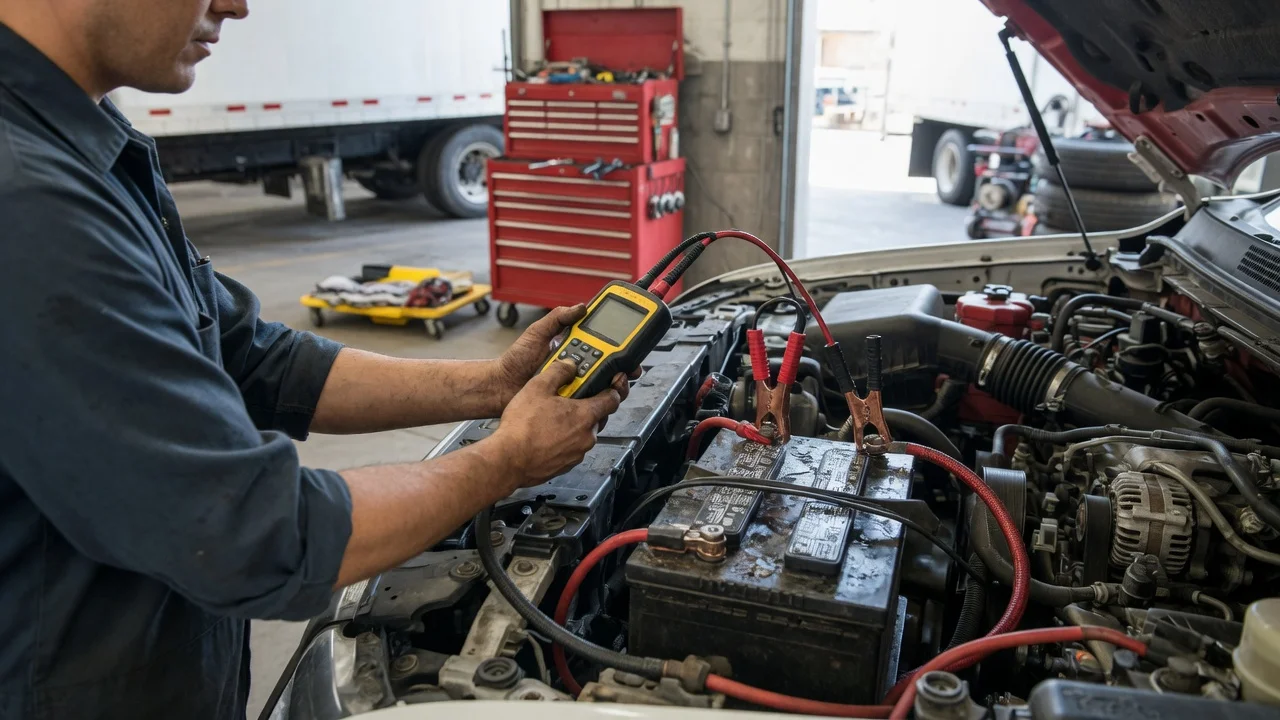
For most pickups and light trucks with a single 12-volt battery, a handheld digital battery analyzer (often called a conductance tester) is the most practical choice. It checks state of health without draining the battery and reports an estimated cold cranking amps (CCA) figure you can compare against the battery's label. The answer changes in three situations: if the truck runs a 24-volt electrical system, if it has two or more batteries wired together, or if it uses a battery chemistry the tester does not explicitly support. Each of these is covered below.
Types of battery testers
Tester type | What it measures | Best suited to | Main limitation; Digital multimeter or voltmeter | Resting voltage only | Quick charge-level checks | Cannot reliably tell a healthy battery from a weak one that still holds surface charge; Carbon-pile or resistive load tester | Voltage while a heavy load is applied | Confirming whether a battery can deliver current under load | Bulkier, generates heat, and the battery should be well charged before testing; Digital conductance analyzer | Internal conductance, converted into estimated CCA and a health result | Routine diagnosis on most 12-volt trucks | Results depend on entering the correct battery type and rating; Analyzer with starting and charging tests | Battery health plus cranking voltage and alternator output | Finding whether a no-start problem is the battery, starter circuit or charging system | Features vary widely between models
Conditions that change the choice
Electrical system voltage: Most pickups use 12-volt systems, while many medium- and heavy-duty commercial trucks use 24 volts, typically achieved by wiring two 12-volt batteries in series. Confirm that a tester's specifications list the system voltages you need before buying. A tester rated only for 12 volts can still be used on a 24-volt truck if each 12-volt battery is tested individually, but it should not be connected across the full 24-volt pack.
Multiple batteries: Some diesel pickups and many commercial trucks carry two or more batteries wired in parallel. Testing them while connected tends to average the readings, which can hide a single failing battery. For an accurate result, disconnect the batteries from each other and test each one separately, following the vehicle manufacturer's procedure.
Battery chemistry: Trucks may use conventional flooded lead-acid, AGM (absorbent glass mat) or EFB (enhanced flooded battery) types, and some auxiliary or aftermarket setups use lithium batteries. Conductance testers interpret readings differently for each type, so the tester needs a setting for your battery's chemistry. Lithium batteries are generally not compatible with standard lead-acid testers unless the tester explicitly states support.
Rating standard and range: Battery labels may show CCA under one of several standards, such as SAE, EN, DIN, JIS or IEC. A digital tester should let you select the same standard printed on the battery, and its CCA input range should cover large truck batteries, which often carry higher ratings than car batteries.
Checks to make before buying
Supported system voltages match your truck, or you are prepared to test each battery individually; Battery chemistries listed include the type fitted to your truck; Rating standards include the one on your battery label; CCA input range covers your battery's rating; Starting and charging system tests, if you need to diagnose no-start or charging faults; Clamp and cable size suitable for the terminal style on your batteries, including side-post terminals found on some trucks
Getting a reliable reading
Test with the engine off and accessories switched off. If the truck has just been driven or charged, surface charge can make a battery look stronger than it is; letting it rest or briefly switching on the headlights before testing reduces this effect. Clean corroded terminals so the clamps make solid contact, and enter the battery's actual rating rather than a guess. If a result is borderline, recharge the battery fully and test again before deciding to replace it.
Information not covered here
No specific tester models, prices, accuracy figures or independent test results were available for this guide, so it does not recommend particular products. Battery specifications and wiring layouts also vary by truck make, model year, market, trim and engine; check your owner's manual or the battery label for the correct voltage, chemistry and CCA rating before choosing or using a tester.