Tru-Cool Transmission Coolers: Choosing a Model
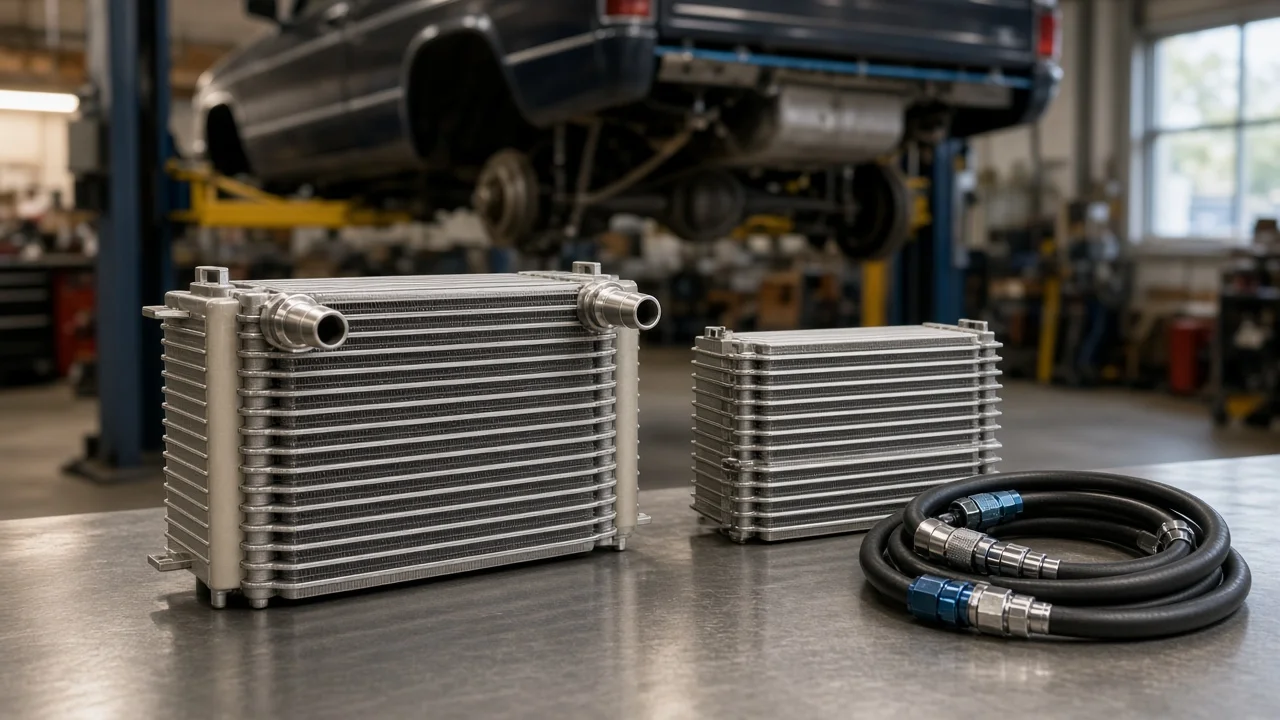
A Tru-Cool transmission cooler is an add-on heat exchanger. It helps keep automatic transmission fluid closer to its intended operating range when a vehicle tows, hauls or idles in heavy traffic. The right model is rarely just the biggest unit. You need to match cooling capacity, line size and mounting space to your transmission and to how you actually drive. This guide walks through that decision step by step.
Define the job the cooler must do
Start with the workload. Different vehicles put very different heat loads on the transmission. A half-ton pickup pulling a camper up mountain grades is one case. A minivan used for daily commuting is another, and a delivery van that spends hours in stop-and-go traffic is a third. Write down your heaviest regular load, including trailer weight, along with your climate and whether the vehicle already has a factory tow package. Many vehicles sold with towing equipment come with an auxiliary cooler from the factory. Adding another one may give little benefit or may need different plumbing.
Be clear about the problem you are trying to solve. An auxiliary cooler is a preventive upgrade that lowers fluid temperature under load. It does not fix an existing fault. If the transmission already slips, flares between gears, shifts harshly or has stored diagnostic codes, have it diagnosed first. A high fluid temperature reading or a burnt smell is a symptom, not proof of a failed part. Possible causes include low fluid, a restricted cooler line, a converter clutch problem or internal wear. A cooler added to a transmission with an undiagnosed problem can hide the warning signs while the damage continues.
Check compatibility before you buy
Identify the exact transmission type first. Conventional automatics, CVTs, dual-clutch units and some modern multi-speed automatics manage fluid temperature in different ways. Some use thermostatic valves, fluid warmers or heat exchangers tied into the engine coolant system. On some of these designs the manufacturer does not support an external cooler at all. On others, the cooler must sit in a specific spot in the circuit to avoid overcooling or disrupting the warm-up strategy. Check the service information for your model and transmission code rather than relying on a generic vehicle listing.
Next, confirm physical fitment. Measure the outside diameter of the cooler lines. Inlet and outlet sizes vary between aftermarket coolers, and the hose must seal properly on both the cooler and the factory lines. Measure the open space in front of the radiator and air-conditioning condenser, and note where the bumper reinforcement, horns, sensors and any active grille shutters sit. Finally, compare the model's capacity rating, usually given as vehicle weight or towing capacity, with your vehicle's real loaded weight rather than its empty weight.
Features that affect the choice
Tru-Cool coolers are commonly associated with stacked-plate construction, where fluid flows through thin, flat plates separated by fins. Plate-type coolers tend to shed more heat for a given frontal area than basic tube-and-fin designs, which helps when space is tight. The trade-off is narrower internal passages, which are harder to flush if the transmission ever sheds debris. Confirm the construction of the specific model you are considering, since a product range can include more than one design.
Treat capacity labels as a starting point. A weight-based rating is useful for comparing models within one line. It does not account for airflow behind your particular grille, ambient temperature or how long the vehicle works under load. Check the details that matter on installation day: whether a mounting kit is included, the type and rating of the supplied hose, the clamp style and whether the fittings suit your lines. Bigger is not automatically better. In a cold climate, an oversized cooler can keep fluid below its intended range, which may affect shift behavior until the fluid warms. A thermostatic bypass can help if it is compatible with your setup.
Limitations and ownership costs
Installation is usually straightforward on conventional automatics, but it still takes care. You will cut or disconnect cooler lines, route hose away from the exhaust and moving parts, and mount the core securely with an air gap ahead of the condenser. Push-through mounting rods that pass through radiator or condenser fins are convenient, but they can damage those cores and wear holes over time. A bracket fastened to solid structure is generally the safer choice. The usual practice is to plumb the auxiliary cooler in series after the factory cooler so fluid passes through both. Follow the guidance for your transmission if it says otherwise.
Budget for more than the cooler. You will likely need quality transmission cooler hose, clamps or fittings, possibly a bracket, and enough fresh fluid to fill the added cooler and hose. Use only the fluid specification your transmission requires; adding a cooler does not change it. After installation, check the fluid level using the manufacturer's procedure. For many units this means a specific fluid temperature and engine state. Inspect the connections for seepage after the first few drives.
Over time, inspect the hose for cracking or softening, keep the cooler face clear of bugs and debris, and watch for stone damage. If the transmission fails internally, many rebuilders recommend replacing a plate-type cooler instead of flushing it, because trapped debris can contaminate the rebuilt unit. Record the cooler in the vehicle's service history so future technicians know it is there when they diagnose a leak or temperature complaint.
Build a practical shortlist
Narrow the field with a checklist rather than a ranking. A good candidate meets five tests. It works with your transmission type, and the vehicle manufacturer allows an external cooler. Its capacity rating suits your heaviest realistic load. Its core fits the available space with room for airflow. Its inlet and outlet sizes match your lines, or the kit includes suitable adapters. Its mounting hardware lets you avoid fastening through the radiator or condenser.
Then weigh your repair options and total costs. Add up the cooler, hose, fittings and fluid, and compare that with the cost of professional installation if you are not comfortable working on fluid lines. If the vehicle has an existing shifting complaint or stored codes, hold off on buying until the transmission has been diagnosed. Once it checks out, the right Tru Cool model is the smallest one that handles your workload comfortably, fits cleanly and installs without compromising other cooling components.