Tru-Cool 40K Transmission Cooler: Fitment and Selection Guide
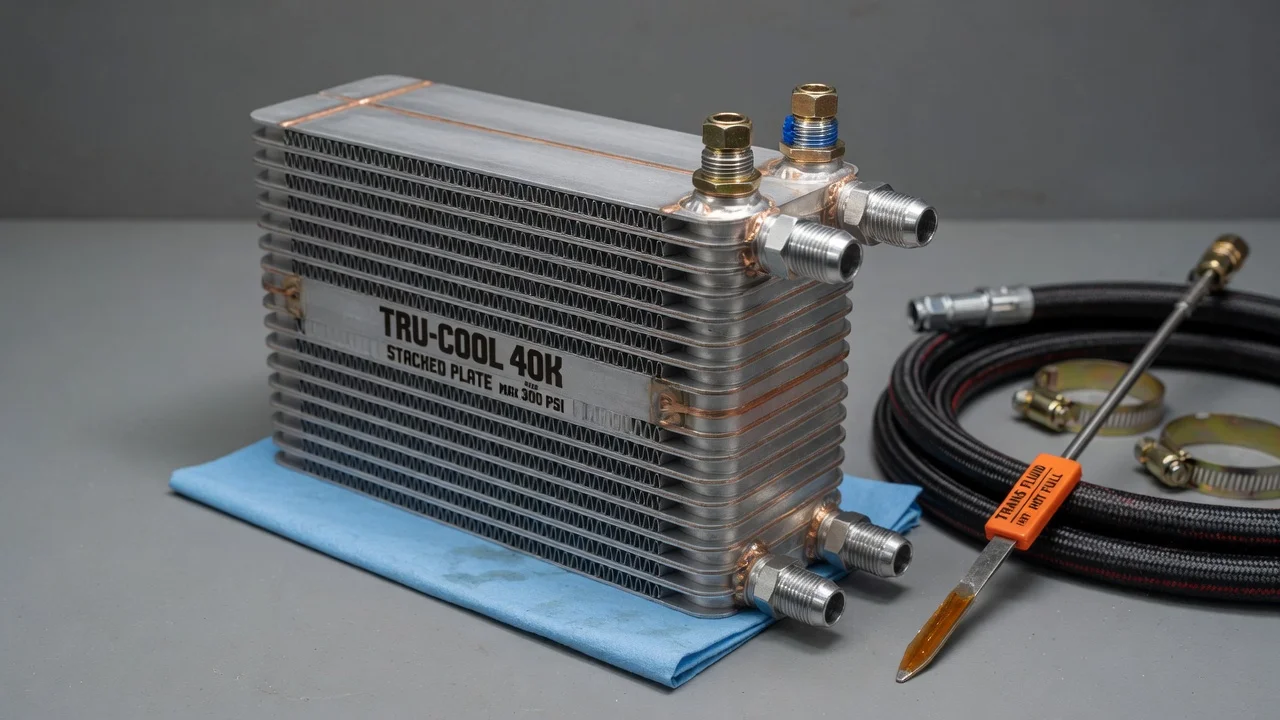
A Tru-Cool 40K transmission cooler is an auxiliary air-to-oil cooler aimed at heavy towing and hauling, and its 40K label is commonly read as a 40,000-pound GVW-class rating. That number alone does not make it the right part for your truck. Whether it suits you depends on your transmission type, the existing cooler circuit, line size, mounting space and how you actually use the vehicle. This guide walks through those checks so you can decide before buying.
Define the job the cooler must do
Start with the work the vehicle does. A truck that tows a large travel trailer over mountain grades, a pickup carrying a slide-in camper, a plow truck, or a work vehicle that crawls and idles under heavy load all generate far more transmission heat than commuter driving. An oversized cooler such as a 40K-class unit makes the most sense where sustained load, low road speed and high ambient temperatures combine. If the vehicle mostly carries light loads at highway speed, a smaller cooler or the factory heavy-duty cooling package may be enough, and a very large core can add cost, weight and installation work without a matching benefit.
Write down the practical constraints as well: year, make, model and engine, the exact transmission, whether a factory auxiliary cooler is already installed, and what the service history shows about fluid changes and any past overheating. Note the climate you drive in. In very cold regions, a large cooler can hold the fluid below its intended operating temperature unless the circuit includes a thermostatic bypass, and that affects both shift behavior and fluid condition over time.
Check compatibility
Identify the transmission type first. Conventional automatics, many modern multi-speed units with electronically managed fluid temperature, CVTs and some dual-clutch designs route fluid differently, and some factory systems use a thermostatic valve or a fluid warmer that an aftermarket cooler must not defeat. Check the service information for your specific transmission before deciding where the new cooler goes. An auxiliary cooler is generally plumbed in series with the factory cooler, often on the return side after it, but the correct arrangement depends on the vehicle.
Next, match the interfaces. Measure the outside diameter of your cooler lines and confirm the hose size and connection style the cooler is designed for, whether barbed ports for hose and clamps or threaded ports that need adapters. Many late-model trucks use quick-connect fittings at the radiator or transmission, which may call for a specific adapter kit rather than cutting a hard line. Confirm that any hose you use is rated for transmission fluid at operating temperature and pressure.
Physical space is the other half of fitment. A 40K-class core is large, so measure the area in front of the radiator and A/C condenser, check clearance to the grille, bumper reinforcement, horns, sensors and any active grille shutters, and decide how it will be mounted. Through-core rod kits are quick but less rigid, while brackets fastened to the core support hold a heavy cooler more securely. Compare the published dimensions of the exact listing against your own measurements rather than assuming it will fit.
Features that affect the choice
The headline number is a sizing rating, not a measured result on your vehicle. Treat the 40K figure as the manufacturer's capacity class and confirm in the product documentation what it is based on. Actual fluid temperature depends on airflow, ambient heat, fan operation, line routing, fluid condition and how hard the transmission is working, so no rating guarantees a particular temperature drop.
Construction matters more than marketing labels. Tru-Cool coolers are generally described as stacked-plate designs, which tend to offer more effective cooling surface and better vibration resistance than basic tube-and-fin coolers, usually at a higher price. Look at what comes in the box: hose length, clamps, mounting hardware and any fittings. Check the inlet and outlet positions against your line routing, because a layout that forces sharp hose bends or long runs complicates installation. A transmission temperature gauge, or a scan tool that reads fluid temperature, gives you real evidence afterward of whether the cooler is doing its job under your loads.
Limitations and ownership costs
Installation opens the fluid circuit, so plan to replace what is lost plus the extra volume the larger cooler and hoses hold. Use the fluid specification listed for your transmission rather than a generic product, and follow the correct level-check procedure. Many current transmissions have no dipstick and must be checked at a specified fluid temperature through a fill or check plug, sometimes with a scan tool. Budget for fluid, hose, clamps or adapters and possibly brackets, and recheck every connection for leaks after the first full heat cycle.
A cooler cannot repair a transmission that is already slipping, flaring, shifting harshly or setting diagnostic codes. Those symptoms can come from low or degraded fluid, wiring or sensor faults, solenoid or valve body problems, software, or internal wear, and each needs proper diagnosis before any part is replaced. Likewise, an overheating warning points to a cause worth finding, such as a clogged cooler, a restricted line, a fan problem or low fluid, rather than proving that a bigger cooler is the answer. Exposed coolers need occasional cleaning of debris and insects, and hoses and clamps deserve inspection at routine service. Some warranties and service contracts treat changes to the cooling circuit differently, so review the terms before installing.
Build a practical shortlist
Before buying, put together a short comparison for each cooler you are considering: the rating and what it represents, core dimensions, connection type and hose size, included hardware, mounting method, and whether it works with your factory cooler and any thermostatic bypass. Add the cost of fluid and adapters for your vehicle, and confirm that the seller's fitment notes match your year, cab, engine and transmission rather than just the model name.
Then weigh realistic alternatives. If the vehicle has a factory tow package, check whether it already includes an auxiliary cooler, and consider whether a smaller unit or a thermostatically controlled cooler suits your climate better. If you are unsure of the transmission configuration, a transmission shop can confirm the circuit layout, check fluid condition and record baseline temperatures, giving you a clear before-and-after reference among your repair options. Choose the 40K-class cooler when your load, measurements and available space all support it, not simply because it is the largest option on the shelf.