Trimble Steering Angle Sensor
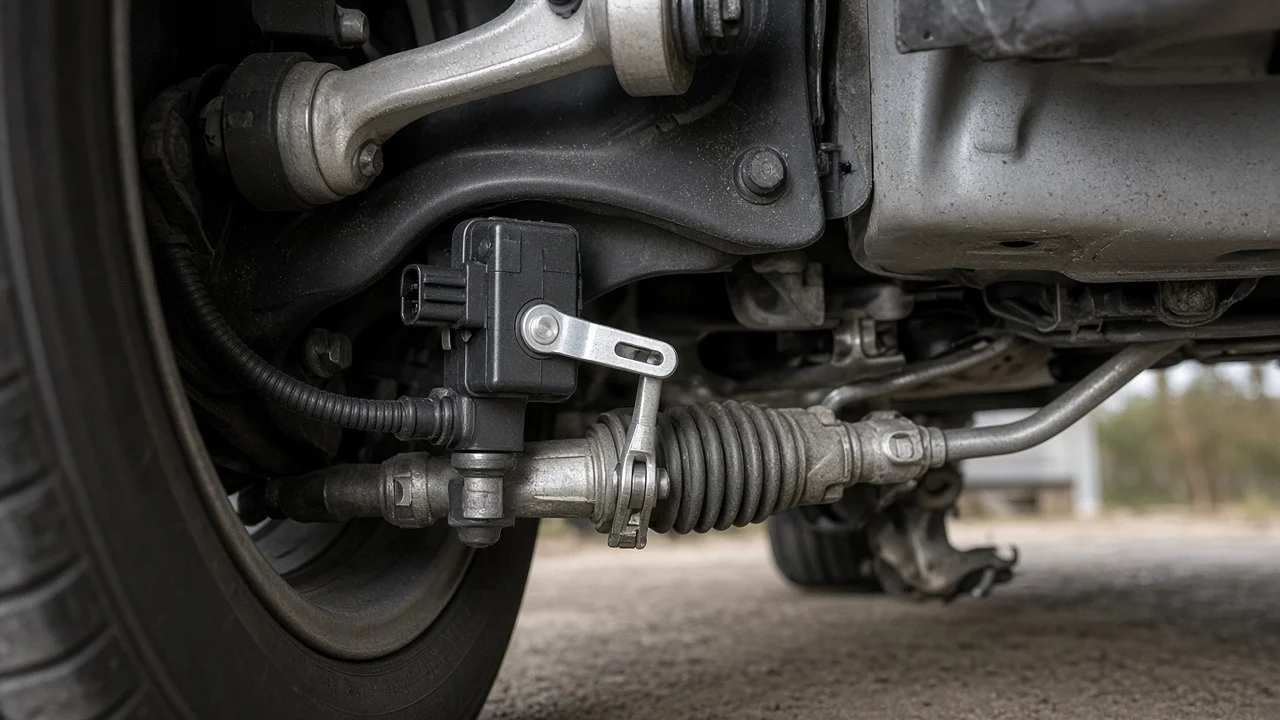
A steering angle sensor translates the driver’s hand movement at the wheel into an electronic position signal used by stability control, steering assist and autonomous guidance systems. The Trimble Steering Angle Sensor applies that principle where accurate heading and wheel position data matter beyond ordinary dash warnings, such as precision agriculture, machine control and specialized vehicle instrumentation. Understanding its role helps distinguish how the measurement is made, why mounting and alignment affect the reading, and what limits should be considered before treating a stored fault as a failed component.
Essential answer
The Trimble Steering Angle Sensor is an electronic measuring device that reports the rotational position of a steering shaft or wheel assembly so a control system can determine intended direction and turning magnitude. Unlike a generic passenger-car angle sensor tied mainly to electronic stability control, this unit is typically used as part of Trimble-compatible guidance, autopilot or machine-control equipment where consistent steering feedback improves path accuracy. Its output is a reference signal rather than a complete navigation solution, and the sensor must be installed so its zero point matches the vehicle’s straight-ahead orientation.
A practical distinction is that the sensor supplies evidence of steering position, not proof that the rest of the steering system is healthy. Worn tie-rod ends, loose mounting points, changed ride height, or incorrect wheel alignment can produce a plausible angle reading while the vehicle still drifts or follows a curved path. Because the device measures relative rotation, physical joint play between the sensor and the wheels can create disagreement between reported steering angle and actual tire direction. Manufacturer-dependent calibration and wiring details require confirmation for the specific vehicle and controller before the signal can be interpreted reliably.