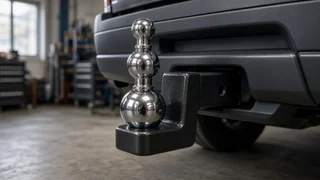
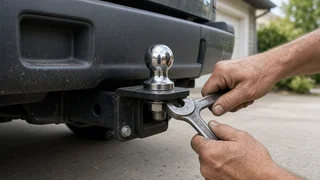
Tri ball trailer hitch
Choosing the right tri ball trailer hitch matters when a driver regularly tows trailers with different coupler sizes. This style combines multiple hitch ball diameters in one mount, so the user can rotate or reposition the assembly instead of swapping a conventional ball each time. For a commercial purchase decision, the important issues are load ratings, receiver fit, and whether the additional bulk changes access to the tow vehicle’s rear. A well-matched triple ball trailer hitch offers convenience, but only when the chosen configuration remains within the vehicle’s gross vehicle weight rating, tongue weight capacity, and axle rating.
The direct answer
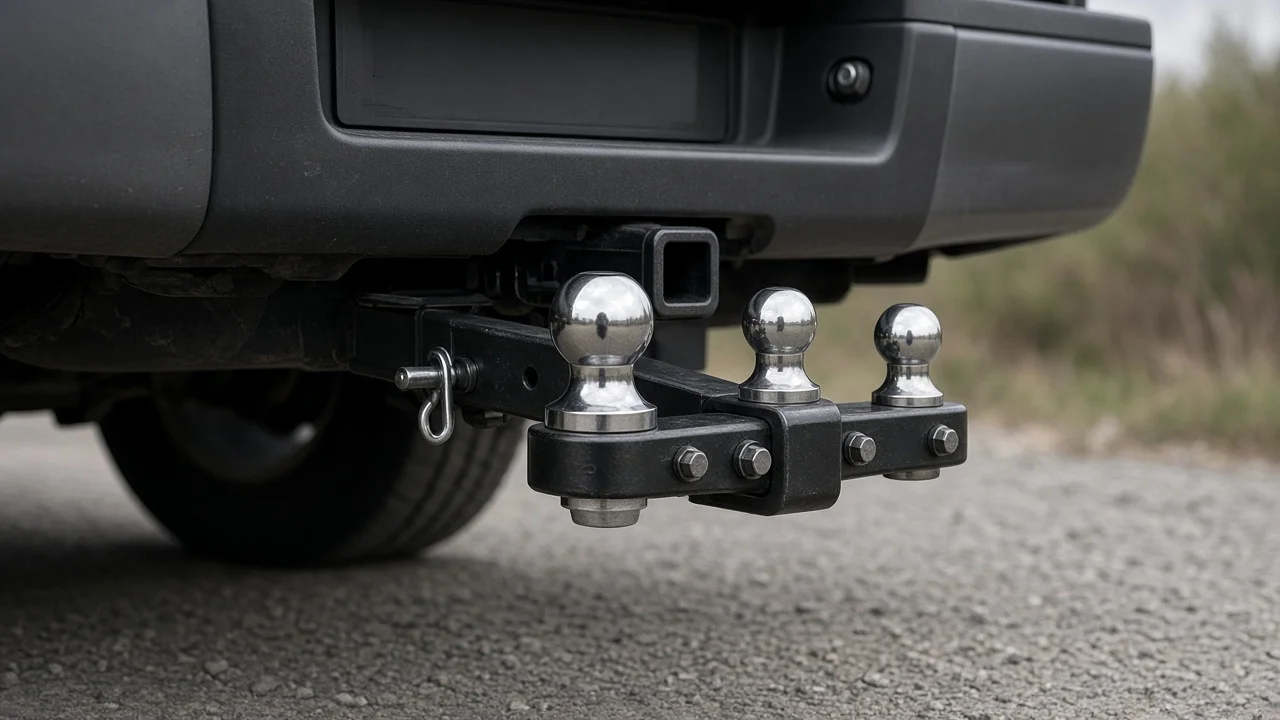
A tri ball trailer hitch, also called a triple ball trailer hitch, is a hitch bar or ball mount fitted with three different ball sizes. Typical configurations cover common coupler diameters such as 1-7/8 inches, 2 inches, and 2-5/16 inches, allowing one assembly to serve several trailers. The immediate answer is that it can be a practical choice for mixed towing, but the user must verify the receiver tube size, shank dimensions, and the drop or rise that positions the trailer level.
The component is not automatically rated for every trailer. Each ball has a capacity determined by its size, shank, and mounting design, and the entire mount must respect the vehicle’s payload and combined weight rating. A low-capacity ball used with a heavy coupler can create an unsafe load path even if the receiver is rated higher. The hook found on a triple ball trailer hitch mount with hook is a recovery or tie-down feature, not an increase in towing capacity.
Buyers comparing a two ball trailer hitch and a three-ball design should focus on real clearance and compatibility rather than ball count alone. A two-ball version is often lighter and shorter, while the three-ball arrangement adds versatility but may extend farther from the bumper and reduce ground clearance on steep driveways. The best option depends on the range of trailers actually towed, the receiver’s rated capacity on the vehicle, and whether the extra rotating assembly can be secured without interference with the bumper, spare tire, or wiring.
A triple ball trailer hitch mount must fit the receiver opening tightly and include a properly rated pin or lock. Because the multi-ball head is heavier than a simple ball mount, the combined assembly can increase the static load hanging behind the axle and affect the rear suspension’s reaction over bumps. When the configuration is correct, the user gains a convenient do-it-all towing accessory; when the ratings are ignored, the convenience creates a false sense of security. The practical purchase step is to confirm the specific ball sizes, shank length, drop, hitch pin hole size, and capacity markings on the product.