Transmission Repair Financing: How to Compare Payment Options
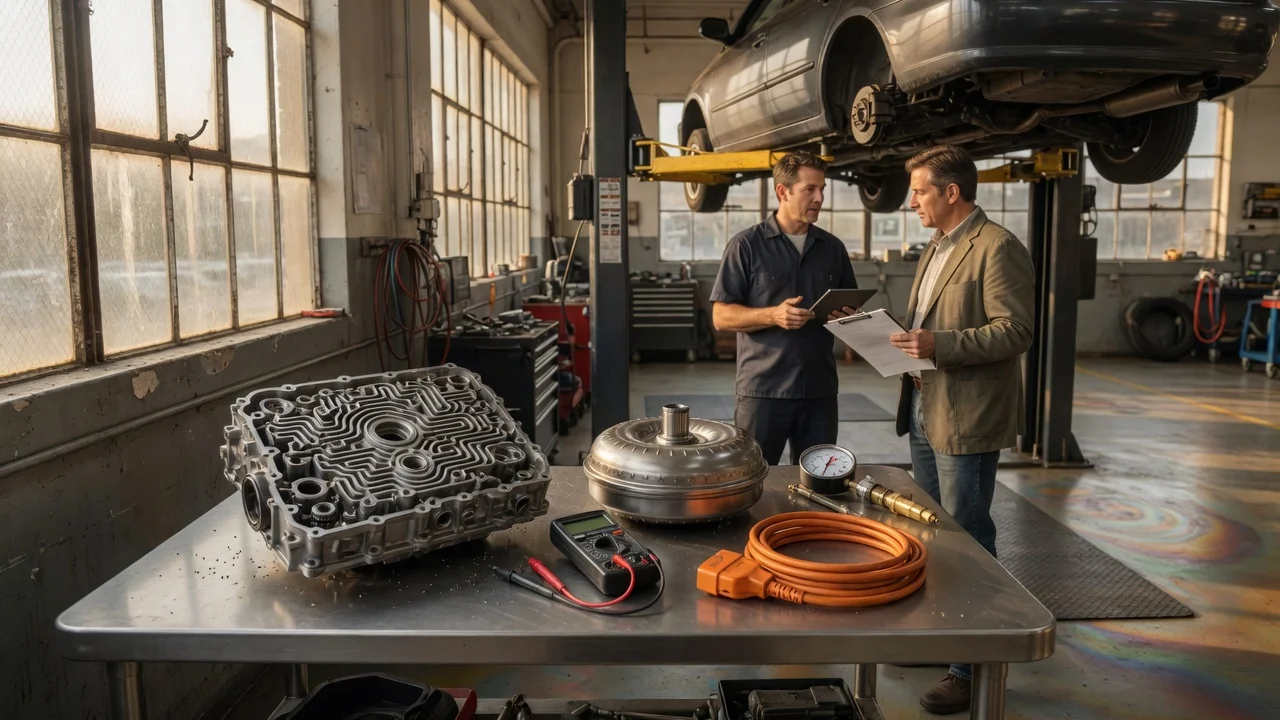
If a transmission repair costs more than you can pay at once, get a written diagnosis and itemized estimate first, then compare every payment method on the same terms: the cash price of the job, the annual percentage rate (APR) and fees, the repayment term, the total you will repay, approval requirements, and any rule that ties the loan to one shop. The smallest monthly payment often produces the highest total cost. Repair prices, APRs, fees, and approval odds vary by vehicle, shop, lender, and credit profile, so use this framework on written quotes rather than on generic figures.
What you are financing
You are paying for repair or replacement of the gearbox that sends engine power to the drive wheels, plus related parts and labor. That work may be a rebuild of the existing unit, a remanufactured or used replacement, or accompanying items such as a clutch, torque converter, valve body, mechatronic unit, seals, fluid, and control-module programming. Automatic, dual-clutch, and continuously variable transmissions (CVTs) are inspected and priced on different parts and procedures than manual gearboxes. Until a shop confirms what failed, the cash amount you would finance is still unknown. Financing an unconfirmed job can fund the wrong repair.
Payment options to line up
Bring the same estimate to each of these sources so the comparison stays on funding, not on mixed repair scopes.
Cash or debit from savings, which has no finance charge on the repair itself. A credit card, including any promotional 0% purchase APR that lasts long enough to repay the cash price. An unsecured personal loan from a bank, credit union, or other installment lender. In-house shop payments or a third-party auto-repair credit plan offered at the counter. Dealership payment arrangements when the work is performed there. An existing factory warranty, extended warranty, or vehicle service contract, including any deductible, if the failure is covered.
A standard personal auto policy pays for transmission damage when a covered collision or listed peril caused it. Mechanical wear and internal failure sit outside most policies. Confirm warranty or service-contract coverage in the contract, including maintenance-record and modification exclusions, before you treat that path as payment.
Criteria that keep the comparison fair
Use one approved cash price for every credit offer. If one shop quotes a rebuild and another quotes a used or remanufactured unit, compare those repairs on durability, warranty, and parts source first. Only after the scope matches should you compare how you pay.
Cash price of the approved work, including parts, fluid, seals, programming, shop supplies, taxes, and labor. APR, which states the yearly cost of credit and includes some, though not always all, fees. Fees outside the APR, such as origination, documentation, or processing charges. Term in months and whether the payment is fixed. Total of payments if you follow the schedule to the end. Deposit or down payment the shop requires before teardown or rebuild. Credit check type and any minimum credit or income the lender requires. Prepayment rules, including precomputed interest that does not shrink much if you pay early. Shop lock-in: whether the funds can be used only at that facility. Late-payment and default terms, and whether the repair warranty remains valid if a payment is missed. Whether the financed amount can rise after teardown if extra parts are found.
How the main options differ
Option Fits well when Main tradeoff; Cash or savings The cash price leaves a working emergency reserve Lowest repair cost; that money is no longer available for other needs; Credit card A true 0% purchase promotion covers the full payoff window, or you need same-day authorization After a promo, revolving APR and minimum payments can raise the total; a large balance raises credit utilization; Personal or credit-union loan You want a closed-end amount, fixed term, and a shop you choose Approval and APR follow credit and income; funding can take longer than a card; Shop or third-party repair plan You need a decision at the counter or other lenders have declined Convenience can come with a higher APR, extra fees, shop lock-in, or deferred interest that converts to a high rate if the promo is missed; Dealership arrangements OEM parts, factory-level programming, or an existing dealer account matter for the job Still requires the same APR, fee, and total-of-payments math as any other lender; Warranty or service contract The unit and failure are covered and authorization is obtained Deductible, exclusions, and required diagnostic steps are set by the contract
Deferred-interest promotions are a special case. Interest may be waived only if the entire balance is paid by the promotional end date. A remaining dollar can cause interest to be charged back to the start of the plan. A 0% installment APR that never accrues that back-interest is a different product and should be labeled that way on the disclosure.
Conditional recommendation
Pay cash when the cash price leaves emergency savings intact and no higher-interest debt is left unpaid as a result. Use a promotional credit card when the disclosure shows a true 0% purchase APR, you can repay the full cash price inside that window, and you will keep the plan simple enough to hit that date. Choose a credit-union or personal installment loan when you need several months or more and want a fixed payment you can compare as a single total-of-payments number against every shop plan, using the same principal. Use shop or third-party repair credit when it is the approval you can actually obtain, then still test whether a second estimate or a different parts path (remanufactured or used unit versus a full rebuild) lowers the amount borrowed. Follow a warranty or service contract first when the failure may be covered, and wait for written authorization or denial before financing the retail price.
The better option is the one that funds a confirmed repair at the lowest total cost you can finish, at a shop whose diagnosis you trust. Credit availability can limit that set; it does not change the arithmetic.
How to compare offers on paper
Write the cash price at the top of a single sheet, then add one column per lender or card.
Obtain a written diagnosis that states the confirmed cause, the failed components, and the proposed work. A road-test complaint or a stored fault code alone does not establish that the transmission must be rebuilt or replaced. Collect at least two itemized estimates, or a clear written reason the scopes differ. Record APR, fees, term, monthly payment, and total of payments for each credit offer. Convert every option to total dollars out of pocket, including deposits and any card surcharge the shop discloses. Note shop lock-in, deferred-interest rules, prepayment terms, and whether teardown findings can increase the amount financed. Select the repair scope on the diagnosis and warranty, then select funding. A preapproved credit line is a ceiling, not a reason to authorize extra work.
If a shop declines to put the estimate in writing, or cannot explain what inspection established the need for a rebuild or replacement, wait to sign a financing contract.
Numbers this article cannot supply
Your repair price, APR, finance charge, and approval odds are not known here. They depend on the vehicle’s model year, transmission family and type, parts source, local labor rates, your credit and income, and the lender’s underwriting. Ask each creditor for a written disclosure of APR, finance charge, amount financed, and total of payments. Ask the shop what the estimate includes after teardown, whether the diagnostic fee is applied to the job, and how added parts will be approved. Estimate, lien, and credit-disclosure rules also vary by jurisdiction. Use the documents in front of you.
Before you sign
Confirm the repair warranty in time and mileage, who honors it if the shop closes, and how late or missed finance payments affect that warranty. Keep the diagnosis, estimate, authorization, and credit disclosure together. Towing and diagnosis come first when the vehicle will not stay in gear, has no drive in any range, overheats the transmission, leaks a large amount of fluid, or shows a warning a technician has told you requires immediate attention. Those conditions set whether the vehicle should be driven; they are separate from which payment option you choose.