Choosing Transmission Fluid for Torque Converter Shudder
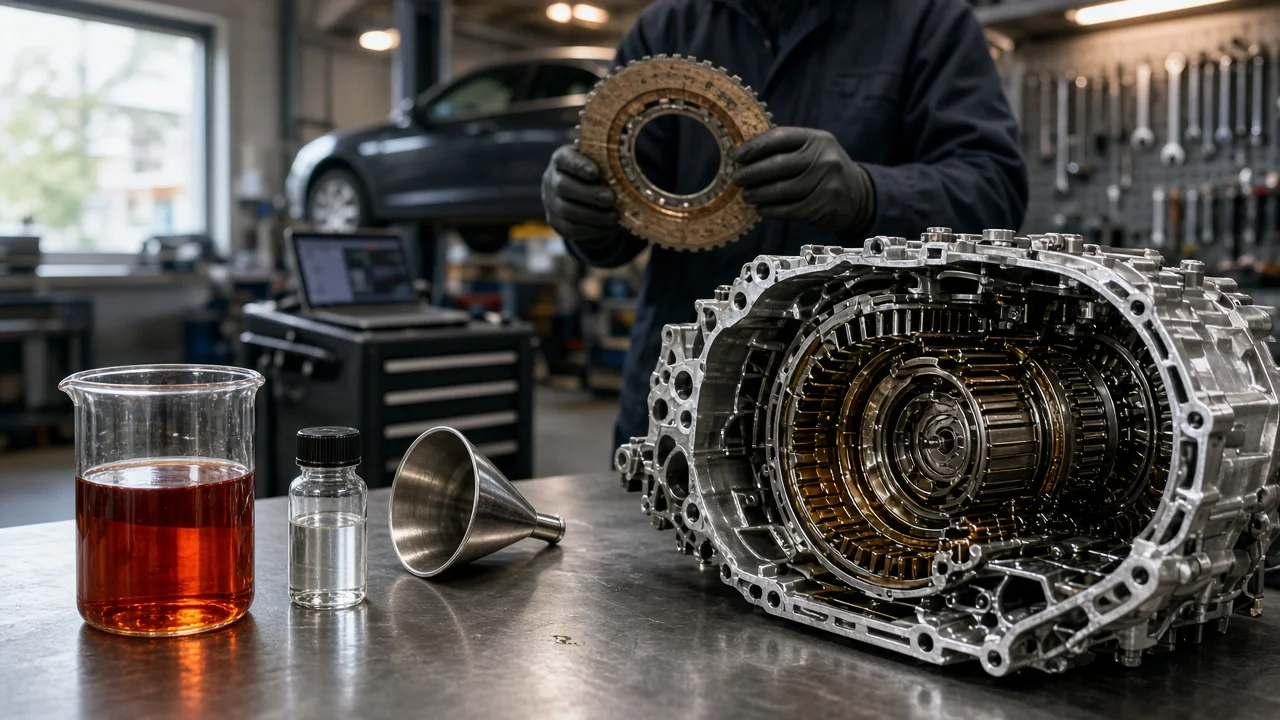
Torque converter shudder often feels like rolling over rumble strips during steady cruising or light acceleration. Fresh fluid with the correct friction properties can calm shudder caused by worn-out fluid. It cannot repair worn clutch material, a failing solenoid or an engine misfire that feels similar from the driver's seat. This guide explains how to pick a fluid that matches your transmission and when a fluid change is the wrong tool for the job.
Define the job the fluid must do
Most modern automatics use a torque converter clutch, also called a lockup clutch, to connect the engine and transmission directly at cruising speed. Many units also run this clutch with a small, controlled amount of slip to smooth out engine pulses. The fluid's friction modifiers determine how smoothly that clutch grabs and releases. Over time, heat and use break those additives down. The clutch can then start to grab and slip in rapid cycles, which you feel as shudder. When degraded fluid is the cause, the right replacement fluid restores the intended friction behavior, and that is the specific job you are shopping for.
Before buying anything, confirm that the symptom fits. Converter shudder typically appears when lockup engages, often once the transmission is warm. It may disappear briefly if you touch the brake pedal or change throttle position, because either can release the clutch. Engine misfires, worn engine mounts, driveshaft imbalance and worn CV joints can produce similar vibrations. Scan for diagnostic codes: a converter clutch code such as P0741 points toward the lockup system, and misfire codes point elsewhere. Review the service history as well. Original fluid at high mileage makes fluid a plausible contributor, and a recent service with the wrong product is just as relevant. A symptom suggests where to look. It does not confirm which part has failed.
Check compatibility with your transmission
Start with the transmission type. A conventional stepped automatic with a torque converter uses automatic transmission fluid. Many CVTs also have a torque converter, but they require a dedicated CVT fluid, and a regular ATF can damage them. Dual-clutch transmissions have no torque converter at all, so a shudder there involves different parts and different fluids. Next, identify the exact transmission model. The owner's manual, a tag on the transmission case, or a dealer lookup by VIN can confirm it. The same vehicle can carry different transmissions depending on engine, drivetrain and model year, so fitment by vehicle name alone is not enough.
Then find the fluid specification the manufacturer requires. Common examples include Dexron VI, Mercon LV and ATF+4, along with proprietary fluids such as Toyota WS or Honda ATF DW-1. These specifications are not interchangeable. Many newer transmissions with more gears use low-viscosity fluids designed around their clutch materials. Also check for technical service bulletins. For certain transmissions, manufacturers have responded to shudder complaints by specifying a revised fluid and a particular exchange procedure. A dealer service department can check open bulletins by VIN, and a bulletin that names a fluid outranks any general recommendation.
Features that affect the choice
Labels on ATF bottles fall into two broad groups. Some fluids are officially licensed or approved under a manufacturer's program, such as Dexron or Mercon licensing. These products have met that program's requirements. Others are multi-vehicle fluids that say they are suitable for use in, or recommended for, a long list of specifications. That claim comes from the blender rather than the vehicle maker. For a shudder complaint, friction behavior is the property that matters most, and it is the hardest one to judge from a label. The factory fluid or a product licensed to the exact specification gives you the strongest evidence of a match.
Other marketing terms matter less. Synthetic base oil can resist heat well, but many specified fluids are already synthetic or synthetic blends, so the word alone does not prove a friction match. High-mileage formulas usually add seal conditioners and do not target lockup behavior specifically. Bottled shudder additives change friction characteristics and can reduce symptoms for a while. They can also mask a developing mechanical problem, and some manufacturers advise against adding anything to their fluid. If you try one, treat it as a short-term or diagnostic step and check how it affects any warranty coverage.
Limitations and ownership costs
The service method matters as much as the product. A simple drain-and-fill replaces only part of the fluid, because a large share stays in the torque converter, valve body and cooler lines. Removing enough old fluid to change friction behavior may take several drain-and-fills or a machine exchange, and either way you need more fluid than one fill. Some transmissions also have a serviceable filter, which brings a pan gasket or seal into the parts list. Many current units have no dipstick. They must be checked through a fill plug at a specified fluid temperature with the engine running, which often requires a scan tool to read that temperature. An incorrect level causes problems of its own, and some vehicles need adaptive values reset or relearned after service.
Fluid also has limits. It cannot rebuild worn converter clutch lining, replace a failing lockup solenoid, correct valve body wear or remove internal converter damage. If the old fluid smells burnt or the pan holds noticeable metallic debris, have the transmission inspected before relying on a fluid change. Repair options at that point can include a manufacturer software update, solenoid or valve body work, converter replacement or a rebuild. Factor these possibilities into ownership costs, along with the extra fluid volume, filter parts and labor or tool costs for a correct level check.
Build a practical shortlist
Compare candidate fluids against a short checklist instead of a ranking. Confirm the exact transmission model and model year. Note the fluid specification from the owner's manual or service information. Check whether any service bulletin names a revised fluid or procedure. Confirm whether each product is licensed or approved for that specification, rather than only claiming compatibility. Estimate the quantity needed for your chosen service method, including multiple drain-and-fills or an exchange. List the filter, gasket, drain plug washer and any tool required to check the level at the correct temperature. A product that fails any of the first four checks should come off the list, however strong its marketing.
After the service, drive under the conditions that used to cause shudder and watch shift behavior and lockup engagement over the following days, since some adaptation may occur. Record the date, mileage, fluid used and service method in the vehicle's service history. If the shudder persists or returns quickly, or diagnostic codes appear, move to proper diagnosis of the converter clutch system rather than trying another bottle.