Transmission fluid for diesel trucks
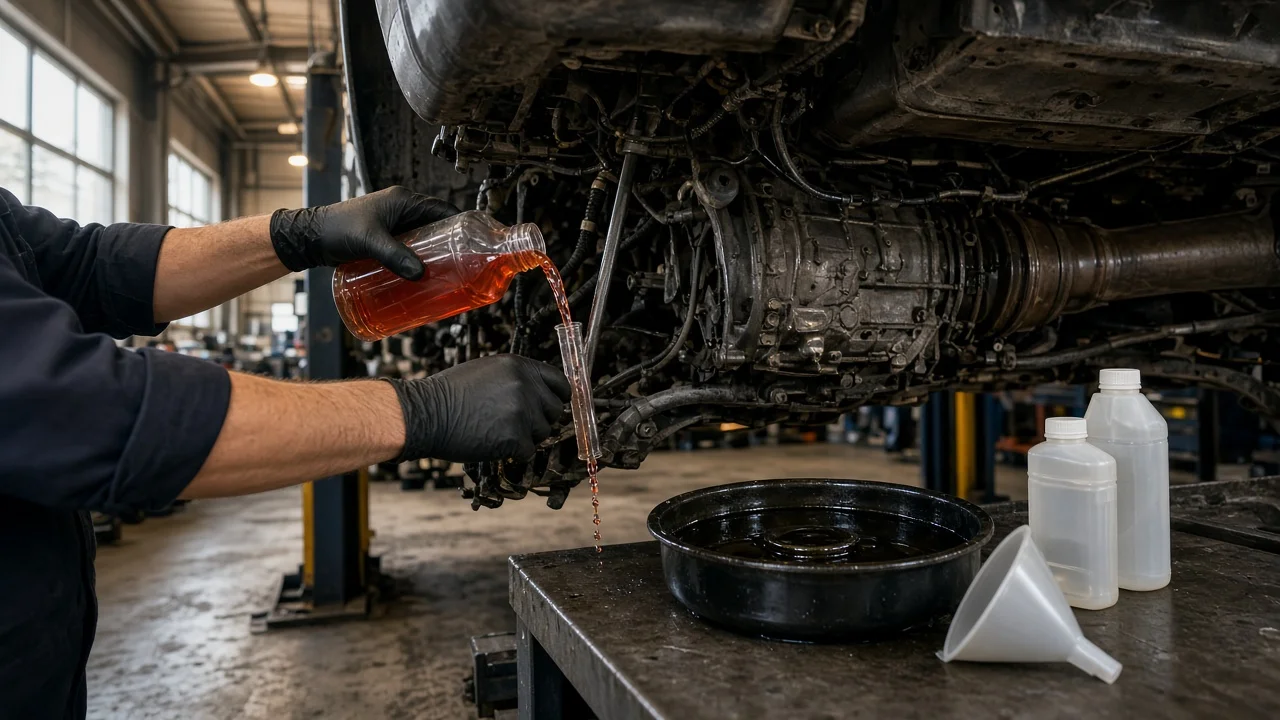
Choosing the right transmission fluid for diesel trucks means matching a heavy-duty lubricant to the demands of high torque, elevated operating temperatures and frequent towing or hauling. Diesel-specific drivelines can stress automatic gearboxes differently than gasoline platforms, so the fluid must support clutch engagement, valve-body response and heat rejection without breaking down. Owners researching this topic often encounter fluid specifications, shift behavior, diagnostic codes and service history questions while trying to separate marketing claims from practical fitment guidance. The essential issue is not simply finding any ATF, but confirming the lubricant that protects the transmission and maintains predictable shifting under sustained load.
Essential answer
The essential answer is that diesel trucks require a transmission fluid selected primarily by the transmission type and the vehicle manufacturer’s fluid specification, not merely by the fuel burned in the engine. A diesel engine’s torque character can raise transmission oil temperatures and stress the torque converter during loaded acceleration, but the gearbox still needs the chemistry and friction behavior approved for that exact unit. Transmission fluid for diesel trucks therefore means identifying whether the driveline uses a conventional stepped automatic, an Allison-style commercial automatic, a dual-clutch gearbox or a manual transmission, because each design has distinct lubrication and shift-feel requirements.
Fluid specification matters more than broad diesel labeling. A heavy pickup or medium-duty truck often needs a fluid that resists oxidation, maintains viscosity at high heat and protects against clutch shudder during low-speed trailer maneuvering. Shift behavior can reveal incorrect fill: delayed engagement after sitting, harsh upshifts when warm or flaring between ratios may indicate aged or incompatible fluid. Service history and diagnostic codes help narrow whether fluid degradation, adaptive learning or a mechanical issue is present, but a fault code alone is not proof that a specific part has failed and manufacturer-dependent codes require vehicle-specific confirmation before expensive repairs.