Transmission Fluid Change Coupons: How to Find and Compare Offers
The short answer
A transmission fluid change coupon is a time-limited discount on professional transmission service, most often a pan drain-and-fill or a fluid exchange, sold by a dealership, independent shop, or national service chain. The coupon is useful when it applies to your transmission type, names a fluid that meets the manufacturer specification, and still looks like a fair price after you add required parts, extra fluid, taxes, and shop fees.
Live coupon amounts, shop names, and model-year service intervals are not listed here because they change by market, VIN, and date. Treat any advertised price as incomplete until you confirm eligibility, the exact procedure, and the fluid spec against the owner’s manual or manufacturer service information.
Where owners usually find these offers
Shops issue transmission-service coupons to fill appointment books and to bundle inspection work around a fluid service. The same discount can appear in more than one channel, so the printed or digital coupon is only the starting point. Call or visit the issuing shop, give the vehicle year, make, model, mileage, and transmission type, and ask whether the coupon still applies before you schedule.
Dealer service mailers, owner apps, and in-service specials tied to the selling brand; Manufacturer service campaigns and seasonal maintenance events; National oil-change and general-repair chains that advertise transmission flush or drain specials; Independent transmission specialists and general repair shops; Warehouse clubs, parts retailers, and installer networks that sell a fluid-and-labor package; Loyalty, new-customer, fleet, or military discounts that can be applied to a listed transmission service; In-bay or waiting-room promotions that apply only on the day of the visit
Bring the coupon, the vehicle identification number, and the owner’s manual fluid specification to the quote. If the shop cannot say whether the unit is a conventional automatic, continuously variable transmission (CVT), dual-clutch, or hybrid transaxle, the coupon is not ready to redeem.
Offer differences that change the real cost
Two coupons with the same headline price can describe different jobs. Compare them on the service method, the fluid specification, what is included, and which vehicles are excluded. Figures from unlike jobs are not a fair match: a pan drain, a filter-and-gasket service, and a machine exchange replace different amounts of fluid and take different labor.
Decision point What to confirm on the coupon or quote Why it matters; Service type Drain-and-fill, drop-pan with filter, or machine flush/exchange A pan drain removes only the fluid that leaves the pan. An exchange aims to replace a larger share of the system volume. Some makers specify one method and advise against the other. Fluid specification OEM spec, brand, and part number, plus extra quarts if the job needs more than the advertised volume Incorrect fluid can cause shift problems or internal damage. CVT, dual-clutch, and hybrid units usually need dedicated fluid that a generic automatic coupon may omit. Parts and labor Filter, pan gasket, drain plug washer, cooler lines, taxes, shop supplies, disposal A low labor price can still rise once the pan is dropped or the quote adds mandatory add-ons. Vehicle eligibility Year, mileage, transmission family, two-wheel versus four-wheel drive, commercial or modified vehicles Many coupons exclude CVTs, dual-clutch units, heavy-duty or high-mileage vehicles, and prior flush work. Fine print Expiration, one-per-customer rules, stacking with other discounts, inspection-required language An expired or non-stackable coupon, or a required multi-point inspection, can erase the advertised savings. Shop type and follow-up Dealer using factory procedure versus independent or chain using aftermarket fluid Factory-fill documentation can matter on a vehicle still under a powertrain warranty or certified pre-owned program. Out of warranty, a shop that documents the correct spec can be equivalent value.
Drain-and-fill coupons versus flush coupons
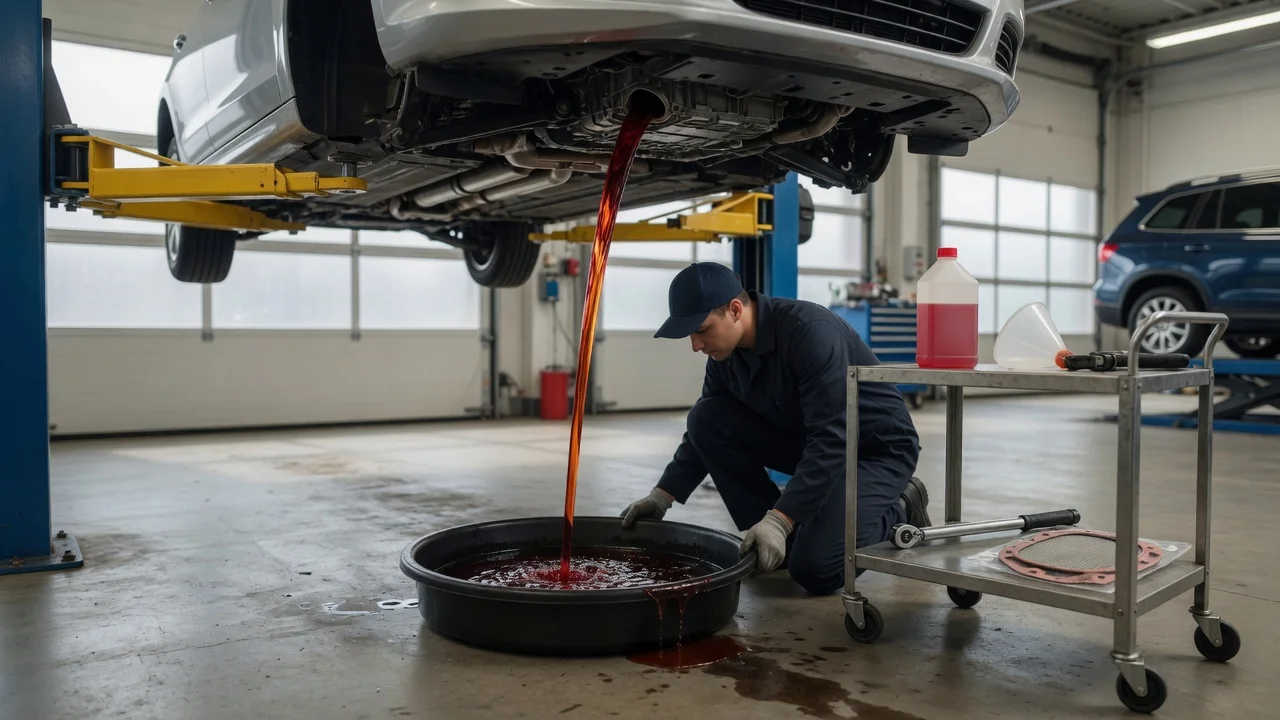
A drain-and-fill coupon covers removing fluid from the pan, often through a drain plug or by lowering the pan, then refilling to the specified level. If the pan comes down, the quote should also state whether a filter and pan gasket are included. This is the procedure many manufacturers describe for routine service.
A flush or fluid-exchange coupon usually means a machine connected to the cooler lines or a similar circuit that pushes new fluid through while old fluid leaves. That can replace more of the total fill, and it can cost more in fluid volume. Some manufacturers warn against high-pressure flushing on certain automatics and CVTs. If the coupon says flush and the service information for your VIN calls for a drain-and-fill only, ask the shop to quote the factory method instead of stretching the coupon to a different job.
Dealer, chain, and independent coupons
Dealer coupons are often the closest match to factory fluid and factory steps, which is the practical choice while a powertrain warranty, extended service contract, or certified pre-owned inspection still applies. They can also be the only offers that list the exact OEM fluid by part number.
Chain and independent coupons can be a better cash price on an older vehicle when the shop writes the correct specification on the repair order, uses new fluid from sealed containers, sets the level at the temperature the maker requires, and gives you the old-fluid and filter remains if you want them. The tradeoff is documentation: you need the invoice to show fluid type, quantity, and procedure if a later warranty or resale question comes up.
A kit or parts-only coupon for do-it-yourself fluid is a different product. It saves money only if you already have a safe way to support the vehicle, catch hot fluid, reset the fill level, and dispose of used fluid. Many late-model units have no simple dipstick and need a scan tool and a specific fluid temperature for a correct level check. That job belongs with a shop if you lack that equipment.
How to compare two coupons before you book
Put both offers next to a written quote for the same VIN. Keep the comparison in matching units: same service method, same fluid spec, and the same included parts. If one shop is quoting a drain-and-fill with filter and the other is quoting a flush without a filter, the two prices are not interchangeable.
Confirm the transmission family: conventional automatic, CVT, dual-clutch, or hybrid transaxle. Read the owner’s manual or a dealer printout for the fluid specification and the allowed service method. Ask whether the coupon price includes fluid, filter, gasket, labor, taxes, and shop fees, and get extra quarts priced separately. Ask what happens if the pan, magnet, or fluid shows debris: whether the coupon still applies or the job converts to a diagnosis. Check expiration, appointment blackout dates, and whether the offer is limited to four-cylinder, two-wheel-drive, or passenger-car units. Decline add-on flushes, additives, or cooler replacements that are not in the manufacturer procedure unless the shop shows a related fault. Keep the final invoice with fluid brand, spec, quantity, and odometer reading.
A practical way to choose
Use a dealer coupon when the vehicle is under a powertrain warranty or a certified program, or when only the dealer will sell the specified fluid and follow the factory fill process. Use a chain or independent coupon on an out-of-warranty vehicle when the shop documents that same spec and a drain-and-fill or maker-approved exchange, and the out-the-door price stays lower after parts and extra fluid. Walk away from a flush-only special when the manufacturer specifies a pan drain, when the coupon is silent on fluid type, or when the quoted job requires a high-pressure machine the maker does not allow.
Specific dollar-off amounts, current coupon codes, and the correct interval for a given model year are outside the evidence available for this article. Those details have to come from the issuing shop and from manufacturer service information for your VIN. If the transmission already slips, bangs, or leaks, a coupon for routine fluid service is the wrong next step; have the fault diagnosed first.