Transfer Case Shift Motor: Function and Location
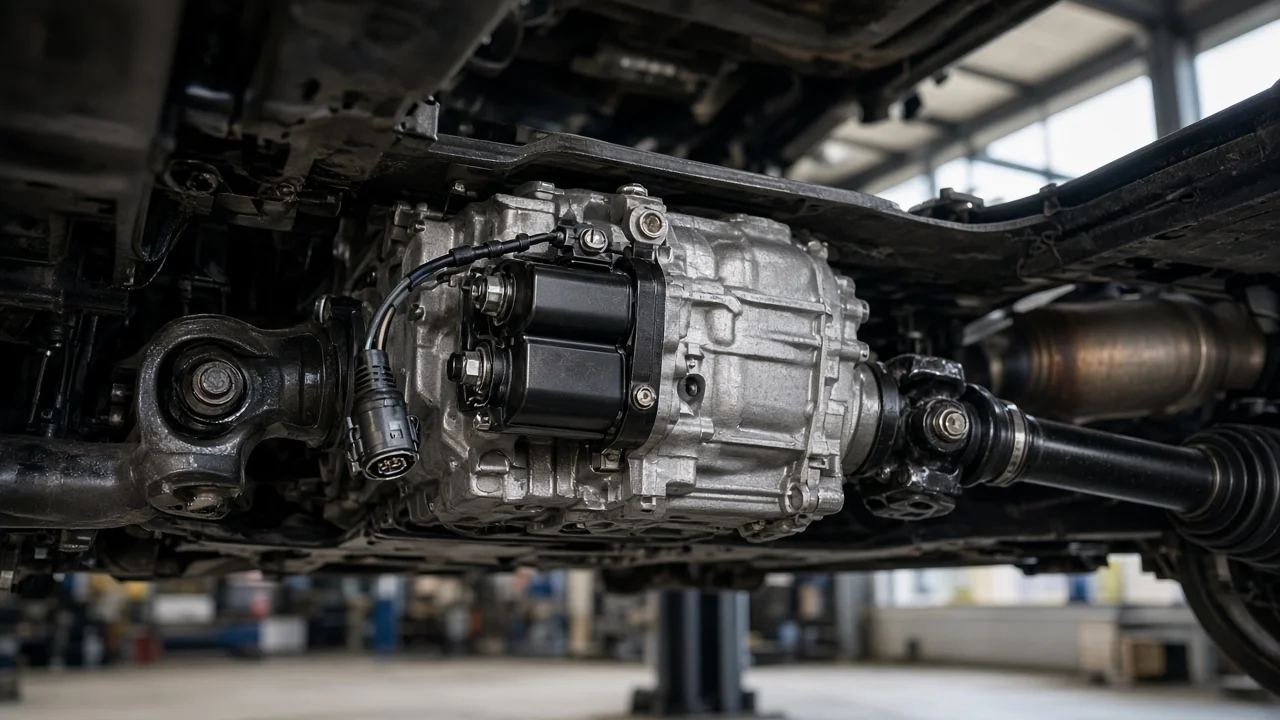
Many four-wheel-drive trucks and SUVs let the driver choose a drive mode with a button, dial or switch instead of a floor lever. Something still has to move the parts inside the transfer case, and that job usually belongs to an electric shift motor, also called a transfer case actuator. This guide explains what the actuator does, where it is normally mounted and which details of your vehicle change the answer.
The short answer
A transfer case shift motor is an electric actuator that physically shifts the transfer case into the mode the driver selects. Depending on the system, those modes can include two-wheel drive high, four-wheel drive high, four-wheel drive low and sometimes neutral or an automatic setting. The motor converts an electrical command into rotation, and that rotation moves the internal shift mechanism that routes power to the front axle or changes the gear range.
The motor is usually located underneath the vehicle and mounted on the outside of the transfer case housing. The transfer case sits directly behind the transmission, roughly in the middle of the vehicle. The actuator is typically bolted to the side or rear of the case and has an electrical connector leading to the vehicle harness. The exact position varies by vehicle, and transfer cases shifted with a mechanical floor lever generally do not use a shift motor at all.
How the shift motor works
On most electronically shifted systems, the selector switch does not power the motor directly. It sends a request to a control module, which may be a dedicated transfer case module or a function built into another module, depending on the vehicle. The module checks whether conditions allow the shift, such as vehicle speed or transmission position, and then powers the motor. The motor turns a shaft that engages the shift mechanism inside the case, commonly a cam or drum that moves a shift fork. The fork slides a collar or sleeve to engage four-wheel drive or to select high or low range.
Most shift motors also report their position back to the module through a built-in position sensor. This feedback lets the module confirm that the shift actually completed and control the dashboard indicator. When the reported position does not match the request, the indicator may flash, a warning message may appear or a diagnostic trouble code may be stored. Because internal parts must line up before they can engage, some systems delay the shift or need the vehicle to roll slightly before it finishes.
What changes the answer for your vehicle
Vehicle configuration matters most. A part-time four-wheel-drive system typically uses the motor to switch between two-wheel drive and four-wheel drive and between high and low range. Full-time or automatic systems may also use an electronically controlled clutch pack inside the transfer case to vary how much torque reaches the front axle, and on some designs a motor or electromagnetic coil applies that clutch. Some trucks also have a separate actuator at the front axle or use locking hubs to connect the front wheels. A four-wheel-drive problem can therefore come from a component other than the transfer case shift motor.
Operating conditions affect behavior as well. Many vehicles require a specific procedure for shifting into or out of low range, such as stopping and placing the transmission in neutral, but the exact steps differ between manufacturers. Low battery voltage can cause hesitant or failed shifts. Because the actuator sits low on the drivetrain, mud, water, road salt and impacts from debris can damage the connector or wiring, especially on vehicles used off-road or in winter climates. A skid plate or nearby exhaust parts may also limit access to the motor.
What the owner can check
Start with the owner's manual and confirm that you are following the exact shifting procedure for your vehicle. Many apparent failures are a shift request made under conditions the system will not accept. If the problem continues, note the details: whether the indicator flashes or stays steady, which mode fails, whether any message appears and whether you hear a click, whir or no sound from under the vehicle. Note when it happens too, such as only when cold, after driving through water or after the vehicle has sat for a while.
Basic checks come next. Make sure the battery and charging system are in good condition, and check the fuse or relay for the four-wheel-drive system using the locations listed in the owner's manual. With the vehicle safely supported on level ground and the exhaust cool, you can perform a visual inspection of the actuator connector and harness for corrosion, looseness or physical damage. Never work under a vehicle supported only by a jack. A scan tool that can communicate with the four-wheel-drive or transfer case module is often needed to read the relevant codes, because a basic code reader may not access that module.
Review the service history as well. Transfer case fluid is part of many maintenance schedules, and fluid that is low, contaminated or incorrect can affect how smoothly the internal parts shift, even when the motor itself is working. Use the fluid type and service interval listed for your specific vehicle rather than a general rule.
Replacing the actuator
Removing a shift motor often looks simple, with a few bolts and one connector, but the details vary. Some procedures require the transfer case and the replacement motor to be in matching positions before installation, and some vehicles need an initialization or calibration step with a capable scan tool afterward. The replacement part must also match the exact vehicle configuration, since actuators that look similar can differ in internal design or connector layout. Confirm the correct part and procedure from manufacturer specifications or the service information for your vehicle before starting.
Limitations and next step
The shift motor is only one link in the system. A faulty selector switch, control module, wiring fault, worn internal shift fork or front axle engagement problem can produce the same symptoms as a failed motor. Replacing the actuator based on symptoms alone can waste money without fixing the cause. Accurate diagnosis usually needs the vehicle-specific wiring diagram, test procedures and specifications, along with live data showing the requested and reported motor positions.
If the vehicle grinds, binds in tight turns on dry pavement or stays stuck in four-wheel drive, limit driving and arrange an inspection, because operating in the wrong mode can strain driveline parts. Otherwise, work through the manual's procedure and the basic checks above, record any codes and symptoms, and bring that information to a qualified technician. A clear record helps them confirm whether the transfer case shift motor is the problem before parts are replaced.