Transfer Case Oil: What Your 4WD or AWD Vehicle Actually Needs
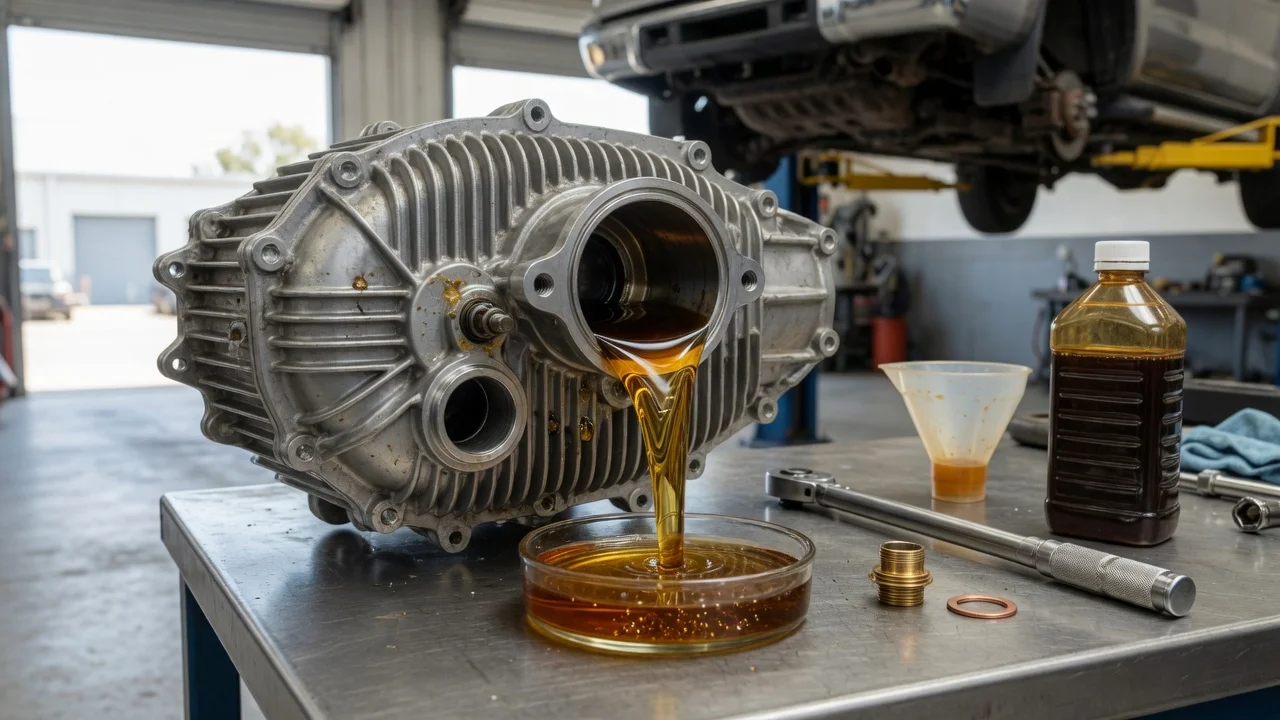
The short answer
Transfer case oil is the lubricant inside the transfer case, the component on four-wheel-drive and many all-wheel-drive vehicles that splits engine power between the front and rear axles. There is no single correct transfer case oil. Depending on the vehicle, the manufacturer may call for automatic transmission fluid (ATF), a conventional gear oil, or a proprietary transfer case fluid with specific friction properties. The only reliable way to know which one your vehicle needs is to check the specification the manufacturer published for your exact model year, drivetrain and transfer case.
That qualification matters more than any general rule. Two vehicles from the same brand, or even the same model in different years or trims, can use different transfer cases and therefore different fluids.
What the oil does inside a transfer case
The fluid lubricates and cools the gears, chain, bearings and any clutch components inside the case. In units that use a clutch pack to vary torque between axles, the fluid also affects how those clutches engage, so its friction characteristics are part of how the system behaves, not just how well it is protected from wear.
Why the fluid type varies
Transfer cases are built in several different ways, and each design places different demands on the fluid. The main categories of fluid you will see specified are:
Automatic transmission fluid: specified for many transfer cases, often a particular ATF standard rather than any ATF. Gear oil: a thicker lubricant, identified by a viscosity grade, used in some gear-driven designs. Proprietary or dedicated transfer case fluid: formulated for a specific unit, commonly where clutch packs or electronically controlled torque distribution require particular friction behavior.
Because these fluids differ in viscosity and friction additives, substituting one for another can change how the transfer case engages or increase wear. In clutch-based systems, using a fluid without the intended friction properties may produce shudder, binding or noise. This is a general risk of using the wrong fluid; the severity for any given vehicle depends on its design.
How to find the right oil for your vehicle
Check the owner's manual, usually in the fluids and capacities or maintenance section. Look for a tag or stamping on the transfer case itself, which may identify the unit and sometimes the required fluid. Ask a dealer parts department with your vehicle identification number, since the VIN identifies the exact drivetrain fitted at the factory. Consult the factory service information for the correct fill procedure and capacity.
If a vehicle has had its transfer case replaced or swapped, the original specification may no longer apply, so identifying the installed unit becomes important.
Checking and changing the fluid
Many transfer cases have no dipstick. The fluid level is commonly checked through a fill plug on the side of the case, and a common approach is to fill until fluid reaches the bottom edge of that opening. A widely given precaution is to confirm the fill plug can be removed before draining, so the case is not left empty with no way to refill it. Procedures do differ between units, so the factory service information should take precedence over these general practices.
Service intervals also vary by manufacturer and by how the vehicle is used. Towing, off-road driving, deep water crossings and heavy use of four-wheel drive are often treated as severe service, which may call for more frequent fluid changes. Your maintenance schedule is the authority here.
What this guide cannot tell you
No vehicle-specific specifications, capacities, viscosity grades or service intervals were available for this guide, so none are stated. Any exact figure for your vehicle should come from the manufacturer's documentation or a dealer working from your VIN.