Trailer Turn Signal Not Working: Left, Right, and Brake Light Troubleshooting
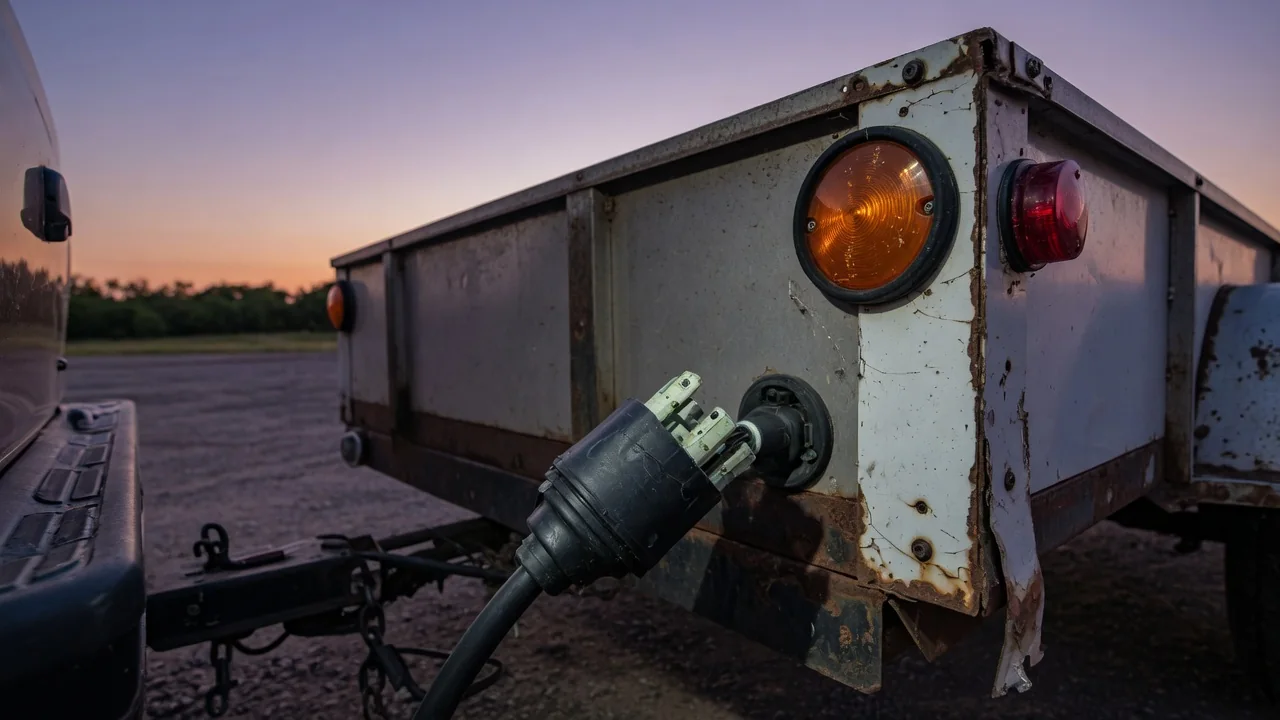
When a trailer turn signal stops working, the fault can be anywhere between the tow vehicle and the lamp. The left signal may be dark, the right side may be out, or the brake light and turn signal may fail together. In every case, the same approach works: figure out which side of the hitch has the problem, then narrow it down one circuit at a time.
How Trailer Turn Signals Get Power and Why They Fail
Your tow vehicle sends separate signals through the trailer wiring harness: left turn, right turn, tail or running lights, and a ground return. On a 4-pin flat connector, those four circuits are usually all there is, and brake and turn share one wire on each side. A 7-way trailer plug adds pins for things like electric brakes, auxiliary power, and reverse lights. Layouts vary, so confirm the pin assignments for your own plug and trailer before you test anything.
Faults fall into five broad zones: the tow vehicle's output, the connector and its pins, the wiring along the trailer, the ground path, and the lamp itself. The quickest first step is finding out whether the problem follows the truck or the trailer. If you have access to a known-good trailer or truck, hook it up and compare. Don't drive with trailer signals that don't work. Hand signals are only a short-term fix, and only where local rules allow them.
Left Trailer Turn Signal Not Working
When the left turn signal on your trailer isn't working, start by watching the lamp closely. If it's completely dark, suspect an open circuit or a dead bulb. If it's dim, flickers, or flashes at an odd rate, suspect resistance from corrosion or a weak ground. Corroded pins or a bent left-turn terminal in the plug can cut that one circuit, while the right side, the tail lights, and everything else keep working normally.
Next, follow the wiring along the left side of the trailer frame and look for wire that is pinched, chafed through, or hanging where it can snag. A burned-out bulb, a failed LED trailer light, or a corroded lamp socket can look just like a wiring fault, so inspect the lamp too. A simple circuit tester at the plug shows whether the truck is sending a left signal. If the readings get confusing, a technician can take the testing further.
Right Trailer Turn Signal Not Working
When the right trailer turn signal isn't working, the causes are the same as on the left. The right side just has its own pin and wire, so the diagnosis is a mirror image. Inspect the right-turn terminal on both the vehicle socket and the trailer plug. Look for green corrosion, a loose fit, or a pin that has been pushed back into the housing and no longer makes firm contact with its mate.
Then check the right-side lamp housing for water inside, a cracked lens, or loose mounting hardware, since many lamps ground through their mounts. A fault on only one side usually points to that side's circuit or lamp rather than the shared trailer ground wire, though a poor ground can still play a part. If a tester shows no right signal at the vehicle socket, the cause is probably on the tow vehicle, and it makes sense to have a professional test it.
Turn Signal and Brake Light Both Out on One Side
Many trailers, especially those with 4-pin wiring, use one combined brake and turn circuit on each side, which feeds a single bulb filament or LED circuit. So if the left turn signal and brake light are both out, or the right turn signal and brake light are out together, the cause is usually that shared wire, the lamp, or its connection. Two separate faults on the same side at the same moment are much less likely.
Some tow vehicles keep stop and turn signals separate. In that case, a tail light converter or the tow vehicle's trailer module combines them for the trailer, and a failure there can take out both functions on one side. Check whether the tail or running light on that side still works. If it does, the lamp's ground and socket are probably fine. A suspected converter, module, or vehicle-side fault calls for professional diagnosis rather than guesswork.
Trailer Turn Signal Stops Working When the Lights Are On
When a trailer turn signal fails only while the lights are on, a poor ground is the usual suspect. The running lights draw extra current, and current that can't return through the frame looks for another path through other circuits. Common symptoms are signals that go dim or flash faintly, other lamps that flicker or glow when they shouldn't (backfeed), and signals that fail only when the headlights are switched on.
Grounds most often break down where the white ground wire bolts to the trailer frame, at the connector's ground pin, and at the lamp mounts. Rust, paint, or loose hardware at any of those points can cause the problem without any visibly broken wire. You can only learn so much by looking. If cleaning and tightening the ground connections doesn't help, have a technician test the voltage drop across the ground path.
Semi Trailer Left or Right Turn Signal Not Working
When a turn signal fails on a semi trailer, left or right, you're dealing with heavier hardware. Commercial rigs use heavy-duty 7-way connections and longer wiring runs, often with harness junctions and several lamps on each side. From a safe position, drivers can check the pigtail cable for cuts or stretching, the plug near the gladhand area, and any visible damage at the lamps or harness junctions.
A failure on one side can come from the tractor's output, the pigtail, the trailer's main harness, or a single lamp. Drivers can narrow it down by noting whether every lamp on that side is out or just one, and whether a different trailer behaves the same way. Commercial vehicles are subject to lighting inspection rules, so repairs belong with a qualified shop or fleet maintenance provider. Don't work under a coupled trailer or near air brake components.
Checking the Tow Vehicle Side, Including Silverado Trucks
If the vehicle socket shows no signal on one side, the cause may be a trailer-lighting fuse, a relay, a factory or add-on trailer module, or damaged socket wiring. Check the owner's manual for your exact make, model, and year to find the trailer-lighting fuses and see how the system is set up. Don't assume every truck uses the same layout. A blown fuse often points to a short further down the line, so replacing it without finding the cause rarely lasts.
If the right trailer turn signal isn't working on a Silverado, keep in mind that fuse locations, module design, and trailer settings vary by model year and trim, so confirm the details for your specific truck. Some trucks show trailer lamp warnings on the dash or info screen, which can tell you which circuit the truck sees as open or faulty. On newer trucks with integrated trailer control modules, have a dealer or qualified technician handle the electronic diagnosis.