Trailer Tire Replacement: Choosing Suitable Tires
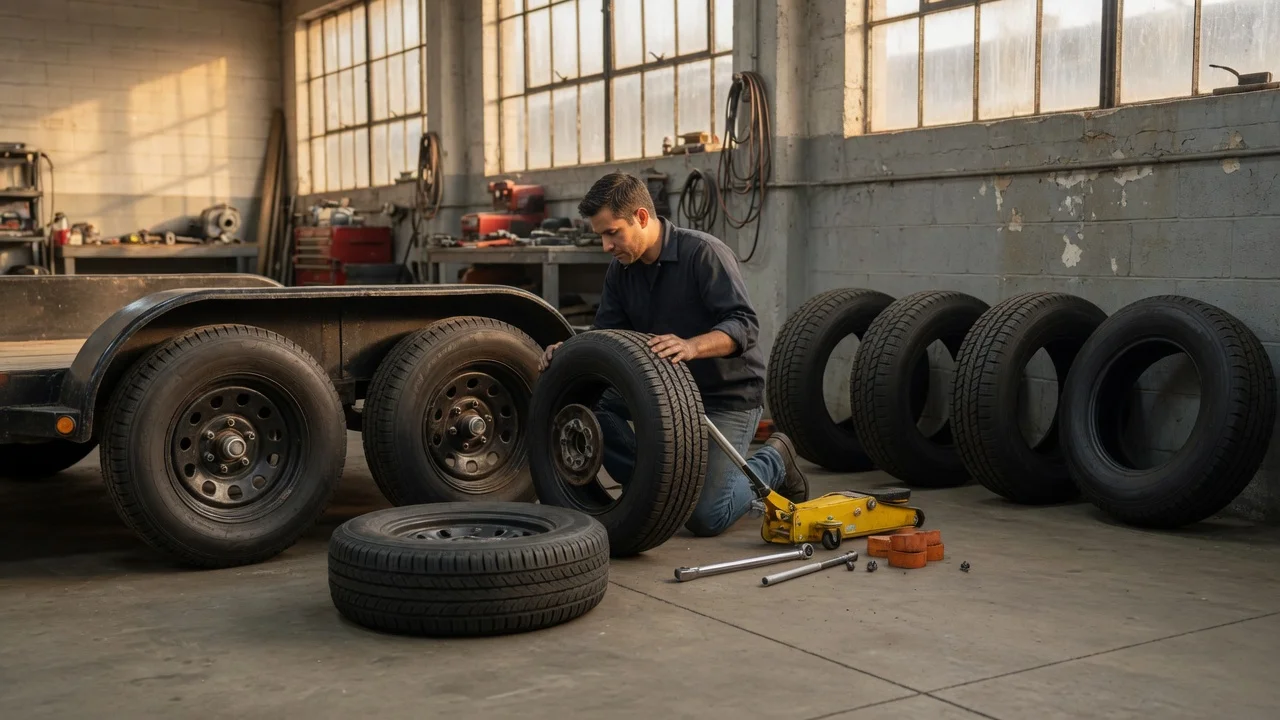
What Trailer Tire Replacement Actually Requires
Replacing a trailer tire is not the same as fitting a passenger-car tire from the same wheel diameter. The essential answer is that the replacement must match, or safely exceed, the trailer’s load-carrying needs while fitting the wheel, axle clearances, and expected towing conditions. The most reliable starting point is the tire information placard or the markings on the existing trailer tire. Key values include size, load range, maximum load at a stated inflation pressure, and speed rating. A replacement that looks similar but has a lower load capacity can overheat and fail even when the trailer appears lightly loaded.
Two qualifications materially change the answer. First, trailers use specialized tires that are built for high vertical loads, long periods at highway speed, and frequent exposure to weather while parked. Standard light-truck or passenger tires are not automatically equivalent, even in the same size. Second, the required capacity is determined by the loaded trailer weight and axle distribution, not by the unloaded appearance of the trailer. Because the supplied material does not include the specific placard values, gross vehicle weight rating, or axle weight rating for a particular trailer, the exact replacement should be selected from those figures on the trailer itself rather than from a generic size alone.
Reading the Key Numbers on a Trailer Tire
A trailer tire sidewall typically carries a size such as ST205/75R15, a load range letter, a maximum load rating, and a maximum inflation pressure. The ST prefix identifies a special trailer tire. The first number is the nominal section width in millimeters, the second is the aspect ratio, and the final number after R is the wheel diameter in inches. Load range, expressed with a letter, is a direct capacity indicator; for example, a higher load range generally supports more weight at a higher inflation pressure.
When choosing a replacement, the replacement tire must have a maximum load capacity at its specified inflation pressure that is at least equal to the required capacity for that axle position. Matching the original size is the safest way to preserve fender clearance, ride height, speedometer consistency on tow-vehicle systems, and suspension geometry. A wider or taller tire may fit the wheel but change clearance and towing behavior, so a size change should only be made when the owner verifies that the new tire fits without contact through the suspension travel and steering range.
Bias Ply Versus Radial Trailer Tires
Trailer tires are available in bias ply and radial construction, and the choice is a common comparison point. Bias ply tires have a stiffer sidewall and historically have been used for heavy, slow-moving or agricultural trailers. Radial trailer tires generate less rolling resistance, generally run cooler at sustained speed, and often provide more predictable traction and tread wear on paved roads. For a trailer that spends most of its time at highway speed, a radial ST tire is preferable when the load and speed ratings meet the application.
Bias ply tires can still be appropriate for severe service or applications where sidewall puncture resistance and simplicity matter more than high-speed heat management. The decision should not be made on appearance or price alone. The supplied information does not include tested temperature, tread-wear, or durability results for specific models, so the comparison is limited to the general construction trade-off rather than a measured ranking of particular brands.
Load Range and Speed Rating as Decision Criteria
Load range and speed rating are the two shared criteria that matter most when comparing an original tire and a proposed replacement. Load range must meet the fully loaded axle requirement. Speed rating must be appropriate for the maximum towing speed. Many older trailer tires were rated for a lower sustained speed, while modern ST tires commonly carry a higher speed letter. Even a high load range does not compensate for operating continuously above the tire’s speed rating, because heat buildup can degrade the casing.
If the original tire is unavailable or discontinued, a replacement with the same diameter and width, an equal or higher load index, and an equal or higher speed rating is the most straightforward substitute. A higher load range may require higher inflation pressure and can produce a firmer ride on an empty trailer. This is generally acceptable when the trailer is loaded to match, but the owner should not exceed the wheel’s rated pressure or the trailer manufacturer’s stated limit.
When a Different Size or Construction May Be Acceptable
A replacement does not have to be identical in every marking if the operational values are suitable. For example, a trailer originally fitted with bias ply tires may accept radial ST tires of the same size, provided the load range meets the loaded requirement and the speed rating matches the expected towing speed. This change is often preferable for highway use. Conversely, fitting a lighter-duty tire of the same physical size is not acceptable merely because it mounts to the wheel.
The critical qualification is that any size or construction change must be checked against the axle rating, wheel width, inflation limit, clearance, and hub fitment. Without the trailer’s specific placard, scale weight, and wheel specifications, the article cannot confirm which exact replacement model is suitable. Owners should treat the original tire’s complete marking as the baseline and obtain the trailer’s placard values before finalizing a purchase.
Replacement in Pairs and Axle Considerations
When one trailer tire is damaged or worn, the immediate question is whether to replace only that tire or both tires on the axle. Matching diameter is important on a single axle and even more important on a tandem-axle trailer. A new tire beside a heavily worn tire can have a slightly different rolling circumference, which changes how the pair shares load and can accelerate tread wear. Replacing tires on the same axle as a matched pair is the practical choice when the remaining tire has significant tread wear.
The spare tire is also part of a replacement plan. A spare should be inflated to its rated pressure, inspected for age and cracking, and protected from long exposure to sunlight. Age matters independently of tread depth. Trailer tires can age out before their tread is worn, especially on trailers that sit for long periods. The supplied material does not state a universal replacement interval, so the existing tire manufacturer’s age guidance and a careful sidewall inspection should inform the decision.
Common Mistakes to Avoid
Using a passenger tire simply because the diameter matches; the load and casing design may be unsuitable. Choosing a lower load range because the tire is cheaper or more available. Inflating to the maximum pressure shown on the tire without confirming the trailer’s required pressure. Fitting a wider tire without checking fender and suspension clearance under load. Ignoring speed rating on a highway trailer, even when the load rating appears sufficient.
Summary
The suitable trailer tire replacement is a tire whose size, load range, inflation rating, and speed rating match the loaded trailer’s documented requirements. When the exact original tire is unavailable, an equal or higher capacity tire of the same size and wheel fitment is the most direct substitute. Bias and radial constructions are both valid in the right use, with radial ST tires generally preferable for sustained highway towing. The main information gap in this material is the lack of a specific trailer’s placard values, axle weights, and wheel limits; those figures, rather than a generic size match, should determine the final choice.