Trailer Tire Replacement: Choosing Suitable Replacement Tires
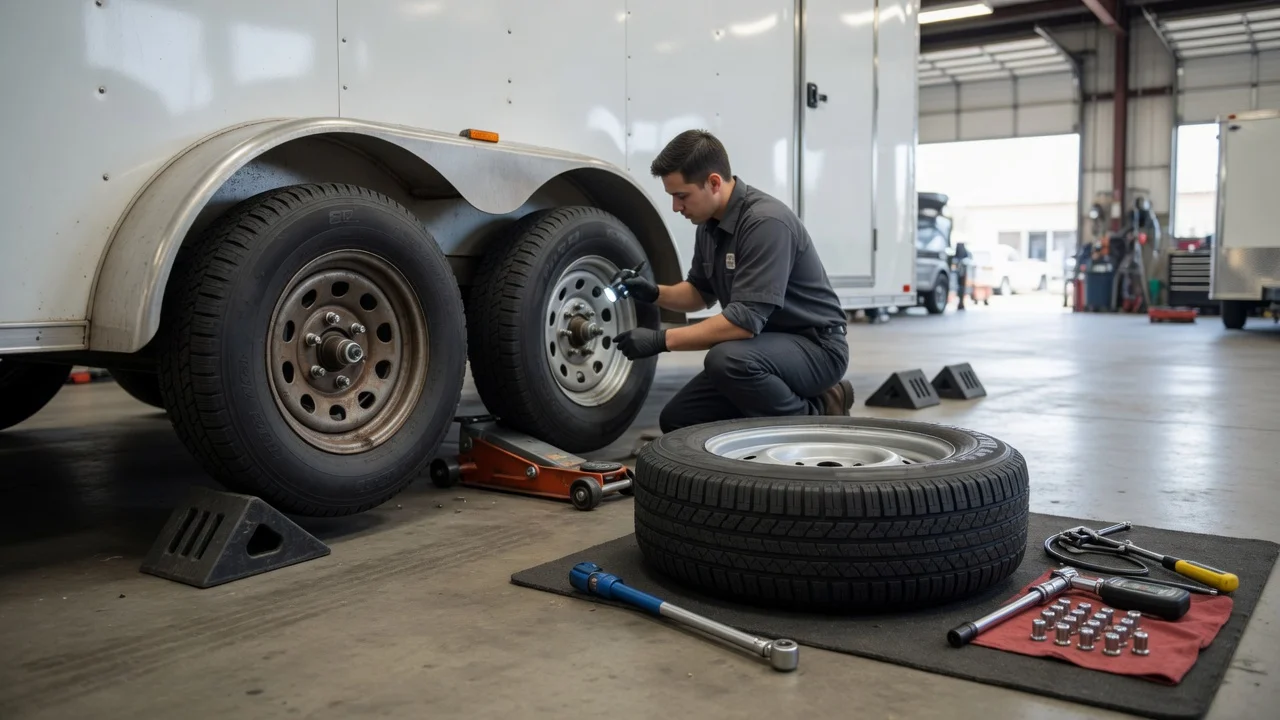
The Short Answer
When replacing trailer tires, start with what the trailer was built to carry. The new tires should match the original size, and their combined load capacity should meet or exceed the trailer's maximum load. Their speed rating should also suit how you tow. For most boat, utility, camper and cargo trailers, that means ST (Special Trailer) tires in the same size and the same or higher load range as the originals.
The main qualification is the trailer's own specifications. Sizes, load ranges and inflation pressures vary by manufacturer, model and axle setup. The trailer's tire information or certification label, where one is fitted, and the sidewalls of the original tires should drive the choice, not general rules.
What to Check Before Buying
Tire size: Read the full size from the sidewall or the trailer label, for example the section width, aspect ratio and rim diameter. The rim diameter must match your wheels exactly. Load range and load index: The letter load range (such as C, D or E) and the maximum load figure on the sidewall show how much each tire can carry at its stated pressure. Multiply the per-tire figure by the number of tires. The total should equal or exceed the trailer's gross vehicle weight rating, minus any weight carried by the tow vehicle's hitch. Speed rating: Check the maximum speed marked or coded on the tire and compare it with your actual towing speeds. Many ST tires have historically carried a lower maximum speed than passenger or light-truck tires, so confirm the rating instead of assuming it. Construction: Note whether the originals are radial or bias-ply. Do not mix the two types on the same axle. Wheel compatibility: Confirm that the wheel's own load rating and rim width suit the new tire. Check the bolt pattern too if you are replacing wheels and tires together. Age: The DOT code on the sidewall ends in four digits that give the week and year of manufacture. Check this code on new stock as well, because tires age even when unused.
Comparing the Main Tire Types
Replacement shopping usually comes down to two choices. The first is the tire category: ST, LT (light truck) or P-metric (passenger). The second is construction: radial or bias-ply. The table compares the categories on shared decision points. It reflects general design intent, not measured test results, and individual products vary.
Criterion | ST (Special Trailer) | LT (Light Truck) | P-metric (Passenger); Designed for | Free-rolling trailer axles | Light trucks; also used on some heavier trailers | Passenger cars; Sidewall focus | Stiffer sidewalls to resist trailer sway and handle heavy static loads | Built for load-carrying and traction on driven axles | Built for ride comfort and handling on cars; Load capacity on a trailer | Rated for trailer service as marked | Generally used at the marked rating; confirm with the tire maker | Commonly derated when used on trailers under tire industry guidance, which reduces usable capacity; Speed rating | Check the sidewall; many have historically been rated lower than LT or P tires | Typically higher than older ST ratings; check the sidewall | Typically higher; check the sidewall; Typical fit | Most utility, boat, camper and cargo trailers | Heavier trailers, or trailers originally fitted with LT tires | Only where the trailer manufacturer specifies them
When Each Option Makes Sense
ST tires are the default choice for most trailers, because they are designed for the forces a non-driven trailer axle sees. LT tires suit owners who need a higher speed rating or a load capacity not available in an ST tire of the right size. They are only appropriate if the size, load capacity and wheel fit all work and the trailer manufacturer does not advise against them. P-metric tires should be used only where the trailer was designed for them, and their reduced capacity in trailer service has to be accounted for.
Radial and bias-ply construction also differ in ways that matter. Radial tires are generally associated with cooler running and smoother tracking at highway speed, which suits frequent or long-distance towing. Bias-ply tires have stiff sidewalls, are often cheaper, and are commonly chosen for trailers that are used occasionally, stored for long periods or moved at low speeds. These are general characteristics rather than test findings. Whichever you choose, fit the same construction across each axle, and ideally across the whole trailer.
Replacement Practices
Replace tires at least in axle pairs so both sides carry load evenly. On tandem or triple axles, replacing the full set keeps load sharing consistent. Inflate to the pressure specified on the trailer label or by the tire maker. Trailer tires are commonly run at the maximum cold pressure shown on the sidewall to reach their rated load. Check the spare against the same criteria. An old or mismatched spare is a common gap. Inspect for cracking, bulges, uneven wear and damage. Trailer tires often age out before the tread wears out, so follow the tire maker's guidance on service life. Recheck the lug nut torque after mounting new wheels or tires, following the trailer or axle maker's procedure.
Gaps in the Available Information
No brand comparisons, prices, independent test results or specific speed and load figures for current tire models were available for this guide. The comparisons above are therefore general rather than product-specific. Before buying, confirm the exact load, speed and pressure ratings on the tire's sidewall or the maker's published specifications, and check them against your trailer's label or owner documentation.