Trailer Tail Lights Not Working: Common Causes and Safe Checks
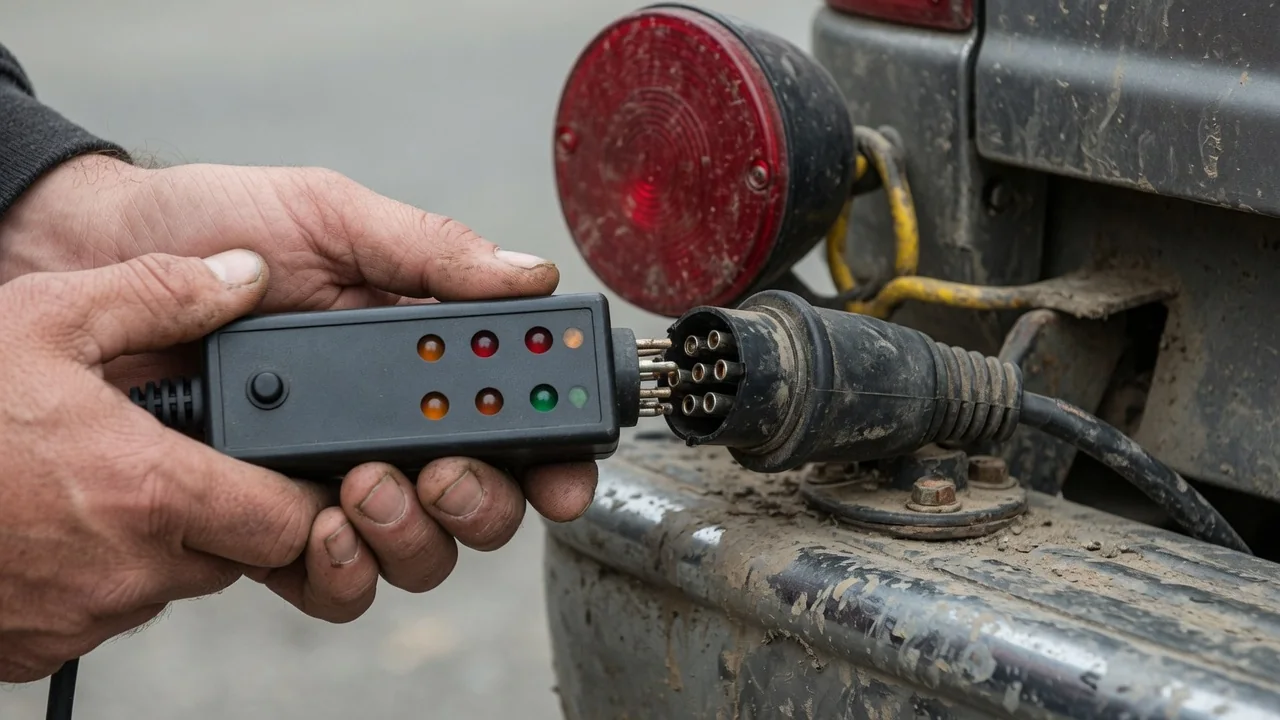
When the tail lights are not working on a trailer, the cause is usually simple: no power leaving the tow vehicle, a corroded plug, a weak ground or a failed lamp. Whether you pull a utility trailer, a travel trailer or a semi trailer, a methodical order of checks finds the fault faster than replacing parts on a guess.
Narrowing It Down: Tow Vehicle Side or Trailer Side
Before blaming the trailer, confirm that power actually reaches the tow vehicle socket. A plug-in trailer light tester or a simple test light shows whether the tail light circuit goes live when the headlights or parking lights are switched on. Pin positions and wire colors vary by connector type and manufacturer, so match the tester reading to the diagram for your specific connector rather than assuming a universal layout. If the socket is dead, the trailer is not the problem yet.
The failure pattern is also a clue. Trailer tail lights not working while brake and turn signals still function points to the running light circuit alone, whereas everything going dark at once suggests a shared feed or ground. On the vehicle side, a trailer lighting fuse, a relay or an aftermarket trailer light converter can fail; the owner's manual lists their locations and ratings. Hitching the trailer to another tow vehicle known to work properly is a quick way to isolate which half holds the fault.
Corroded Plugs, Bent Pins and Loose Connector Sockets
Trailer connectors live in road spray, salt and moisture, often hanging near the hitch with their terminals exposed. Corrosion builds a resistive film on the contacts that can interrupt one circuit while others keep working. Look for green or white residue, pins that are bent or pushed back into the housing, cracked plastic and a plug that sits loosely in the socket. Any of these on a 4-pin trailer connector or 7-way trailer plug can explain tail lights on a trailer not working.
Light corrosion often responds to electrical contact cleaner and a small brush, used with the vehicle lights switched off. A thin film of dielectric grease afterward helps keep moisture out, but it protects sound contacts rather than rescuing broken ones. A corroded trailer plug that works only when wiggled has usually worn or loosened internally and deserves replacement instead of repeated cleaning. Also confirm that the plug, socket and any adapter share the same wiring layout by checking the trailer's or adapter's wiring diagram.
Bad Ground Connections and the Odd Symptoms They Cause
Every lamp needs a return path to the tow vehicle, and on many trailers that path runs through the frame and a single trailer ground wire. When that connection weakens, current looks for another route, which produces symptoms that seem unrelated. Lights may glow dimly, flicker over bumps, or behave strangely, such as a tail lamp brightening or fading when a turn signal or the brakes are applied. Weak grounds are among the most frequent reasons trailer lighting misbehaves.
Check the ground at the connector, the point where it fastens to the trailer frame, and the ground at each lamp, since some lamps ground through their mounting hardware. Paint, rust and loose fasteners all block current, so the contact surface needs to be clean bare metal with a tight fastener. Because one poor ground can imitate several separate failures, verify it before buying multiple lamps or a new trailer wiring harness.
Burned-Out Bulbs, LED Lamp Failures and Damaged Wiring
With incandescent lamps, remove the lens and inspect the bulb for a broken filament or blackened glass, then check the socket for corrosion or bent contacts that keep a good bulb from lighting. An LED trailer tail light is different: many are sealed units, so a dead section of diodes generally means replacing the whole assembly. Water or fogging inside a lens housing points to a failed seal, and unless that is addressed, the replacement is likely to fail the same way.
Wiring deserves a slow look along the tongue and frame, where it flexes, rubs and gets pinched. Chafed insulation at frame edges, sections crushed under hardware, cuts from road debris and old splices that have corroded or pulled apart are all typical finds. When choosing replacement lamps, match the trailer's system voltage and the lighting functions required for its size and use, because lamps that look alike are not interchangeable across every trailer.
Travel Trailer Tail Lights Not Working
On many travel trailers, the running lights and tail lights are fed through the tow vehicle connector rather than the house battery, though designs differ, so confirm how yours is wired before digging into the coach electrical system. That is why interior lights working proves little about the exterior tail light circuit. Larger multi-pin RV plugs have more terminals to corrode, and the tow vehicle socket deserves its own test because certain circuits there may be separately fused.
When travel trailer tail lights are not working and the connector and vehicle output both check out, the remaining wiring is often hidden behind wall panels, inside the underbelly or beneath the floor. That limits what an owner can safely inspect without removing structure or disturbing insulation. Visible lamps, their grounds and the junction area near the tongue are reasonable to examine; beyond that, the trailer's documentation or an RV service technician can supply a diagram specific to the make, model and year.
Semi Trailer Tail Lights Not Working
Semi trailers connect to the tractor through a heavy-duty multi-pin plug and a coiled trailer pigtail cable that stretches and flexes with every turn. That cable and its plug ends endure constant movement, weather and repeated coupling, which makes them a common place to start when semi trailer tail lights are not working. During a walk-around, note whether lamps are out on one side or everywhere, look for cracked or abraded cable jacket, and check whether the plug seats firmly without visible corrosion.
The fault can sit in the tractor's output, in the pigtail or in the trailer harness itself. Substituting a known-good pigtail, or coupling the trailer to a different tractor, separates those possibilities quickly without opening any wiring. Commercial vehicles are subject to lighting inspection requirements, so defects should be reported and repaired according to fleet policy or by a qualified shop. Requirements vary and change, so confirm the current rules with your carrier or the relevant authority.
When to Stop Troubleshooting and Get Professional Testing
Towing with tail lights out makes the trailer hard to see from behind and may be illegal, so it should stay parked, especially after dark, until the lights work. Some findings call for professional testing: a fuse that blows repeatedly, melted or burnt connector terminals, an intermittent fault that will not reveal itself, or wiring tied into a brake controller. Many modern tow vehicles also control trailer circuits through electronic modules that can shut down an output, and tracing that may require diagnostic equipment.
Resist improvised fixes. Bypassing a fuse, fitting a larger one or tapping into an unidentified vehicle circuit can overheat wiring or damage control modules, turning a small lighting problem into a larger one. A sensible sequence remains the same for nearly any trailer: confirm the tow vehicle output first, then inspect the connector, verify the ground, check the lamps and finally follow the harness. Working in that order keeps guesswork and unnecessary parts to a minimum.