Trailer Mounted Sway Control Ball: What It Is and Where It Fits
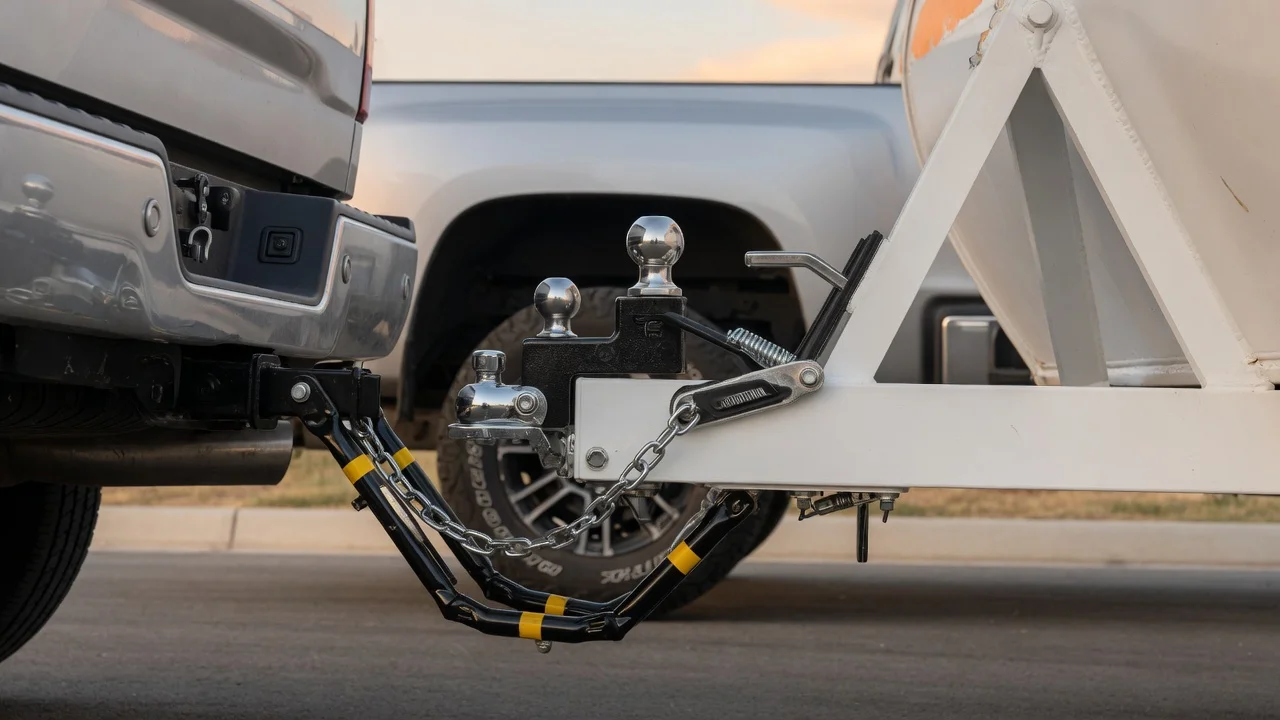
What a trailer mounted sway control ball is
A trailer mounted sway control ball is a small, stud-like steel ball that bolts onto the trailer frame, usually near the coupler. It serves as one of two anchor points for a friction sway control device. The other anchor point is a matching small ball mounted on the tow vehicle's hitch head. The sway control bar connects both balls and is tightened to create friction that resists sudden lateral movement between the tow vehicle and trailer.
Where the ball fits in a sway control system
Friction sway control uses two small balls: one on the trailer and one on the vehicle-side hitch. The trailer mounted sway control ball is the trailer half of that pair. It is typically installed on the trailer A-frame tongue using a bracket or a pre-drilled mounting plate. A sway control bar with sockets at each end snaps over both balls and is adjusted to the manufacturer's recommended friction setting.
Typical mounting and hardware
The ball may be supplied as a single threaded stud with a nut and washer, or it may come as part of a bolt-on plate that positions the ball at a specific angle relative to the trailer frame. Many trailer mounted sway control balls use a common thread size, but the exact diameter and thread pitch can vary between sway control brands. Some sway control kits include both the vehicle-side ball and the trailer-side ball; others sell the trailer ball separately.
Compatibility points to check
Before buying or installing, check that the ball diameter matches the sockets on your sway control bar. A typical friction sway control uses a small ball, but not all small balls are interchangeable. Also verify that the mounting bracket or plate fits your trailer's tongue width and frame shape. The trailer mounted ball must be positioned parallel enough to the vehicle-side ball that the sway control bar can move through its normal range without binding.
What this part does not do
The trailer mounted sway control ball is not a weight-distribution component and does not change tongue weight. It only provides a fixed anchor for the friction sway control link. Without a sway control bar attached, the ball has no effect on towing stability by itself.
Immediate answer and main condition
The immediate answer is that a trailer mounted sway control ball is the trailer-side mounting stud for a friction anti-sway bar. The main condition that changes the proper choice is compatibility: the ball must match the sway control bar's socket size, and the mounting location must suit the trailer tongue and align with the vehicle-side ball. If those dimensions or positions do not match, the sway control system cannot be installed correctly.