Trailer Hydraulic Brake Systems: How They Work and Which Type Applies
The short answer
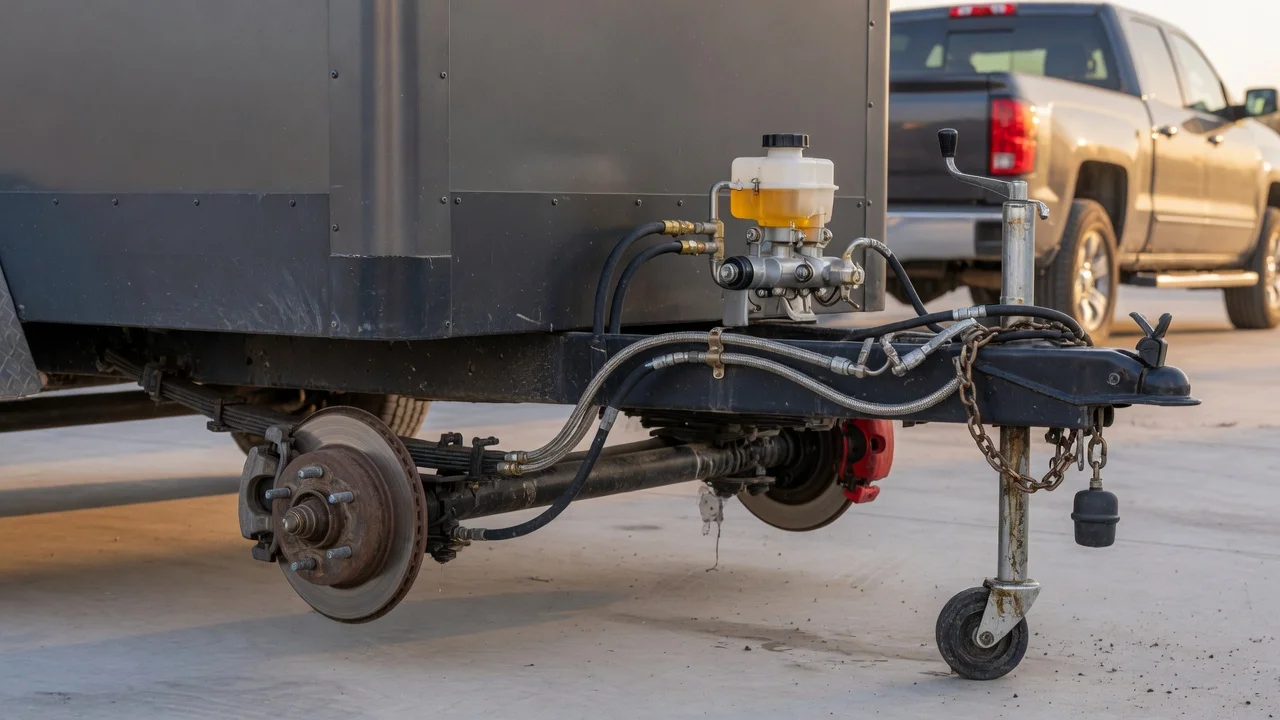
A trailer hydraulic brake system stops the trailer's wheels using brake fluid pressure, much like the brakes on a car. The key difference from a car is how that pressure is generated. On a trailer, it comes from one of two sources: a surge actuator built into the trailer coupler, or an electric-over-hydraulic actuator controlled from the tow vehicle. That distinction matters more than anything else, because it decides how the brakes are triggered, what equipment the tow vehicle needs and how much control the driver has.
The term covers the actuation method and the hydraulic circuit to the wheels. It does not refer to the tow vehicle's own brakes. It is also separate from the electric brakes that many trailers use, where an electromagnet in each drum applies the shoes without any fluid.
Surge brakes: self-contained hydraulic actuation
A surge brake system places a master cylinder inside a sliding coupler at the front of the trailer. When the tow vehicle slows, the trailer's momentum pushes it forward against the hitch. That push compresses the coupler and drives the master cylinder, which sends fluid pressure to the wheel brakes. The harder the tow vehicle decelerates, the more force the trailer applies to the coupler, and the more braking results.
Because the system powers itself, it needs no brake controller in the tow vehicle and no electrical brake signal. That is a practical advantage when one trailer is towed by several vehicles.
The trade-off is control. The driver cannot apply or adjust the trailer brakes separately from the tow vehicle's brakes. Backing up can also push the coupler in and apply the brakes. Surge systems handle this with a reverse lockout, which may be a manual pin, a solenoid wired to the reverse lights or a design that releases freely in reverse. The method varies by actuator manufacturer.
Electric-over-hydraulic: controller-driven hydraulic actuation
An electric-over-hydraulic (EOH) system uses an electric pump on the trailer to build fluid pressure. The pump is commanded by a compatible brake controller in the tow vehicle. The wheel-end hardware is still hydraulic, but braking follows the controller's output instead of coupler movement.
This gives the driver what surge brakes lack: adjustable gain and, on most controllers, a manual lever to apply only the trailer brakes. The cost is added complexity. The tow vehicle needs a controller that is compatible with EOH actuators, and the trailer needs a battery and wiring to run the pump. Some controllers built for electric drum brakes are not suitable for EOH units, so check compatibility against both the controller and actuator documentation.
Drum or disc at the wheel
Either actuation type can feed hydraulic drum brakes or hydraulic disc brakes at the wheels. The actuator and the wheel brakes must be matched, though. Some surge actuators are specified for drums only, others for discs. Check that pairing before mixing components.
Why hydraulic brakes are common on boat trailers
Trailers that are backed into water often use hydraulic brakes instead of electric brakes. Electric brake magnets and wiring at the wheel tolerate repeated submersion poorly, while a sealed hydraulic system has no electrical parts at the hub. Hydraulic components still corrode, so many owners flush the brakes with fresh water after launching. Corrosion-resistant hardware is often sold for this use.
Choosing between the two types
Surge brakes suit owners who want a self-contained system that works with any tow vehicle that has a suitable hitch and no brake controller. Electric-over-hydraulic suits owners who want driver-adjustable and manually applied trailer braking and who will tow with a vehicle fitted with a compatible controller. Both deliver hydraulic braking at the wheel, which is the main reason they are chosen over electric drum brakes for trailers that are submerged.
What this guide does not settle
Legal requirements for trailer brakes vary by country, state or province. These include the trailer weight at which brakes become mandatory, whether brakes are needed on every axle, breakaway system requirements and whether surge brakes are allowed for a given trailer class or weight. No jurisdiction-specific rules or figures were supplied for this guide. Confirm them with the relevant licensing or transport authority before buying or modifying a trailer.
Likewise, no specifications, capacity ratings or test results for particular actuators, brake kits or controllers were supplied. Fluid type, actuator rating and maintenance intervals should be taken from the manufacturer documentation for the specific components installed.