Trailer Hitch Ball Sizes: Dimensions, Shanks and Ball Mount Fit
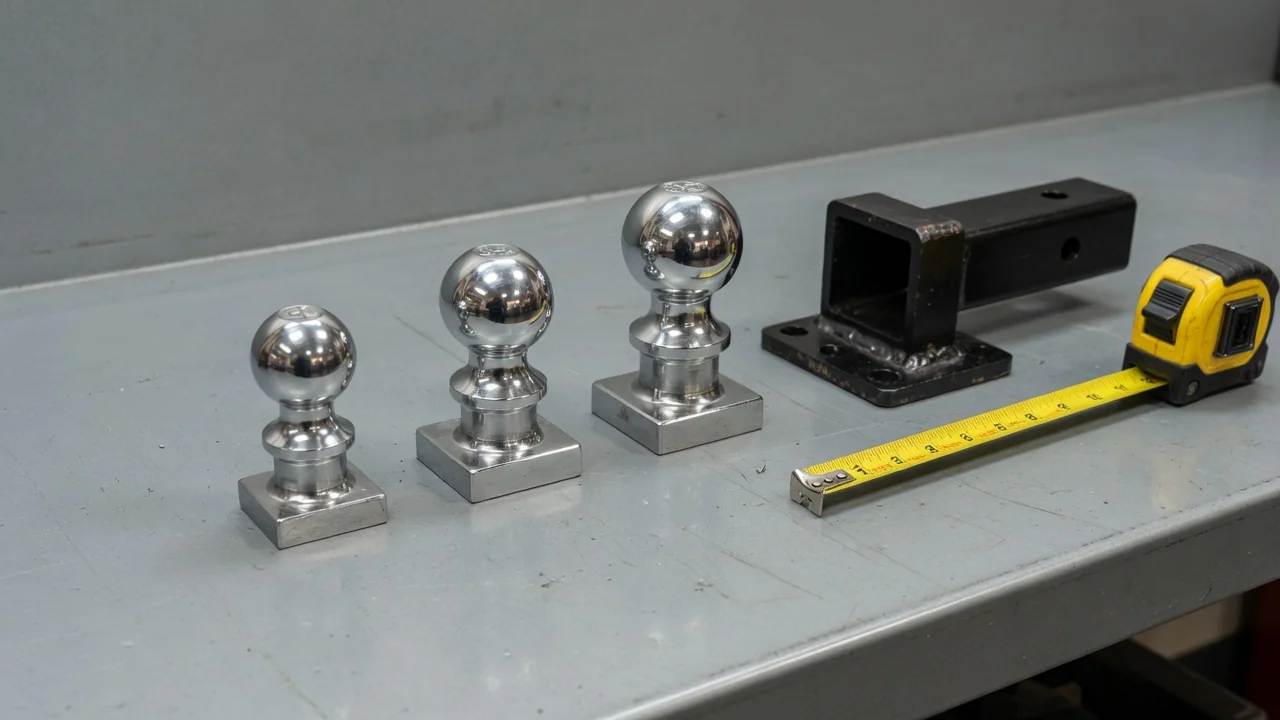
Choosing among the sizes of trailer hitch balls is less about the tow vehicle than about the trailer coupler and the ratings stamped on every part in the connection. This guide explains trailer hitch ball dimensions, how the shank and ball mount fit together, what a 2-inch ball really means, and how to check that the whole setup suits the load before any trip.
Common Trailer Hitch Ball Sizes and Where Each One Shows Up
Most trailers on the road use one of three ball diameters: 1-7/8 inch, 2 inch, or 2-5/16 inch. The smallest is usually found with light utility and small boat trailers, the middle size covers a wide range of general towing such as campers and mid-size cargo trailers, and the largest is associated with heavier equipment, car haulers and big travel trailers. Larger balls exist for specialty and heavy-duty setups, so no single size can be assumed to fit every trailer.
The trailer hitch ball size a setup needs comes from the coupler on the trailer tongue, not from the tow vehicle's make, model or year. The same pickup may need different balls for different trailers. Those typical pairings are only tendencies, too; the real limit is set by the ratings stamped on the parts. Two balls of identical diameter can carry very different weight ratings depending on shank size and construction, so diameter alone never proves a ball is suitable for a given load.
Reading Hitch Ball Dimensions: Ball Diameter, Shank Diameter and Shank Length
Trailer hitch ball dimensions include more than the sphere. Ball diameter is the width of the round head and must match the coupler socket. Shank diameter is the thickness of the threaded stem that passes through the ball mount, and shank length is how far that stem extends below the ball's base. Overall height, from the bottom of the shank to the top of the ball, slightly affects how high the coupler sits. Each measurement affects whether the ball seats, clamps and carries load correctly.
The shank should fit closely in the ball mount hole; a stem that rattles in an oversized hole can shift and loosen under load, and a reducer bushing should be confirmed as approved for that ball and mount rather than assumed safe. Shank length must suit the platform thickness so the lock washer and nut engage the threads fully. Size and capacity are usually stamped on top of the ball or around its base. If the markings are unreadable, measure the diameter with calipers and treat the rating as unknown.
The 2-Inch Trailer Hitch Ball: Fit, Ratings and Common Mismatches
The 2-inch ball is among the most common diameters, which is why a search for a trailer hitch ball in the 2-inch size returns so many options. Common does not mean uniform. Capacity varies from one 2-inch ball to another, so the stamped rating on the specific part, not the diameter, tells you what it can carry. These balls are also sold with several shank diameters and lengths, meaning the hole in the ball mount and the platform thickness still have to be confirmed before buying.
Mismatches are the main hazard. A 2-inch ball sitting in a 2-5/16 inch coupler may appear to latch yet feel loose, clunk over bumps, or let the tongue lift off when raised with the jack. A 2-inch coupler forced onto a larger ball will not seat fully, and the latch will not close or accept its pin. There is also a naming trap: a 2-inch receiver describes the square opening on the hitch, a completely different measurement from ball diameter.
Matching the Ball to the Trailer Coupler and Weight Ratings
The required ball size is normally stamped or cast into the trailer coupler, often on top of the tongue or near the latch, and it may also appear in the trailer's documentation or on its identification plate. Once the diameter matches, ratings decide the rest. The usable limit is the lowest figure among the ball, ball mount, receiver hitch, coupler and the vehicle's published towing capacity. A high-rated ball cannot raise the limit of a lighter receiver or vehicle.
Two weights matter. Gross trailer weight is the total weight of the trailer as loaded, including cargo, fluids and gear. Tongue weight is the portion of that total pressing down on the hitch ball, and it influences stability and how the tow vehicle's rear suspension and steering behave. Both have separate limits on most hitch components. The owner's manual and the labels on the hitch and trailer give the figures that apply; general rules of thumb are no substitute for them.
Choosing a Ball Mount: Receiver Size, Rise, Drop and Level Towing
A ball mount is the bar that slides into the receiver hitch and carries the ball. Receivers are made in several square opening sizes, commonly 1-1/4 inch, 2 inch and 2-1/2 inch, with larger ones on some heavy-duty trucks, and the mount's shank has to match the opening it slides into before the hitch pin goes through. Fixed mounts have a single set height, adjustable mounts let the platform move up or down, and interchangeable-ball mounts carry more than one ball diameter for owners with several trailers.
Drop is how far the ball platform sits below the receiver, and rise is how far above. The aim is a trailer that sits roughly level when coupled, which helps keep load shared across its axles and supports predictable handling and braking. To estimate the amount, park both units on level ground, measure from the ground to the top inside edge of the receiver opening, then to the bottom of the coupler with the trailer leveled. The difference suggests the rise or drop, though loaded vehicles often settle.
Safe Inspection Checks and When to Get Professional Help
Before each trip, look over the ball and mount. Cracks, deep scoring, flat spots, a ball that is no longer round, rust around the shank or a nut that turns by hand are all reasons to stop using the part until it is replaced or checked. When coupling, keep the vehicle parked with the parking brake set, confirm the coupler latches fully over the ball, fit the safety pin or lock, cross and attach the safety chains, and connect and test the lighting.
Ball nuts need to be tightened to the hitch maker's installation specification, which varies with shank size, so generic torque values should not be relied on. Professional inspection makes sense when loads are heavy, when a weight-distribution system is involved, when ratings cannot be read or verified, or after any impact such as a collision, jackknife or hard curb strike. A qualified hitch or trailer technician can confirm that every component matches and that hidden damage has not weakened the connection.