Trailer Brake Lights Not Working: Causes and How to Narrow Them Down
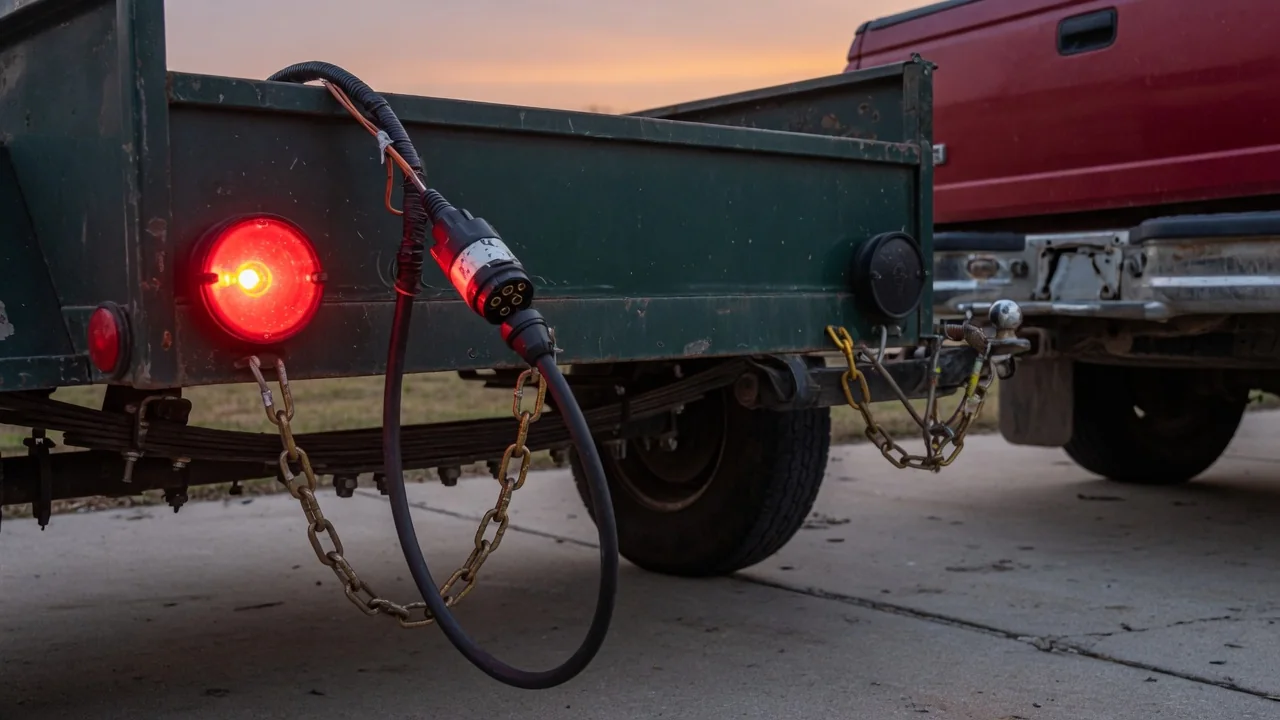
When the brake lights are not working on a trailer, drivers behind you lose their clearest warning that you are slowing. Most cases follow recognizable patterns. Whether the running lights still glow, the turn signals still flash, or one side stays dark, each symptom shows roughly where the signal is getting lost between the tow vehicle's brake light switch and the lamp.
Why Trailer Brake Lights Stop Working: How the Signal Gets From Pedal to Lamp
Every trailer brake light depends on one chain. It starts at the tow vehicle's brake light switch, passes through a fuse or relay, reaches the hitch connector, runs down the trailer harness, and returns through the trailer ground wire. A break anywhere along it can leave the trailer brake lights dark. First, check whether the tow vehicle's own brake lights work. If they are out too, the fault is on the vehicle side. Fix the problem before towing on public roads, because dark brake lights are unsafe and may break local rules.
Many US trailers use a stop/turn combined circuit, with one filament on each side handling both braking and signaling. Some tow vehicles keep stop and turn separate and need a taillight converter or tow module to merge them, so find out how your setup is wired before blaming a part. Possible causes include corroded or loose connector pins, a poor ground, harness corrosion or damaged insulation, failed bulbs or LED modules, a blown tow package fuse, and a faulty converter.
Brake Lights Out but Running Lights Work, or the Reverse
If the trailer brake lights are not working but the running lights are, the trailer ground and tail-light circuit are probably fine. Look next at the stop/turn signal path at the vehicle, the connector pins, or a converter. Brake lights that fail only when the running lights are on are trickier. A weak shared ground or a dual-filament bulb with an internal short can make lamps dim, backfeed, or interfere with each other. Treat that as something to test, not a confirmed diagnosis.
The reverse case is when the trailer running or tail lights are out but the brake lights still work. That points toward the tail-light pin, its dedicated fuse or tow relay on the vehicle, or a break in the tail-light wire along the trailer. To sort out these patterns, hitch up on level ground with the parking brake set and switch the lights on. Have a helper press the pedal, and note which lamps respond on each side. A trailer lighting tester shows whether a signal is present, not why it is missing.
When Brake Lights and Turn Signals Fail Together or Separately
On combined-circuit trailers, brake lights and turn signals often fail together because each side's stop and turn functions share one wire and one filament. A single break, corroded pin, or failed lamp can take out both. Split patterns are different. If the turn signals fail but the brake lights work, or the brake lights fail while the signals still flash, the trailer's lamps and wiring can clearly light up. That makes the vehicle side the more likely suspect.
On the vehicle side, the device that merges the signals is often worth checking. Tow vehicles with separate stop and turn circuits may need a powered converter or a factory tow module. One that has lost power or failed can pass one function while dropping the other. It is a reasonable thing to check, but not a guaranteed cause. Look up the trailer-lighting fuses and relays in the owner's manual rather than assuming fuse numbers or locations.
One Side Dark, or Tail and Brake Lights Both Out
When the trailer brake lights are out on one side only, the fault is usually local to that side: the bulb or LED unit, its socket, its stretch of wire, or its connector pin. The rest of the system is evidently delivering power. When the tail lights and brake lights are both out, the cause is more often shared, such as a bad trailer ground, a corroded main connector, or a damaged section of harness, because both circuits depend on the same return path.
Visual checks are safe and often revealing. Look for green or white corrosion on terminals, pinched or broken wires at the tongue and hinge points, loose ground screws on the frame, and water inside lamp housings. An incandescent lamp may only need a new dual-filament bulb. Many LED trailer lamps, however, are sealed units that have to be replaced as a whole. Confirm the correct lamp type and mounting for your trailer rather than assuming a replacement will fit.
Checking a 7-Pin Connection, Including UK Setups and Pickups Like the Tundra
If your trailer brake lights are not working with a 7-pin plug, start at the 7-way RV blade connector. Look for bent or recessed terminals, corrosion, packed debris, and a loose fit, and confirm the pinout from the vehicle or trailer documentation. A plug-in tester shows which pins carry a signal when the pedal is pressed. If the brake pin on the vehicle side is dead, the fault is upstream of the trailer. Avoid probing the pins in ways that could short adjacent terminals.
UK 7-pin connectors follow different standards and pin assignments from US 7-pin plugs, so US diagrams will mislead anyone working on a UK setup. Use UK-specific wiring references instead. Toyota Tundra owners with dead trailer brake lights should check the tow-related fuses and connector condition listed in the owner's manual and confirm the factory towing setup for their model year. An adapter to a 4-pin flat connector adds one more joint to inspect. If you're unsure, use a proper tester or get a professional diagnosis.
Semi Trailer Brake Lights on Tractors Like the Kenworth T680 and Volvo Trucks
Semi trailer brake lights need a different approach. Commercial tractor-trailer combinations use a heavy-duty multi-pin connection, and the stop-lamp circuit may be triggered differently than on a light-duty pickup, so passenger-vehicle advice may not apply. Start with safe observation. With the rig secured, inspect the pigtail cord and plug for cuts, crushed sections, and corrosion. Then have a helper compare how the tractor and trailer lamps respond when the brakes are applied.
If your Kenworth T680 or Volvo truck isn't lighting the trailer brake lights, keep in mind that stop-lamp wiring, switches, and any electronic lighting control vary by build. For model-specific diagnosis, use the vehicle documentation, a dealer, or a qualified technician. Brake lights that don't work on a semi trailer also affect roadside compliance as well as safety. Any work on air brake components or tractor electrical modules belongs with qualified technicians.
Travel Trailers, Utility Trailers, and When to Get Professional Testing
On utility trailers, brake light faults often trace back to exposed wiring along the frame and tongue, where chafing, corrosion, and damage from off-road or wet use build up. Travel trailers can be harder to diagnose because the wiring runs are longer, the lamps are often built into the body, and the trailer's own 12-volt system may be involved. In either case, work on a level, secured trailer, unplug it before handling the wiring, and never crawl under an unsupported trailer.
Some signs mean it's time for professional testing: intermittent faults, fuses that blow repeatedly, melted connectors, a burning smell, or problems that remain after you've checked the connector, ground, and lamps. These point to a short, an overload, or a hidden harness fault that needs proper circuit testing. Finding the real cause protects both the trailer's lighting and the tow vehicle's electrical system, and it keeps the brake lights working when you need them.