Trailer Brake Controller Not Working: Symptoms, Safe Checks and Next Steps
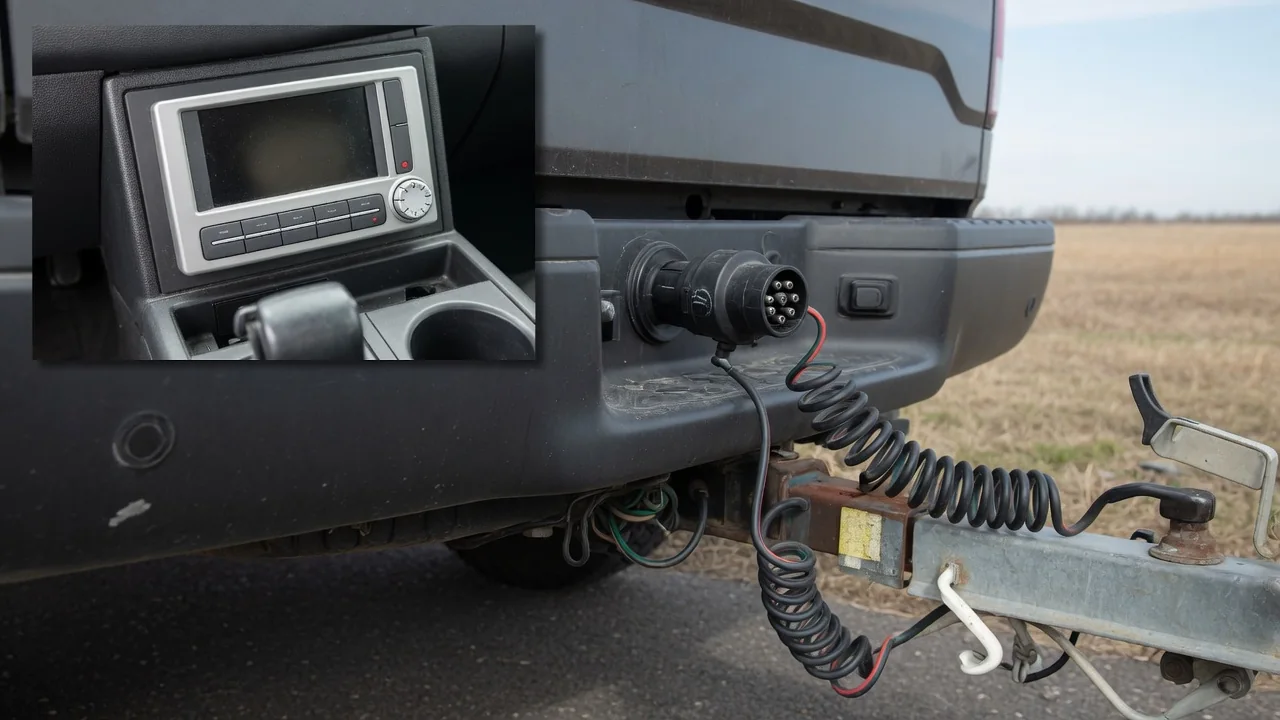
A trailer brake controller not working can show up as a dark display, a disconnected-trailer message, or a trailer that shoves the tow vehicle at every stop. Because electric trailer brakes depend on the controller, the wiring, the connector, and the trailer itself, finding the fault takes patient observation. This guide covers the symptoms, safe checks, and sensible next steps.
What a Non-Working Trailer Brake Controller Looks and Feels Like
The problem tends to appear in a few recognizable ways. The display may stay blank or dark, a no trailer connected message may appear even with the plug attached, or squeezing the manual override lever may produce no trailer brake output. On the road, the clearest sign is a trailer that pushes the tow vehicle during stops. A controller that never powers up points toward its supply or in-cab connection, while one that lights up but sends nothing points further downstream.
Intermittent behavior tells its own story. Braking that cuts in and out over bumps usually suggests a loose or corroded connection rather than a total failure, because vibration briefly makes and breaks contact. Still, the fault can sit in the controller, the tow vehicle wiring, the connector, or the trailer's own brakes, and symptoms alone rarely prove which. Treat trailer brakes not engaging as a safety issue, and keep the trailer off public roads until braking is confirmed.
Checking Power, Display and the In-Cab Controller Connection
Aftermarket controllers typically rely on a vehicle-specific brake controller wiring harness or plug-in adapter, and a connector behind the dash that is loose or only partly seated is a sensible thing to look at first. Fuses or circuit breakers protecting the trailer brake circuit differ from one vehicle to another, so their location and rating must come from the owner's manual rather than a general guide. A blown fuse is also a clue that something overloaded the circuit.
Several observations need no tools. Note whether the display lights up with the ignition on, whether it reacts when the brake pedal is pressed, and whether the mounting or wiring looks disturbed after recent stereo, dash, or hitch work. Avoid cutting, splicing, or probing dash wiring without the correct wiring information, since modern vehicles route sensitive module circuits through the same area. If the unit stays dead with a seated connector and sound fuses, a qualified installer should take over.
Inspecting the Trailer Plug, Socket and Wiring Path
The 7-way trailer connector lives in road spray and deserves a close look on both the vehicle and trailer sides. Green or white corrosion, bent or recessed pins, packed dirt, moisture, and cracked housings can all interrupt the brake circuit. A plug that is not fully seated, or one held loosely by a worn socket door, can make the trailer connected signal flicker on and off, which produces exactly the kind of intermittent braking that seems random from the driver's seat.
With the trailer parked and stable, follow the wiring along the tongue and frame, looking for sections that are pinched, chafed, or dragging near the ground. The trailer ground connection matters as much as the power feed, because brake current must return through it; a weak ground raises resistance and leaves braking feeble or erratic. Ground quality is hard to judge by eye, though. A terminal can look clean and still perform poorly under load, so confirmation usually takes electrical testing.
Gain, Boost and Controller Settings That Can Mimic a Failure
Settings can imitate a failure convincingly. The brake controller gain setting determines how much power is sent to the trailer brakes, and a value set too low for a loaded trailer can feel as if nothing is happening at all. Some controllers add boost or sensitivity modes that change how quickly or aggressively braking builds, so the wrong mode can make stops feel either lazy or grabby. On certain inertia-based units, mounting angle or leveling also matters, and the manufacturer's instructions decide the correct setup.
A factory integrated trailer brake controller may store trailer-type or brake-type choices in the vehicle menus, and a selection that does not match the trailer's brake system can alter output. Those menu options vary by make, model, and year, so the owner's manual is the reference. Make adjustments with the vehicle parked, or verify them during a controlled low-speed check in a safe, empty area. Trial and error in traffic puts an unproven braking system among other road users.
When the Problem Is on the Trailer Side
A controller can do its job perfectly while the trailer lets it down. Worn trailer brake magnets, faulty brake assemblies, broken wiring inside the axle, or a corroded junction box can all stop the brakes from applying. Clues that point this way include output displayed on the controller with no braking felt, braking on only one side, or a problem that follows the trailer to another tow vehicle. The breakaway switch and its battery are separate safety parts worth inspecting, but they do not stand in for a working controller.
Looking inside the drums or adjusting the brakes means lifting a wheel, and that requires the trailer to be properly supported on stands rated for its weight. Never work under a trailer held up only by a jack or the tongue support, because either can shift or sink without warning. Owners who lack the equipment or the space are better served by a trailer service shop, which can also assess bearings, magnets, and shoe wear during the same visit.
Reading Warning Messages and Codes Without Guessing
Dashboard messages and controller error codes are not standardized. Their wording and meaning differ between vehicle makers and controller brands, so the owner's manual or the controller's documentation is the only reliable source for what a particular display means. No single universal definition applies to any code or message, and a meaning borrowed from another brand can send the diagnosis in the wrong direction. A warning is evidence to interpret, not proof that a given part has failed.
General message types still help narrow the search. An overload or short warning suggests looking for damaged insulation, wet connectors, or a fault in the trailer's brake wiring, while a no-connection message directs attention to the plug, socket, and the circuit between them. None of these identifies the failed component by itself. Diagnostic trouble codes stored by an integrated controller may also be out of reach of a basic code reader and require a scan tool able to communicate with that vehicle's modules.
When to Stop Towing and Get Professional Testing
If the trailer brakes are not confirmed working, the trailer should go no farther than a safe spot off the road. Professional help is the right call after repeated short or overload warnings, any sign of melted or burned wiring, a problem that began after a collision, or one that returns following basic checks. A shop can measure circuit output under load, verify the ground path, and inspect the brakes themselves, which together separate a vehicle fault from a trailer fault.
Good notes speed that process. Record what happens, when it happens, any messages displayed, and any recent wiring or hitch work, since a fault that appears only when wet or only over rough pavement is a valuable lead. Legal requirements for trailer brakes also depend on trailer weight and location, so check the rules that apply where you tow instead of trusting a single threshold.