Trailer brake away controller
A trailer breakaway kit is the safety circuit meant to stop a detached trailer before it can roll freely. Drivers researching a trailer brake away controller are usually looking at the electrical device that senses separation and sends current to electric trailer brakes. The goal is not everyday stopping power, but emergency activation when the coupler separates from the hitch. Understanding this controller means looking at the trailer battery or breakaway battery, the pull-pin switch, the wiring, and how the signal reaches the brake assemblies. It is a short-duration emergency system, distinct from the in-cab brake controller used during normal towing.
Essential answer
A trailer brake away controller is the emergency activation portion of a breakaway kit. When the trailer separates from the tow vehicle, a lanyard attached to a switch pin is pulled free, closing a circuit that sends power from the trailer-mounted battery to the electric trailer brake magnets. The resulting brake application is meant to bring the trailer to a stop quickly. This device is often called a breakaway switch or breakaway controller, although it works as a simple electrical actuator rather than a modulating brake controller.
The brake away controller must be matched to the trailer brake type and wiring. It works with electrically actuated trailer brakes, not with surge brakes or hydraulic-only systems. The emergency current flows through the same blue brake feed wire used by the normal brake controller, but it bypasses the in-cab controller entirely. Because the system depends on a dedicated battery, the controller is only as reliable as the charge state and condition of that power source. A pin that is missing, corroded, or miswired leaves the trailer without emergency braking.
Several related brake system terms help explain why the controller matters. The controller does not directly squeeze brake pads or rotate brake rotors; it energizes the magnets that press the friction material against the drum surface. Its activation does not use brake fluid or move a caliper. Instead, the electric signal creates the mechanical force. Operators should check vehicle fitment for the breakaway switch, the proper mounting angle, and the pull-cable routing so the switch pin activates before the safety chains are fully stretched.
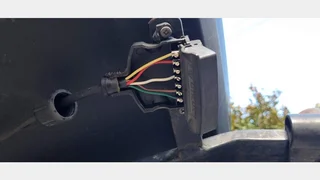
In practice, the trailer brake away controller is part of a complete breakaway kit that includes the switch, a weather-resistant battery case, a small lead-acid or compatible battery, and the lanyard. The kit must keep the battery charged while driving, usually through the auxiliary power pin in the seven-way connector. Without that charging circuit, the trailer battery can discharge and fail to supply enough current during an emergency. Wiring, terminal corrosion, and tight ground connections are the common reasons a system tests fine on the bench but does not apply the brakes during a pull-pin test.