Trailer Brake Actuator: What It Does and How to Choose the Right Type
The short answer
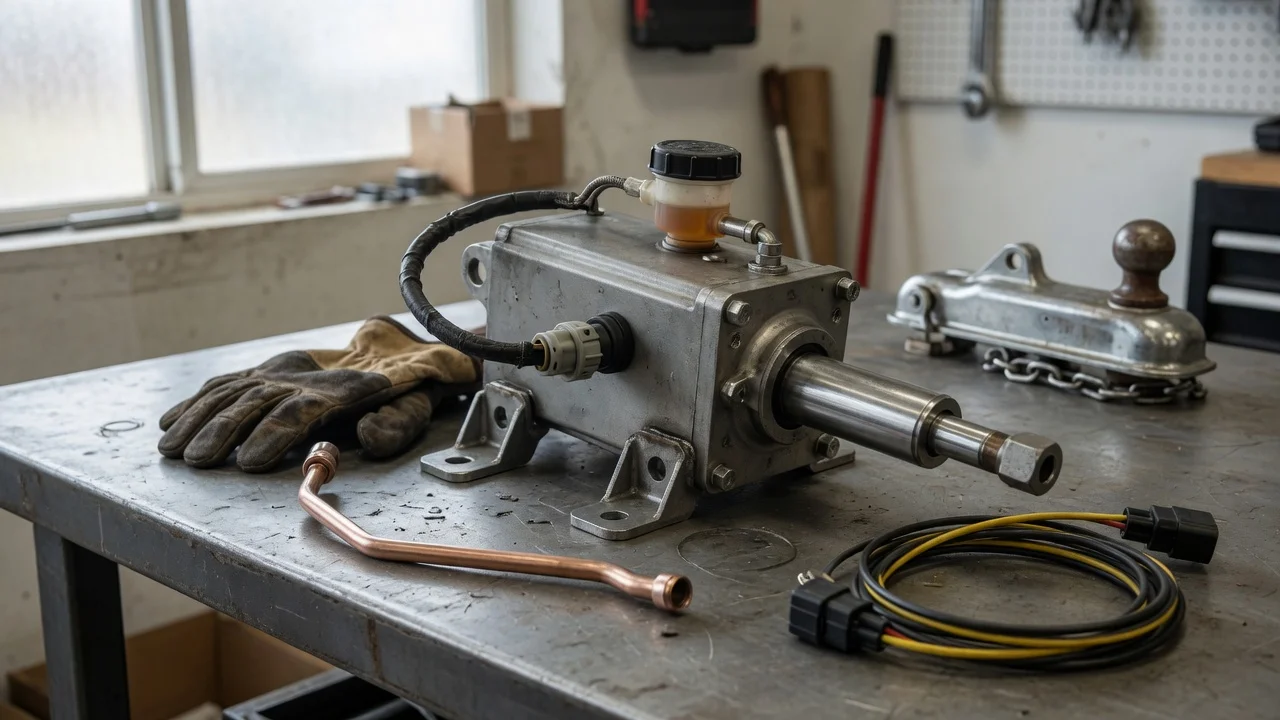
A trailer brake actuator is the component that creates hydraulic pressure for a trailer's hydraulic brakes. It comes in two main forms. A surge actuator is built into the trailer coupler and works mechanically when the tow vehicle slows. An electric-over-hydraulic (EOH) actuator is an electric pump that responds to a brake controller in the tow vehicle. Which one you need depends mainly on the trailer's existing brake hardware and how you want the tow vehicle to control it.
One condition changes the answer completely. If your trailer has electric drum brakes, it does not use an actuator. Electric brakes are driven directly by an in-cab brake controller through the trailer wiring, so shopping for an actuator would be the wrong path.
Surge actuators
When the tow vehicle brakes, the trailer's momentum pushes forward against the hitch. A surge actuator uses that push to compress a master cylinder inside the coupler housing, which sends hydraulic pressure to the trailer brakes. The harder the tow vehicle slows, the more the trailer pushes, and the more braking force results.
No brake controller is needed in the tow vehicle, which makes surge brakes easy to tow with different vehicles. They are common on boat trailers, partly because the system has fewer electrical parts that can be exposed to water. The driver cannot adjust trailer braking from the cab. Braking depends on how the actuator responds to deceleration. Backing up can push the coupler in and apply the brakes. This is handled with a reverse lockout, either a manual pin or an electric solenoid wired to the tow vehicle's reverse-light circuit, depending on the actuator design.
Electric-over-hydraulic actuators
An EOH actuator is a self-contained electric pump and reservoir mounted on the trailer. It receives a signal from the tow vehicle's brake controller and converts that signal into hydraulic pressure. This allows hydraulic brakes, often disc brakes, to be controlled from the cab in much the same way as electric brakes.
The tow vehicle needs a brake controller that is compatible with EOH systems. Not every controller supports them. The driver can usually adjust braking gain and apply the trailer brakes manually from the cab. It needs a reliable power supply from the tow vehicle, and it typically uses a breakaway battery on the trailer. The reversing problem of surge brakes does not apply in the same way, though some installations still include a reverse-related feature. Check the specific unit's instructions.
How to tell which one you need
Hydraulic drum or disc brakes with a surge coupler already fitted: a replacement surge actuator, or a conversion to EOH if you want in-cab control. Hydraulic brakes with no coupler-style actuator and a pump unit on the trailer: an EOH replacement or repair. Electric drum brakes: no actuator. You need a brake controller in the tow vehicle. A new build or conversion: base the decision on whether your tow vehicles have, or can accept, an EOH-compatible controller, and on how the trailer will be used.
Specifications to match before buying
An actuator has to suit both the trailer and its brakes. Confirm the following details against the trailer's documentation and the actuator manufacturer's specifications, rather than assuming two units are interchangeable.
Weight rating: the actuator's capacity must cover the trailer's gross vehicle weight rating (GVWR), which is the maximum loaded weight the trailer is rated for. Brake type: drum and disc brakes need different hydraulic pressure and fluid volume. Use an actuator specified for your brake type. Some units are sold as drum-only or disc-only. Mounting: for a surge coupler, check the tongue style (straight channel or A-frame), the channel width and the bolt pattern. Ball size: for a surge coupler, the coupler socket must match the hitch ball diameter on the tow vehicle. Brake fluid: use the fluid type the actuator manufacturer specifies, and do not mix types. Electrical requirements: for EOH units, check the supply voltage, the connector type and the controller compatibility listed by the manufacturer.
Breakaway and legal requirements
Braked trailers generally need a breakaway system that applies the trailer brakes if the trailer separates from the tow vehicle. On surge actuators this is usually a cable attached to the tow vehicle that applies the actuator mechanically. On EOH systems it is usually a breakaway switch and an onboard battery. Which trailers require brakes and breakaway systems, the weight thresholds involved, and whether surge brakes are acceptable for a given use all vary by country, state or province. Check the rules that apply where you register and tow the trailer.
Tow vehicle compatibility
For a surge actuator, the tow vehicle needs the correct hitch ball and working trailer lighting. If the reverse lockout is electric, it also needs a reverse-light signal at the trailer connector. For an EOH actuator, whether a factory-integrated brake controller supports EOH depends on the vehicle's model year, market and trim. That information was not available for this article, so check the owner's manual or the controller's settings for your specific vehicle. If the factory controller does not list EOH support, an aftermarket controller that does may be needed.
Information this article does not cover
No specific products, prices, pressure ratings or test results were supplied, so none are given here. Compare actual units using the manufacturer's published weight capacity, brake-type compatibility and mounting dimensions. If you are unsure which brake hardware your trailer has, check the trailer's specification label or documentation, or have a trailer service shop confirm it before you buy.