Track Day and Hard Cornering Tire Wear: What to Expect and How to Manage It
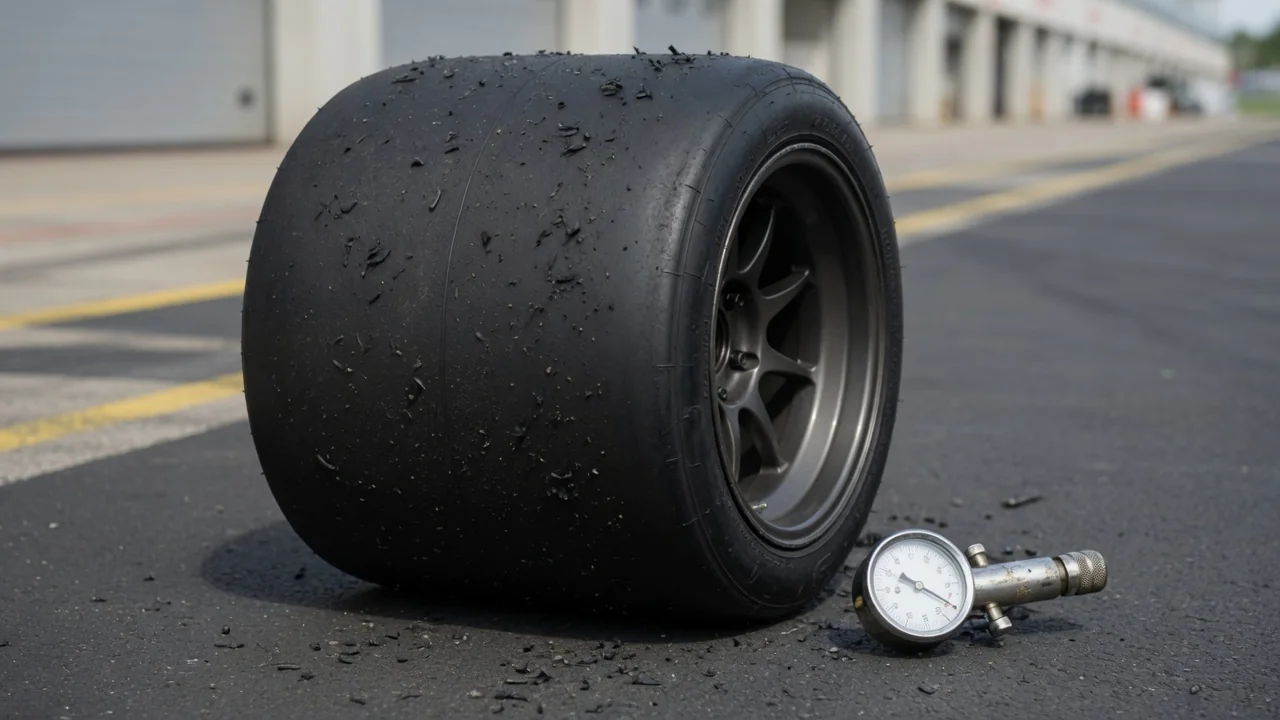
Track day tire wear and hard cornering tire wear come from sustained high lateral load and repeated heat cycles that street driving rarely produces. The outside front tire often scrubs its outer shoulder first, but the exact rate depends on car weight, power, track layout, weather, and driver pace. Reading the resulting wear patterns, adjusting hot tire pressure, and considering alignment settings help manage rubber loss. This article explains why track use accelerates wear, how to interpret what you see, and when to retire track tires.
Why a Track Day Wears Tires Much Faster Than Street Driving
A track day subjects tires to continuous high lateral load, hard braking, and strong acceleration, all of which generate far more heat than normal commuting. Sustained cornering force makes the tread flex and scrub against the pavement, while repeated heat cycles soften the compound and accelerate tread loss. Session length also matters: longer stints keep temperatures high and increase wear, whereas short sessions with cool-down laps let the tire shed some heat and recover.
Wear rates vary widely, so exact mileage or lap-count predictions are not useful. A heavy high-horsepower car on a fast track with warm weather will consume tires much faster than a light low-power car on a tight, slow circuit. Driver pace is equally important; smooth inputs reduce sliding and wear even at high speed. Street tires used on track often overheat and wear unevenly sooner than tires designed for track use, so tracking your own tire logs is the best way to set expectations.
How Hard Cornering Loads the Outer Shoulder
During hard cornering, weight transfer shifts load from the inside tires to the outside tires. The outside front tire usually carries the most load because it must handle both cornering force and much of the braking load. Body roll increases this effect, compressing the outside suspension and pushing the tire's contact patch outward. The sidewall flexes and the tread rolls over, concentrating pressure on the outer shoulder rather than spreading it evenly across the tread face.
This outer shoulder wear is the classic track day pattern, but the same mechanism works on public roads during aggressive cornering, just more slowly. Front-drive cars often wear the outside front tire fastest because it does the steering, cornering, and accelerating. Rear-drive cars may shift extra wear to the outside rear tire under hard acceleration out of corners, while all-wheel-drive layouts distribute load more evenly. The safe way to reduce road wear is to corner less aggressively, not to drive faster on track.
Reading Wear Patterns After a Session
After a session, let the tires cool completely before inspecting them. Look at the outer shoulder for smooth accelerated wear, feathering where the tread blocks have a saw-tooth edge, graining that looks like a rippled surface, blistering from overheating, or chunking where pieces of tread have broken away. Also compare the inside, center, and outside edges for uneven wear. The sidewall often has small triangular tread-wear indicators that show if the tire is rolling too far onto its shoulder; if the wear reaches those markers, the tire needs more pressure or more negative camber.
Wear differences from one axle to the other or one side to the other can reveal track characteristics, like a circuit dominated by right-hand corners wearing the left tires faster, but a quick visual check has limits. If you see cuts, bulges, exposed cords, or feel an unusual vibration, the tire should not go back on track. Those are signs of internal or structural damage that need a tire professional to inspect, not just a pressure adjustment.
Tire Pressure Management for Track Use
Cold tire pressure is what you set before driving; hot tire pressure is what you measure immediately after a session. As the tire flexes and heats up, the air inside expands, raising pressure by several psi. Track driving creates much more heat than street driving, so the hot pressure is critical for handling and wear. Pressure that is too low lets the sidewall flex excessively, causing the tire to roll onto its shoulder and overheat, which leads to outer shoulder wear and possible tread failure.
Pressure that is too high reduces the contact patch, gives less grip, and concentrates wear in the center of the tread. There is no universal number because the right pressure depends on the car, tire, track, and temperature. Start from the tire maker's guidance, the vehicle placard, and advice from event organizers or instructors. Check hot pressures right after coming into the pits, keep notes per corner, and make small changes between sessions. Before driving home, let the tires cool and return to the placard pressures.
Camber, Toe and Alignment Tradeoffs for Enthusiasts
Negative camber tilts the top of the tire inward toward the car. During hard cornering, the outside tire leans outward due to body roll, so negative camber helps keep the tread flat on the road. This spreads the cornering load more evenly across the tread and reduces outer shoulder wear. Many track enthusiasts run more negative camber than stock, but there is a street tradeoff: extra negative camber increases inner-edge wear during straight-line driving because the tire now rides mostly on its inner shoulder.
Toe settings have a strong effect on overall wear. Toe-in or toe-out causes the tire to scrub slightly as it rolls, which can create feathering and rapid tread loss even in a straight line. The adjustment range depends on the vehicle and suspension hardware; some cars allow significant camber changes, others very little. Settings should be chosen and done by a qualified alignment shop, not guessed from generic figures. Bring tire temperature readings and wear notes to the appointment so the shop can make informed adjustments.
Driving Habits That Reduce Track and Cornering Wear
Smooth steering, braking, and throttle inputs reduce sliding and scrubbing. Overdriving the tires—braking too late, turning in too sharply, or applying throttle too early—forces them to slide more, which grinds away tread and generates excess heat. A smoother driver can be just as fast while using less rubber. Learning to feel the limit of grip and staying just under it is more effective than constantly pushing past it.
Cool-down laps at the end of a session let the tires and brakes shed heat gradually, which limits overheating and the risk of flat spots from a locked wheel during hard braking on hot tires. Rotating or swapping tires between sessions can even out wear, but only when the tire type and vehicle setup allow it; check the tire maker's rules for directional or staggered fitments. Working with a certified instructor at organized events is the best way to improve technique, rather than practicing hard cornering on public roads where the risks are higher.
When to Retire Track Tires
Legal minimum tread depth is a starting point, but a tire can lose useful grip before reaching the wear bars, especially after many heat cycles. Heat cycling changes the rubber compound, making it harder and less grippy even with tread remaining. A tire that has been through many track days may feel slippery and inconsistent long before the tread is gone. Pay attention to how the tire feels, not just how it looks.
Retire a tire if you see exposed cords, heavy chunking, sidewall damage, deep cracking, or blisters. Grip that has noticeably faded after repeated heat cycles is another sign. Tire age matters too; check the date code on the sidewall and follow the tire maker's guidance rather than relying on a single universal age limit. Before putting a worn track tire back into daily street use, have it inspected by a professional. Many event tech inspections will reject damaged tires.