TPS Oil Checker: What It Measures and Whether It Works on Engine Oil
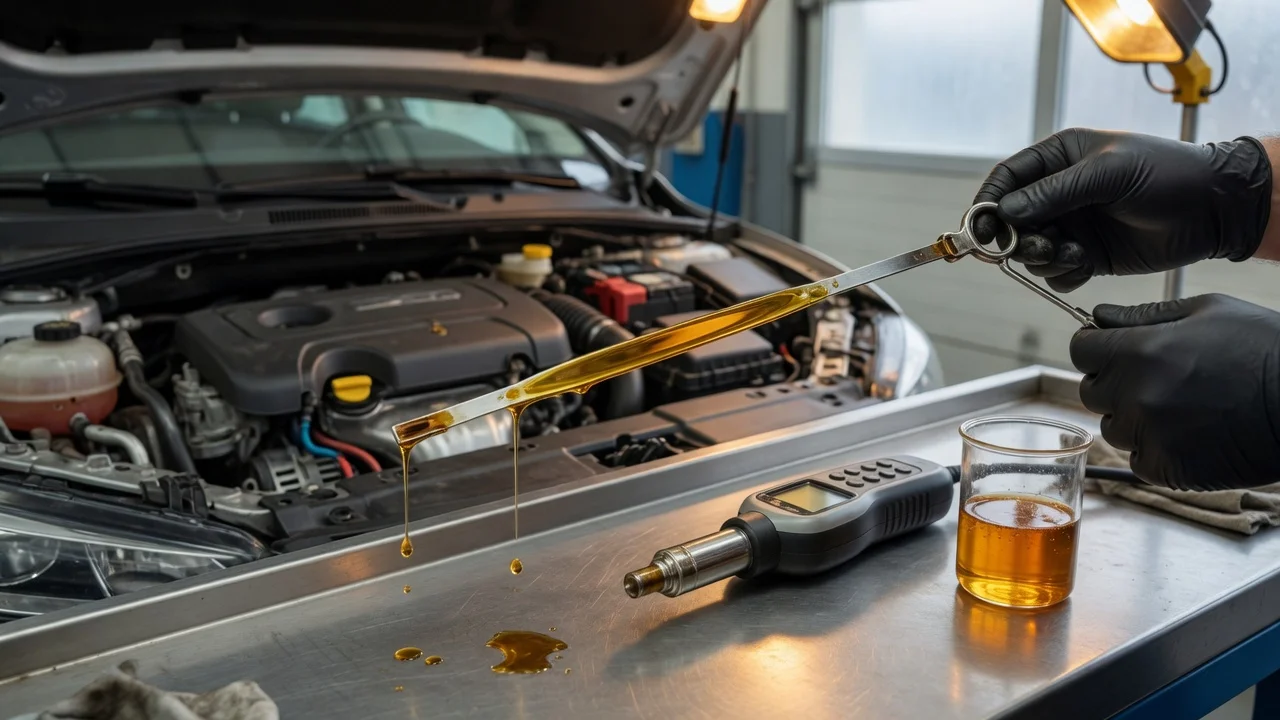
A TPS oil checker is usually a handheld tester that measures total polar substances (TPS, also called total polar materials or TPM) in cooking and frying oil. It is a food-service tool, not an engine oil gauge, and its readings are not designed to tell you when motor oil needs changing. If you want to check engine oil condition, your options are the dipstick, a handheld tester made for lubricants, the vehicle's oil life monitor if it has one, or a lab analysis of used oil. If by TPS you meant throttle position sensor, that part has nothing to do with oil and is tested with a scan tool or multimeter.
What TPS means in each context
Term | Where it is used | What it refers to; TPS / TPM | Commercial kitchens, frying oil | Total polar substances: breakdown compounds that build up as oil is heated repeatedly; TPS | Vehicles, engine management | Throttle position sensor: reports how far the throttle is open to the engine control unit
How a TPS oil checker works
You dip the probe into oil, and it measures an electrical property, typically capacitance. Capacitance is related to the oil's dielectric constant, a measure of how the oil responds to an electric field, and it rises as polar compounds build up. The device converts that measurement into a percentage reading. Kitchens use the reading to decide when to discard frying oil instead of judging by color or smell. Discard thresholds are set by local food-safety rules and vary by country. Check the regulation that applies to you and the tester's documentation rather than relying on a general figure.
Why it is not a reliable engine oil test
Engine oil is formulated differently from cooking oil. Modern motor oils contain additives such as detergents, dispersants and anti-wear agents, and many of these compounds are themselves polar. That means a fresh engine oil can read very differently from a fresh cooking oil. The tester's scale is calibrated for edible oils, so its numbers have no established meaning for lubricants. Even when the reading changes, it cannot tell you the cause, whether that is fuel dilution, coolant contamination, wear metals or loss of viscosity. Dipping a food-contact probe into motor oil also contaminates an instrument meant for kitchen use.
Ways to check engine oil instead
Dipstick check: confirms the oil level and gives a rough look at color, consistency and any milky residue, which can point to coolant or condensation. It costs nothing and is worth doing regularly, but it cannot measure remaining oil life. Handheld engine oil condition tester: devices sold specifically for motor oil usually compare a sample against a baseline, often the same oil when fresh. Treat the readings as a trend indicator. Calibration methods and accuracy vary by product, and no test data was available here to compare models. Used oil analysis: a lab report on an oil sample, typically covering viscosity, contaminants and wear metals. It is the most informative option, but it takes longer and costs more than a quick check. Oil life monitor: many recent vehicles estimate remaining oil life from how the engine has been used. Whether your vehicle has one depends on the make, model year and market.
Choosing the right next step
Running a fryer: a TPS checker is the right tool. Choose one whose documentation covers the oil types you use and your local discard limit. Routine car maintenance: follow the oil change interval in the owner's manual for your model year, engine and driving conditions. Some manuals give a separate, shorter interval for severe service. Check the dipstick between changes. Extending oil change intervals or diagnosing a problem such as oil consumption, milky oil or a fuel smell: a used oil analysis gives you evidence that a handheld tester cannot. Suspected throttle position sensor fault: typical symptoms include erratic idle or hesitation, often with a stored fault code. Read the codes with a scan tool and follow the service procedure for your specific vehicle and powertrain.
What to confirm before buying any oil tester
No product specifications, prices or accuracy test results were available for this article, so it does not compare specific models. Before buying any oil checker, find out from the manufacturer which oil types it is validated for, how it is calibrated, what accuracy it claims and what temperature range it works in.