TPMS Sensor Valve Stem: Replacement and Cost
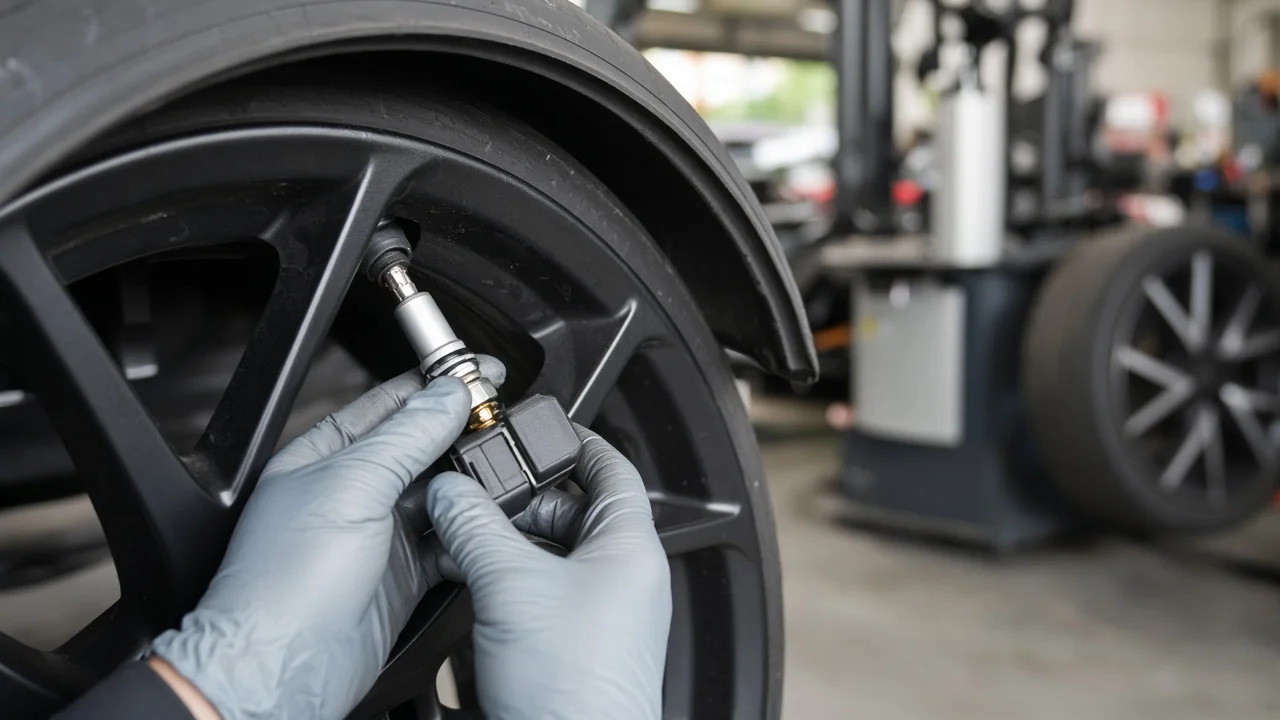
On most cars with direct monitoring, the tire pressure sensor sits inside the wheel and is attached to the valve stem. A leaking, corroded or broken stem therefore often means working on the sensor itself. This guide explains what a TPMS valve stem replacement involves, which choices change the price, and how to compare quotes so you pay only for the work your vehicle needs.
What the estimate includes
A tire valve stem with a sensor is two parts that work as one assembly. The stem holds air and lets you inflate the tire. The sensor body, clipped or bolted to the stem, measures pressure and sends a signal to the vehicle. Replacing either part means deflating the tire, breaking the bead and working from inside the wheel. The labor is therefore similar whether the job is a simple stem service or a full sensor replacement.
A complete estimate for one wheel usually covers removing and remounting the tire, the stem or sensor parts, rebalancing, and setting the inflation pressure to the vehicle placard. It also covers a relearn or ID registration so the car recognizes the sensor. A quote that lists only the part, or only a general TPMS service line, is a partial figure. Before comparing it with other quotes, ask whether the price is per wheel or for the set, and whether programming and balancing are included.
Some vehicles use indirect monitoring instead, which estimates pressure from the wheel speed sensors. On those vehicles the valve stem is an ordinary stem with no electronics, and replacing it is routine tire service.
What changes the cost
Stem design is the first variable. Clamp-in stems are usually metal, held by a nut on the outside of the rim and sealed with a grommet. Snap-in stems are rubber and pull through the rim hole. Many clamp-in stems can be serviced with a kit containing a new grommet, nut, valve core and cap, which costs far less than a new sensor. Some sensors accept a separate replacement stem. Others are a single molded unit, so a damaged stem means replacing the whole tire pressure sensor.
The second variable is why the stem is being replaced. Three common cases lead to very different parts lists: an aluminum stem that is corroded and snaps when the nut is loosened, a sensor whose internal battery has run down, and a slow leak at the grommet. Sensor batteries are sealed, so a weak battery means a new sensor rather than a battery swap. Sensors of the same age often fail close together, which is why some owners replace all four at once.
Labor and location make up the rest of the total. Doing the work while new tires are installed avoids paying twice for mounting and balancing. The final figure also depends on the type of shop, local labor rates, the number of wheels, any seized hardware, and whether your vehicle needs a scan tool to register sensor IDs. Many Toyota models, for example, need a new sensor ID registered through the diagnostic port rather than learning it automatically. A Toyota tire valve stem replacement that involves a new sensor should include that step.
Compare like-for-like options
The main choice is between original-equipment (OE) sensors and aftermarket programmable sensors. OE units match the factory part number and transmission frequency. Programmable aftermarket sensors are set up for your vehicle's protocol, either with a new ID or a cloned copy of the old one. Cloning can sometimes avoid a separate relearn. Both types can work well. What matters is that the sensor is listed for your exact make, model, year and wheel, and that the stem style suits the rim.
Compare options on the same scope. A cheap aftermarket sensor with no programming, balancing or warranty is not equivalent to an OE sensor that is installed, registered and covered by a labor guarantee. Check how long the part and the labor are covered, and whether the warranty is honored only at the installing shop. Also confirm the stem material and valve core. Aluminum stems should use the nickel-plated cores specified for them, because the wrong core can promote corrosion.
If a tire is replaced at the same visit, keep the rest of the fitment correct. Use the tire size, load index and speed rating approved for the vehicle, and fit matched tires where drivetrain compatibility requires them, as on many all-wheel-drive models. Check the remaining tread depth on the other tires before deciding whether to replace one tire or several.
Read an itemized quote
A useful quote lists each item separately, so you can see what you are paying for and what is missing. Look for these lines: the sensor part, with its brand, whether it is OE or aftermarket, and whether it comes programmed; a stem or service kit if only the hardware is being renewed; labor for removing and remounting the tire; wheel balancing, including weights; the fee for relearn, programming or ID registration; any diagnostic charge for reading the TPMS fault; and shop supplies, disposal and tax.
Then ask about exclusions. Extra charges commonly appear when a seized stem nut damages the sensor during removal, when a second sensor turns out to be failing, or when the warning light needs more diagnosis after installation. Ask whether the shop will call you before adding work, whether it tests the old sensors first, and whether the quoted total is per wheel or for all four. Two quotes are comparable only when they cover the same number of wheels, the same part grade and the same included steps.
Decide the next step
Before booking, work through a short checklist. Confirm whether your vehicle uses direct sensors; the owner's manual or a shop's TPMS tool can tell you. Ask the shop to read each sensor's ID and status so you know which wheel actually has the problem. Ask for a stem service kit whenever a tire with a clamp-in sensor is removed, since grommets and cores wear with age. Make sure the quote includes programming or registration and balancing. After the work, check that the warning light goes out. Also check that the tires are inflated to the pressure on the vehicle placard, not the maximum printed on the sidewall.
Avoid shortcuts that create bigger problems. Replacing a sensor with a plain rubber stem keeps air in the tire, but it leaves the warning light on and removes a safety system the vehicle was built with. Overtightening a clamp-in nut can crack the stem or the sensor, so the nut should be tightened to the manufacturer's torque specification. If you carry a tire sealant, choose one labeled as safe for TPMS sensors, because some sealants can clog the sensor port.