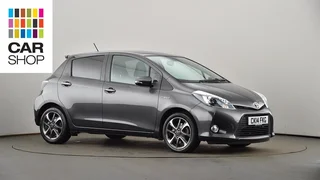
Toyota Yaris What Car review

A Toyota Yaris What Car review is a practical starting point for a used or new small-car decision, but the answer depends heavily on identifying the correct model generation, model year, body style, trim level, powertrain variant, and market specification. The Yaris name has appeared on several distinct vehicles, from economical city hatchbacks to taller crossover-like versions and rebadged models. Understanding those boundaries prevents you from applying one review’s conclusions to a different vehicle. This overview explains how to interpret the review material for American buyers while avoiding unsupported claims about exact specifications.
Essential answer
A Toyota Yaris What Car review is best treated as a general orientation rather than a single universal verdict. The essential answer is that a review must be read alongside the exact vehicle generation and body style, because the Yaris nameplate has covered different subcompacts, a sedan, and a more crossover-shaped variant in some markets. A favorable review of one generation does not automatically transfer to another, and import or market specification changes can affect equipment and tuning.
For readers researching a “Toyota Yaris review What Car” query, the immediate task is to match the reviewed car to the one you are considering. Check the model year, whether it is a hatchback or sedan, and the powertrain. A review may describe an older model still sold in one region while you are looking at a newer platform sold elsewhere. That qualification materially changes how you should use the review’s conclusions.
How it works
A What Car-style review typically organizes evaluation around everyday usability: how the vehicle rides, steers, consumes fuel, and packages occupants. For a Yaris, the reviewer is assessing whether the small footprint translates into easy urban maneuverability without making highway travel feel nervous. The practical effect is that you should read dynamic comments in context: a car praised for tight city parking may still have short gearing or modest acceleration on faster roads.
The review also evaluates how the body style and trim level interact. A base trim hatchback may feel more utilitarian, while a higher trim adds materials and technology that change perceived refinement. Since the Yaris has been offered with different powertrain variants, including conventional automatic and manual transmissions, the same body style can feel different depending on the engine response and shift behavior. That operating principle is why reviewers often note the specific variant tested.
Strengths, limitations and suitability
The Yaris generally earns recognition for maneuverability, predictable controls, and low-effort city driving. Its compact dimensions help in tight lots and narrow streets, and its modest footprint often supports easy outward visibility. For a buyer who wants straightforward transportation with uncomplicated controls, those strengths are meaningful. The review’s positive comments usually center on accessibility rather than performance, interior volume, or long-distance quietness.
The main limitations appear when the small size meets higher-speed or heavily loaded use. A short wheelbase can feel busier over broken pavement, and a small engine may work harder on long grades or when carrying passengers. Suitability therefore depends on the reader’s priority: an urban commuter or second car buyer may value the Yaris highly, while someone covering long interstate miles or needing rear-seat space may find the compromises more noticeable.
Procedure
When using a What Car review as part of a purchase process, start by recording the exact model generation and model year shown in the review photos or headings. Then compare that against the vehicle listing or owner’s manual information you are considering. Pay attention to the body style, because a review of a five-door hatchback may not describe the trunk and rear headroom of a sedan. Note whether the reviewed powertrain variant matches the one offered on the car you might buy.
Next, use the review’s observations as a checklist for a test drive rather than as proof of how your candidate car will behave. If the review mentions high steering effort, limited seat adjustment, or intrusive road noise, check those items yourself. Because tolerances, tire choices, and wear can change behavior, the review gives you useful areas to investigate, not a replacement for experiencing the specific vehicle. Confirm any equipment, technology, or maintenance claims against the actual window sticker or owner’s documentation.
Diagnosing a problem
If a Yaris you are evaluating seems to behave worse than a review describes, begin by separating model-specific traits from mechanical faults. A firm ride over rough pavement may be characteristic of the platform, but clunking or wandering could indicate worn suspension components. Similarly, a modest engine is expected to feel slower than a larger car, but hesitation, rough idle, or excessive fuel consumption suggests a throttle, ignition, or fuel-system concern that needs further inspection.
Pay attention to warning lights and fault codes as clues rather than conclusions. A code related to the powertrain or emissions system identifies an area for diagnosis, not necessarily a failed part. Before purchase, observe cold starts, transmission shifts, and brake behavior. If the vehicle pulls, vibrates, or produces fluid leaks, those are reasons to pause the purchase or seek a professional inspection. The review can tell you what is typical, but only the actual condition of the car reveals what requires repair.