Choosing a Toyota Tundra Shift Interlock Solenoid
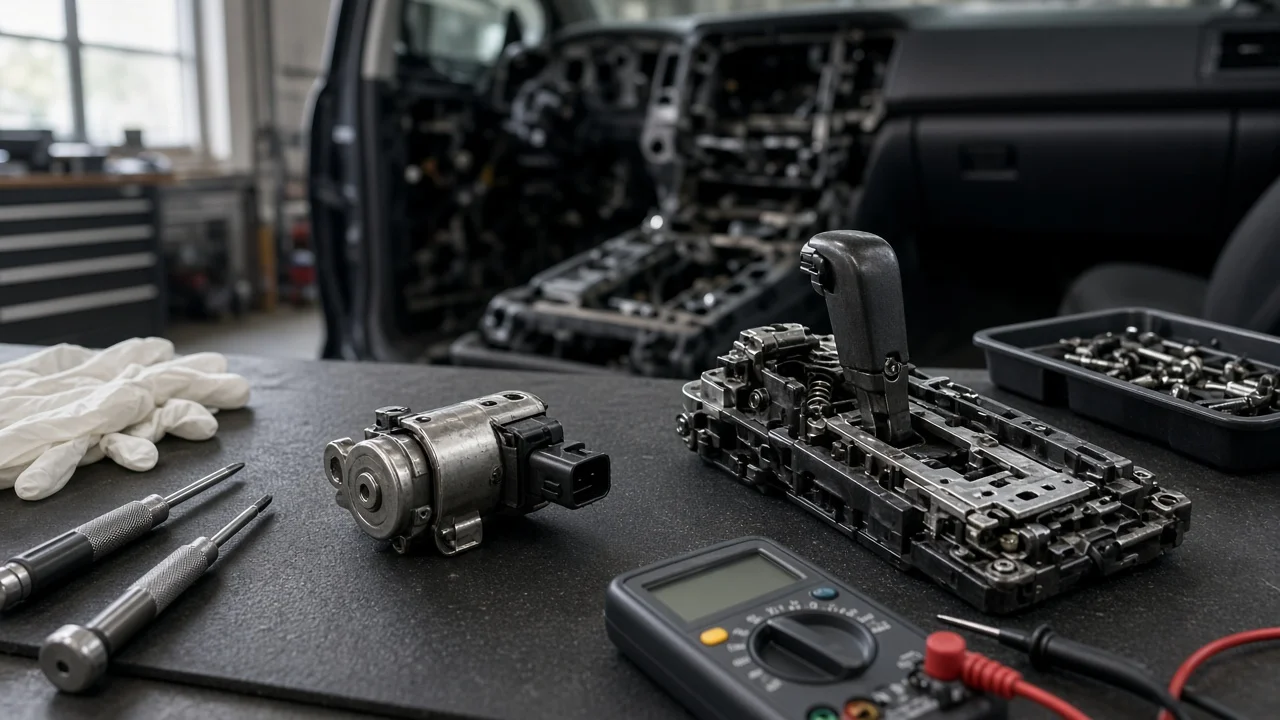
When a Tundra stays in Park even with the brake pressed, the shift interlock solenoid is one possible cause, but it is not the only one. Before ordering a part, confirm what your truck has and what is actually failing. This guide explains how to match a replacement to your Tundra's generation, transmission type and shifter layout. It also covers how to read parts listings critically and what the part cannot fix.
Define the job the product must do
The shift interlock, often called the shift lock, keeps the selector in Park until the ignition is on and the brake pedal is applied. On a Tundra with an automatic transmission, the solenoid sits at the shifter, not inside the transmission. It is an electrical actuator that releases a mechanical lock when it receives a signal from the brake light switch circuit, usually through a shift lock control unit. It is different from the shift solenoids in the transmission valve body, which control gear changes. Parts listings and search results sometimes mix the two up. If the truck leaves Park normally but has harsh, delayed or missed gear changes, the interlock solenoid is not the part you need.
Being stuck in Park points to the interlock system, not to a confirmed failed solenoid. Rule out the cheaper causes first. Check that the brake lights work, because a failed brake light switch or a blown stop lamp fuse cuts the release signal and produces the same symptom. With the key on, press the brake and listen or feel for a click near the shifter. Many Toyotas have a shift lock override slot or button near the selector, and the owner's manual shows where it is and how to use it. The override lets you move the truck and shows whether the mechanical side moves freely, but it does not fix the fault. Damaged wiring, a loose connector and liquid spilled into the console can also stop the release.
Check compatibility
The Tundra covers three generations: the first (2000 to 2006 model years), the second (2007 to 2021) and the third (2022 onward). First-generation automatics are four-speed units. Second-generation trucks use a five-speed or six-speed automatic, depending on engine and year. Third-generation trucks use a ten-speed automatic. Shifter design changes between generations, and on earlier trucks the shifter location can depend on the seating configuration. A listing that only says it fits a Tundra is therefore not enough. Trucks with a manual transmission do not use this part.
The most reliable fitment check is a VIN-based lookup at a Toyota parts counter or in a catalog that decodes the VIN. Use that part number to cross-reference aftermarket options. Before ordering, remove the old unit if you can, then photograph it along with any label or stamped number. Compare the connector shape, pin count, mounting points, and plunger length and orientation. Also check how the part is sold. Some catalogs list the solenoid on its own. Others only offer it as part of a shift lock assembly or a complete shifter assembly, which changes both price and labor.
Features that affect the choice
A genuine Toyota part is matched to your VIN and is the safest bet for fit. Aftermarket solenoids vary widely: some are close replicas of the original, while others are generic units that need adaptation. Useful evidence in a listing includes a specific OEM cross-reference number, a stated year and configuration range, and clear photos of the connector and mounting. Labels such as heavy-duty, upgraded or universal tell you little about whether the part will fit or last. Warranty length and return terms carry more weight. Check whether a return is still accepted once the part has been installed or the packaging opened.
Choosing between a bare solenoid and a full assembly is mainly a trade between parts cost and labor. A solenoid alone usually costs less but means more disassembly of the shifter and more care when transferring brackets or springs. An assembly costs more but generally swaps in with fewer steps and replaces other worn pieces at the same time. Used or salvage parts are cheaper but have an unknown service history and are often as old as the part you are removing.
Limitations and ownership costs
A new interlock solenoid will not fix a bad brake light switch, a blown fuse, damaged wiring, a misadjusted shift cable, a worn shifter detent or any internal transmission problem. Interlock faults often leave no transmission diagnostic codes. If a scan does show transmission codes, treat them as a separate issue that needs its own diagnosis. The solenoid does not touch transmission fluid, so fluid specification does not matter for this repair. If you are also chasing shifting problems, use the fluid Toyota specifies for your exact transmission, which is a separate job.
Plan for the installation itself. Getting to the solenoid usually means removing console or trim panels. Plastic clips can break, so having spares on hand avoids rattles later. Follow the factory repair procedure for your model year, since the steps differ by generation. Once installed, check that the selector stays locked in Park with the brake released, releases when the brake is pressed with the ignition on, and that the brake lights still work. If a shop does the work, labor can exceed the part price, especially when the shifter must be partly dismantled.
Build a practical shortlist
Start with the truck. Record the generation, model year, transmission type and shifter location, plus any relevant service history, such as a recently replaced brake switch or earlier console work. Next, confirm the diagnosis. The brake lights should work, the stop lamp fuse should be good, and with a multimeter you can check for voltage at the solenoid connector while the brake is pressed and the ignition is on. Voltage present with no click points toward the solenoid or its mechanism. No voltage points upstream to the switch, the wiring or the control unit.
Then get the OEM part number from a VIN lookup and compare a few candidates on the same points: matching cross-reference number, identical connector and mounting, solenoid-only or assembly format, warranty, and return terms. Finally, choose your repair option. A DIY install suits owners comfortable removing trim and following a factory procedure. An independent shop or dealer makes more sense when the diagnosis is still uncertain or the shifter must come apart. Paying for a correct diagnosis first often costs less than replacing parts that were never faulty.