Toyota Tundra Rear Axle Shafts: Check Fitment for Your Model Year
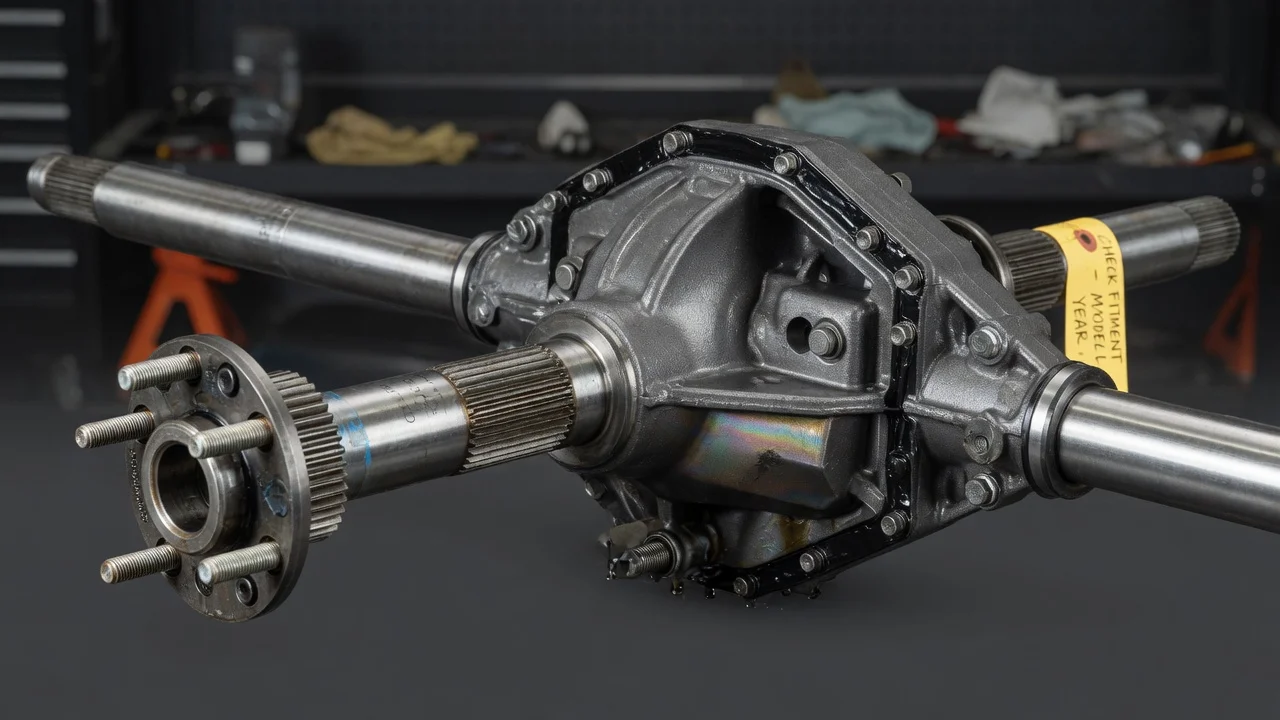
Ordering a rear axle shaft for a Tundra is simple only after two questions are settled: is the shaft actually the failed part, and will the replacement match your truck? The 2004, 2005 and 2006 Tundra belong to the first generation, and the 2007 model year brought a redesigned truck, so never assume parts carry across that boundary. This guide covers symptoms, competing causes, checks in a sensible order, and the details a parts counter or technician will need.
Establish the symptoms
Start by writing down exactly what the truck does and when. Note whether a noise is a hum, growl, grind, click or clunk, and whether it follows road speed, engine speed, or neither. Record if it changes when you steer gently left and right at highway speed, when you accelerate versus coast, when the bed is loaded or a trailer is attached, and whether it appears cold or only after a long drive. Problems at the rear axle shaft and its bearing usually track road speed and often change with load shifting from one side to the other.
Then list associated signs: gear oil on the inside of a rear wheel or tire, a wet backing plate, rear brakes that grab or fade on one side, an ABS or traction warning light, vibration through the seat, or a wheel that looks out of line. Finally, note recent changes in the service history, such as tire rotation or replacement, brake work, differential fluid service, a curb strike, off-road use or heavy towing. Recent work near the hub is a strong clue that the cause may be something other than the shaft itself.
Distinguish plausible causes
A worn rear wheel bearing is the most common reason owners end up shopping for a shaft, because on many semi-floating rear axles the bearing is pressed onto the shaft and serviced together with it. Bearing noise typically builds with speed and gets louder or quieter as weight moves during gentle turns. A leaking axle seal is a separate problem: it shows as gear oil at the backing plate or wheel rather than noise, although a seal often fails because a worn bearing lets the shaft move. Oil-soaked brake components point toward the seal and possibly the bearing, not necessarily a damaged shaft.
A bent or broken shaft is less common and usually follows an impact, overload or a seized bearing. Supporting signs include a visible wheel wobble, a rhythmic clunk once per wheel revolution, or a complete loss of drive on one side. Competing causes deserve equal attention. Cupped or unevenly worn tires can mimic bearing hum. Differential wear tends to change with throttle and coast rather than steering. Loose lug nuts, a damaged wheel or a sticking brake can also produce clicking, pulling or heat. The more your notes point to one wheel and to load-sensitive noise, the stronger the case for that side's bearing and shaft.
Checks in a useful order
Begin with observations that need no tools. With the truck parked on level ground, look behind each rear wheel for oil streaks, check the tires for uneven wear, confirm the lug nuts are present and not visibly loose, and compare how far each wheel sits inside the fender. After a short drive at moderate speed, carefully compare rear hub and wheel temperature by hand near the center, avoiding hot brake surfaces. One side noticeably warmer than the other suggests a dragging brake or a distressed bearing. Note what you find; do not start loosening parts at this stage.
The next checks require proper lifting equipment, jack stands rated for the truck, and manufacturer specifications. With the rear safely supported and the transmission in neutral, a technician can spin each wheel to listen for roughness, rock it at the top and bottom to detect play, and check differential fluid level and condition for metal or water contamination. Removing the brake drum or caliper allows inspection of the backing plate, seal area and brake parts. Measuring axle flange runout, checking end play and pulling the shaft to inspect the bearing and splines require service data and specialist tools, and are best left to a qualified technician if you lack them.
Interpret the findings
Oil at one backing plate establishes a leak on that side but not its cause; the bearing condition and shaft play still need to be checked before deciding whether a seal alone will do. Roughness or play at one wheel with load-sensitive noise strongly supports a failed bearing, which on this kind of axle often means replacing the bearing on the existing shaft or buying a shaft assembly. Measured runout beyond the manufacturer specification, visible bending or damaged splines establish that the shaft itself must be replaced.
Some results only narrow the field. A noise that persists after tires are swapped front to rear argues against tires, but does not prove the bearing. Contaminated differential fluid suggests internal wear that a new shaft will not cure. Clean fluid, no play, no runout and no leak point away from the shaft entirely. Before ordering, confirm the faulty side and whether the whole assembly, the bearing, or only the seal is needed, because these are different parts and different labor.
Urgency and next action
Stop driving and arrange a tow if a rear wheel visibly wobbles, if there is loud grinding or a heavy clunk with each revolution, if drive is lost on one side, or if gear oil has reached the brake friction surfaces. A failing bearing or shaft can let the wheel shift outward, and oil-contaminated brakes reduce stopping ability. Milder symptoms, such as a faint hum with no play or leak, still warrant prompt inspection; there is no reliable way to predict how much further a worn component will last under your operating conditions.
To get the right part the first time, give the parts supplier or technician your VIN, exact model year, cab and bed configuration, engine, and whether the truck is two-wheel or four-wheel drive. State which side is affected and whether the truck has ABS sensors at the rear wheels, since sensor or tone ring arrangements must match. If the old shaft is out, record any stamped part numbers and the spline count. A 2006 shaft should not be assumed to fit a 2007 truck, and parts can change within a model year, which is why a VIN-based lookup against manufacturer specifications is the safest way to confirm fitment.